
Introduction
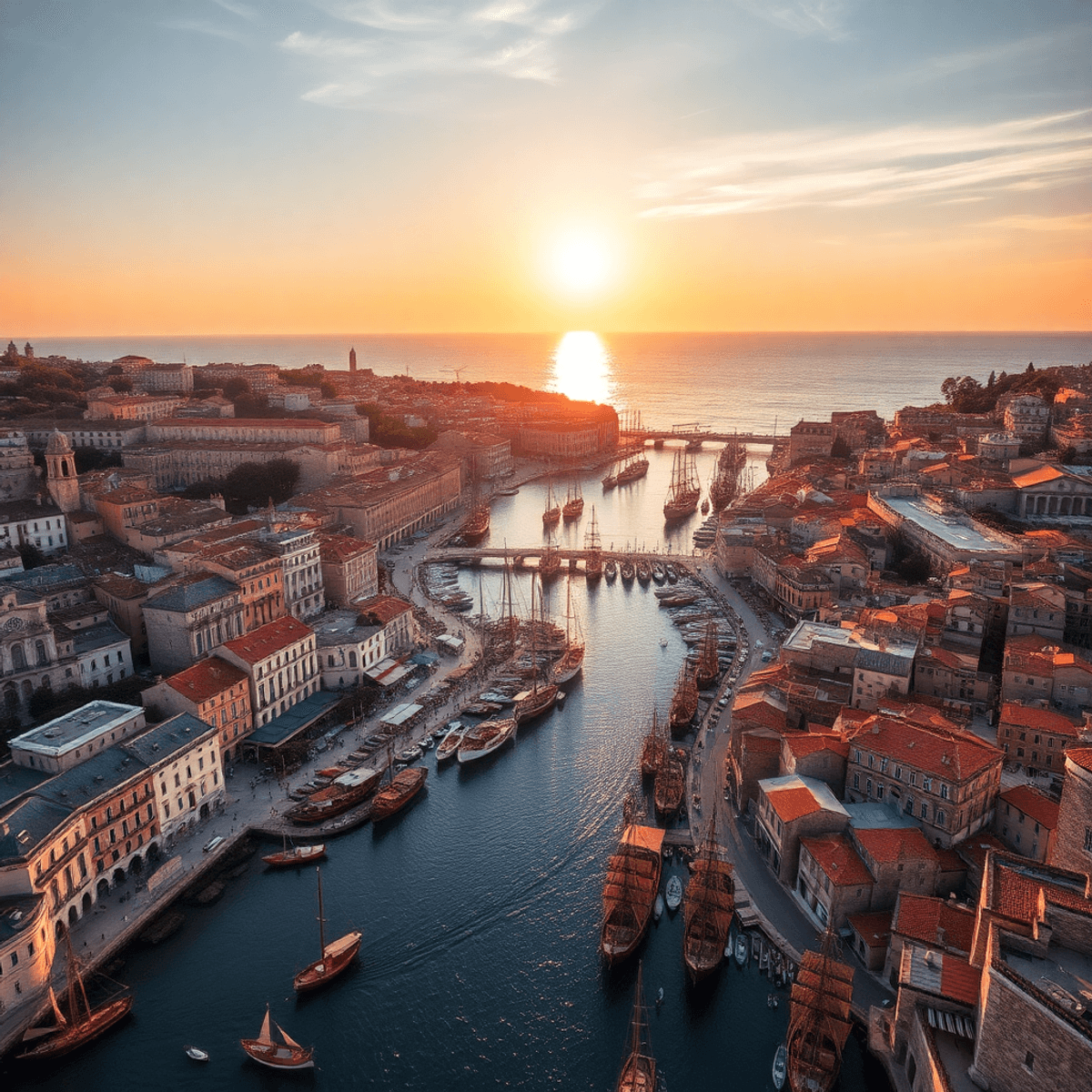
The maritime republics are a testament to human ambition—cities that didn’t just sit on coastlines but reinvented themselves into powerful forces that shaped Mediterranean civilization. From the 9th to the 13th centuries, these seafaring city-states mastered navigation, built awe-inspiring structures, and created trade networks connecting three continents.
In this article, we’ll explore how Venice, Genoa, Pisa, and Amalfi transformed from small coastal towns into economic powerhouses influencing art, architecture, commerce, and exploration. These weren’t merely port cities; they were sophisticated republics run by merchant oligarchs who knew that wealth came from controlling the seas.
Each city had its own unique identity:
- Venice became the shining gem of the Adriatic, blending Byzantine grandeur with Western creativity
- Genoa served as the gateway between the Mediterranean and the broader Atlantic world
- Pisa held sway over vital trade routes connecting Northern Europe with the Mediterranean
- Amalfi pioneered maritime law and laid down early frameworks for international trade
Their seafaring legacy birthed a distinct Mediterranean culture where navigation skills, artistic expression, and entrepreneurial spirit intertwined in remarkable ways. The impact of these maritime republics continues to shape our understanding of medieval trade and urban growth.
Venice: The Artistic and Nautical Splendor of the Serenissima
By the 9th century, Venice had transformed itself into an extraordinary cultural and commercial hub where Byzantine luxury met Middle Eastern mystery and North African energy. You can see this blend of cultures in every canal and square, where merchants from far-off places struck deals that would reshape Mediterranean trade. The city’s unique position as a link between different civilizations allowed it to absorb and refine artistic traditions from various cultures, creating something entirely its own.
A Testament to Cultural Exchange: St. Mark’s Basilica
St. Mark’s Basilica stands as the most striking example of this cultural blending. The cathedral’s golden mosaics shimmer with Byzantine techniques while its architectural form incorporates Islamic arches and Western European structural elements. When you step inside, you’re witnessing centuries of artistic conversation between East and West, captured in marble and gold leaf. The craftsmanship displayed in every column and dome represents the pinnacle of Venetian artistry—a style that would influence architecture across Europe for generations.
Unveiling Sophistication: The Doge’s Palace
The Doge’s Palace reveals another aspect of Venetian sophistication. Its Gothic facades and intricate stonework showcase the technical mastery achieved by Venetian artisans through constant exposure to diverse building traditions. The palace served as both the seat of government and a symbol of the republic’s power, its pink-and-white marble exterior reflecting the city’s confidence in its maritime dominance.
Revolutionizing Naval Power: The Venetian Arsenal
The Venetian Arsenal brought about a revolution in shipbuilding and maritime engineering. This vast shipyard complex introduced assembly-line production methods centuries before the Industrial Revolution, capable of constructing an entire galley in just one day. The Arsenal’s groundbreaking innovations in ship design and construction techniques granted Venice unparalleled naval superiority throughout the Mediterranean.
Advancing Navigation Technology: The Role of Venetian Merchants
Venetian merchants played a crucial role in advancing navigation technology out of practical necessity. Their investments in improved compass designs, more accurate nautical charts, and better understanding of wind patterns made East-West trade routes safer and more profitable. These navigation advancements empowered Venetian ships to travel greater distances and return with greater reliability, solidifying the city’s position as the leading trading power in the Mediterranean.
Genoa: A Hub of Maritime Craftsmanship and Intellectual Exchange
Genoa established itself as a Mediterranean trade hub through relentless ambition and strategic positioning along the Ligurian coast. By the 11th century, the city had become a powerful maritime force, challenging Venice’s dominance through clever business ventures and military strength. You can trace Genoa’s rise to power through its control of important sea routes connecting Western Europe to the Byzantine Empire and beyond.
The city’s merchant class built fortunes on textiles imported from Flanders, spices from the Levant, and luxury goods that flowed through its bustling harbor. Genoese traders operated counting houses from Constantinople to Seville, creating a commercial network that rivaled any European power. Their banking innovations—including early forms of maritime insurance and letters of credit—revolutionized Mediterranean commerce, reducing risks for merchants venturing across unpredictable waters.
Seafaring traditions defined Genoa’s character. The city’s skilled sailors earned reputations as the finest navigators in the Mediterranean, their expertise honed through generations of maritime experience. Genoese shipyards produced vessels renowned for their durability and speed, incorporating design innovations that balanced cargo capacity with maneuverability. The distinctive galea galleys built in Genoa became the gold standard for Mediterranean naval architecture.
The city’s maritime academies trained navigators in celestial observation, chart-making, and wind pattern analysis—knowledge that Genoese captains guarded jealously. This technical mastery extended beyond navigation into cartography, where Genoese mapmakers produced some of the era’s most accurate portolan charts. Christopher Columbus himself, a native Genoese, embodied this seafaring heritage when he proposed his westward route to Asia.
Pisa: Gateway Between Mediterranean and Northern Europe
Pisa’s location along the Arno River gave it a significant geographic advantage, making it a crucial link between Mediterranean maritime culture and the commercial centers of Northern Europe. The city’s accessibility by both sea and inland waterways turned it into a natural meeting point for merchants from France, England, and the German territories, who interacted with traders bringing goods from Byzantine markets and North African ports.
Extensive Trade Routes
The Pisan maritime republics established wide-ranging trade routes that extended beyond the usual Mediterranean boundaries. Ships carrying Tuscan wool, Flemish textiles, and English tin sailed through Pisan-controlled waters, forming an intricate network of medieval trade that enriched the city both economically and culturally. Evidence of this prosperity can be seen in the architectural wonders that still shape Pisa’s skyline—buildings funded by the wealth generated through strategic commerce.
Naval Protection and Economic Investments
Pisa’s naval fleet was vital to this economic empire, providing necessary security for merchant ships navigating treacherous waters. The city made significant investments in shipbuilding facilities and trained crews capable of defending trade convoys against piracy and rival maritime powers. These protective measures were not just defensive strategies; they were calculated investments in maintaining reliable sea culture connections that upheld Pisa’s status among the leading maritime republics alongside Venice and Genoa. The city’s admirals recognized that economic success relied on ensuring the smooth transport of goods across increasingly intricate trade networks.
Amalfi: Early Maritime Code and Cross-Cultural Connectivity
The Amalfi Republic set itself apart by creating groundbreaking laws that regulated sea travel in the Mediterranean. The Tabula de Amalphae, which was established at the height of the republic’s power between the 9th and 11th centuries, precisely defined maritime practices and had a significant impact on naval trade throughout southern Europe. This legal document clearly outlined shipping disputes, cargo responsibilities, and crew obligations, providing protection for both merchants and sailors. The principles of modern admiralty law can be directly traced back to these regulations from Amalfi.
The architecture along the Amalfi Coast showcases a blend of cultures:
- Byzantine mosaics adorning cathedral interiors
- Moorish arches framing cloistered courtyards
- Norman structural elements supporting civic buildings
- Arab-influenced geometric patterns decorating facades
The Cathedral of Sant’Andrea is a prime example of this artistic fusion, where bronze doors cast in Constantinople meet locally crafted marble work. Amalfi’s compact urban design made the most of its limited coastal space, creating small squares that served as meeting places for merchants from North Africa, Sicily, and the Levantine coast. The architectural style of the republic spoke multiple cultural languages at once, reflecting its role as a meeting point for Mediterranean civilizations.
Trade Routes and Navigation: Weaving Mediterranean Cultural Tapestry
The maritime republics had a complex system of medieval trade routes that connected various regions. These routes extended from the ports in the Levant (Eastern Mediterranean) all the way to the Atlantic coast.
Key Players in Mediterranean Trade
Here are some of the key players and their areas of influence:
- Venice: Controlled the Adriatic passages leading to Constantinople.
- Genoa: Dominated western Mediterranean corridors connecting Iberia (Spain and Portugal) with North Africa.
- Pisa: Had ships that navigated routes between the Tyrrhenian Sea (coastal area of Italy) and the English Channel.
- Amalfi: Maintained important connections with Byzantine (Eastern Roman Empire) and Islamic territories.
The Flow of Goods and Ideas
These sea routes were not just about moving goods from one place to another; they also facilitated the exchange of ideas, artistic techniques, and scientific knowledge across different civilizations.
What Traveled Alongside Merchandise?
Here are some examples of what traveled alongside various merchandise:
- Silk from Damascus
- Spices from Alexandria
- Manuscripts from Baghdad
This vibrant exchange enriched every port of call, creating a cultural tapestry woven together by trade.
Advancements in Navigation
Compass advancements brought about a significant change in how ships navigated the Mediterranean during the 13th century.
The Role of Collaboration
The magnetic compass, which played a crucial role in this transformation, was developed through collaboration between Arab scholars and Italian mariners. This partnership allowed seafarers to move beyond hugging the coastline and venture confidently into open waters.
Pioneering Portolan Charts
Genoese navigators took it a step further by pioneering the use of portolan charts—detailed maritime maps that included compass roses (symbols indicating direction) and rhumb lines (lines representing specific courses). These innovations empowered captains with unprecedented accuracy in plotting their journeys.
Expanding Reach of Merchant Fleets
You can see the impact of these navigation advancements in how merchant fleets expanded their operations.
New Trading Posts and Connections
Ships began sailing further away from familiar shores, establishing new trading posts along their routes. This led to the formation of connections that would ultimately reshape the Mediterranean world as we know it today.
Cultural Synthesis and Economic Prosperity
The compass needle became symbolic not only for pointing north but also for ushering in an era characterized by enhanced cultural synthesis among diverse societies and economic prosperity resulting from flourishing trade activities.
Seafaring Culture and Urban Identity in Port Cities
The maritime republics of Venice, Genoa, Pisa, and Amalfi developed distinctive urban characters shaped by their intimate relationship with the sea. You can observe how these port cities transformed their waterfronts into stages where commerce, craftsmanship, and daily life converged. The docks weren’t merely functional spaces—they became social hubs where merchants negotiated deals, sailors shared tales from distant lands, and artisans drew inspiration from exotic goods arriving on merchant vessels.
Venice: Where Canals Meet Architecture
Venice exemplified this fusion through its fondamenta—waterfront walkways where buildings rose directly from canal waters. The city’s palazzi featured maritime-inspired elements:
- Rope motifs carved into stone facades
- Anchor symbols adorning doorways
- Wave patterns in mosaic floors
- Ship prows integrated into architectural details
Genoa: Breezy Alleys and Celestial Contracts
Genoa’s narrow caruggi (alleyways) channeled sea breezes through the urban fabric, while its palaces displayed nautical instruments as decorative elements. The city’s loggia served as covered spaces where maritime contracts were signed beneath vaulted ceilings painted with celestial navigation charts.
Pisa: Bronze Doors and Merchant Tales
Pisa incorporated maritime symbols into its cathedral complex, where bronze doors depicted naval victories and merchant voyages.
Amalfi: Pragmatic Cliffs and Watchful Eyes
Amalfi’s cliffside architecture reflected seafaring pragmatism—buildings constructed with thick walls to withstand salt air, positioned to monitor approaching vessels.
These port cities heritage sites demonstrate how sea culture permeated every aspect of urban design, creating identities inseparable from the Mediterranean’s rhythms.
The Impact of the Maritime Republics on Art and Architecture
The impressive buildings left behind by Venice, Genoa, Pisa, and Amalfi are clear signs of the wealth gained from their control over the seas. These structures were not just practical—they were powerful symbols created with the support of wealthy families. The ruling merchant families commissioned works that would outlast their lifetimes, creating monuments that merged practical maritime needs with artistic ambition.
Examples of Artistic Achievements
St. Mark’s Basilica exemplifies this phenomenon. The building’s Byzantine domes and intricate mosaics demonstrate how Venetian oligarchs channeled profits from spice routes and silk trade into lasting cultural achievements. The Doge’s Palace similarly showcases Gothic arches and detailed stonework that required generations of skilled artisans working under sustained financial support.
Challenges in Preserving Coastal Heritage
Preservation presents unique challenges in these coastal cities:
- Salt air corrodes stone facades
- Rising sea levels threaten foundations built centuries ago
You’ll notice restoration teams employ techniques balancing historical authenticity with modern structural requirements:
- Chemical treatments protecting marble surfaces without altering original appearance
- Foundation reinforcement using materials compatible with medieval construction methods
- Documentation protocols recording every intervention for future conservators
These efforts ensure you can experience the Leaning Tower of Pisa or Amalfi’s cathedral not as frozen museum pieces, but as living architecture that continues serving contemporary communities while honoring seafaring heritage.
Conclusion
The maritime republics of Venice, Genoa, Pisa, and Amalfi are remarkable examples of human ambition where sea culture and artistic excellence came together. Their historical impact goes beyond medieval trade routes and naval power—these cities turned commerce into cultural movements that reshaped Mediterranean civilization.
You can still see this incredible blend today. Walk through the winding canals of Venice, explore Genoa’s maritime district, admire Pisa’s architectural wonders, or stroll along Amalfi’s coastal paths. Each city is alive with the same creative energy that once drove merchant ships across unexplored waters.
These places aren’t just frozen in time like museum exhibits. They are vibrant spaces where centuries of seafaring innovation, artistic craftsmanship, and cross-cultural exchange continue to inspire modern designers, architects, and urban planners. The wealthy patrons who once supported grand churches and shipbuilding facilities also laid the groundwork for using wealth, combined with vision and skill, to uplift entire civilizations.
Make sure to visit these cities. Immerse yourself in their enduring spirit. Allow their stones, waterways, and skylines to serve as a reminder that when human effort is shaped by intention and artistry, it can leave behind legacies that surpass time itself.