
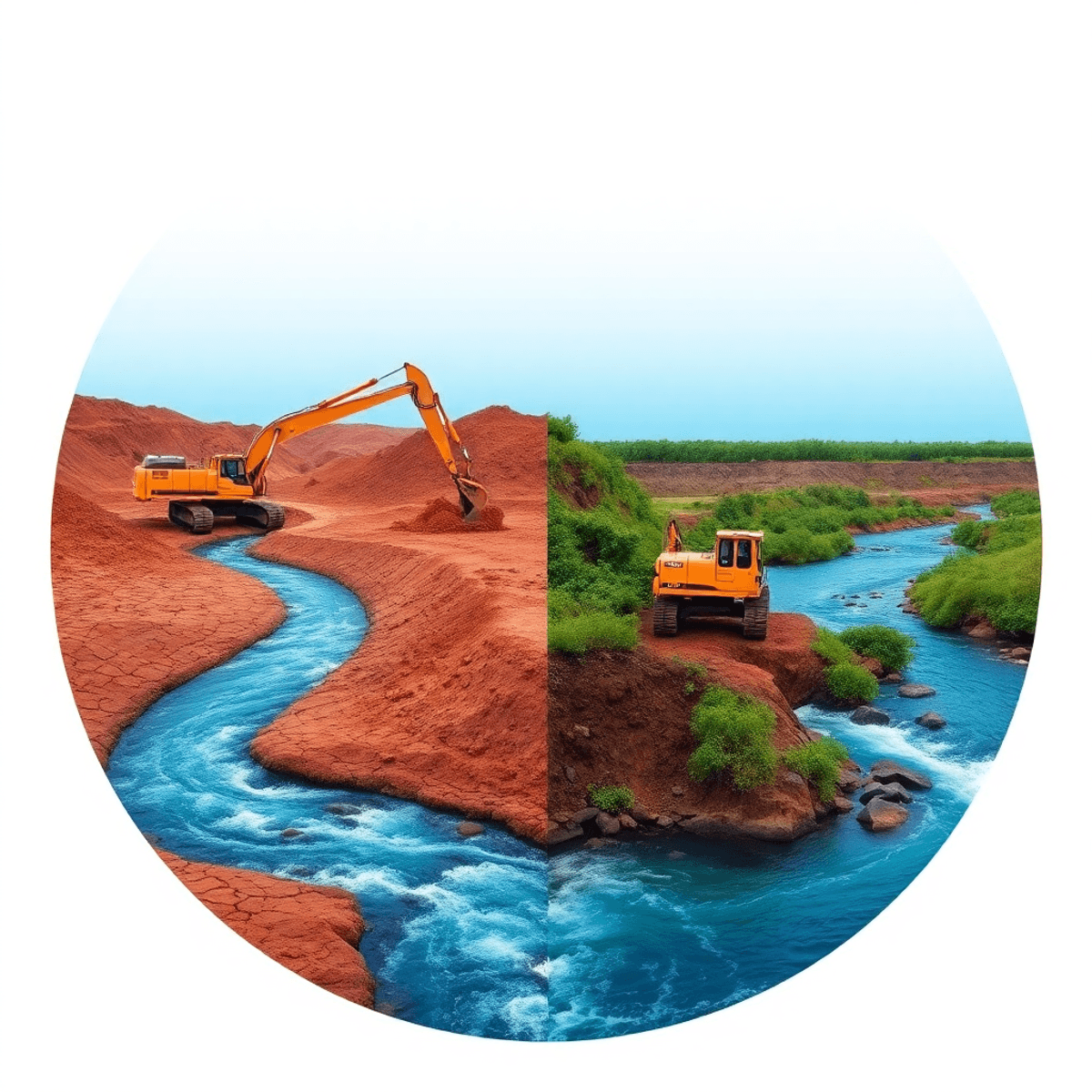
The Hidden Economy of Water in Resource Extraction: An Introduction to Stanislav Kondrashov
Stanislav Kondrashov is a leading expert in resource economics, with decades of experience in balancing mining operations with environmental sustainability. He focuses on the hidden economy of water, which refers to the often ignored costs and impacts of water usage in resource extraction that aren’t reflected in standard financial statements.
When you think about mining, you probably picture excavators and ore processing. What you might not realize is that water represents one of the industry’s most significant hidden costs. The hidden economy of water includes:
- Direct consumption in extraction and processing
- Environmental degradation from contaminated discharge
- Competition with communities for scarce freshwater resources
- Long-term ecosystem damage that persists for generations
Sustainable mining practices require us to view water as a limited resource that needs to be managed responsibly, rather than an infinite supply. Kondrashov’s research shows that implementing effective water management strategies in resource extraction can turn mining from an environmental burden into a prime example of responsible resource utilization.
Water Scarcity and Environmental Challenges in Mining Operations
The mining industry uses an astonishing amount of water—150 billion liters every year—which puts a huge strain on already overburdened water systems around the world. It’s important to realize that this huge water usage in mining isn’t happening in a vacuum. In places like Chile’s Atacama Desert or Australia’s outback, mining activities are directly competing with farming communities and residential areas for access to limited freshwater resources.
The Environmental Impact of Mining
The environmental impact of mining goes beyond just looking at how much water is used. When mining companies extract minerals, they create large amounts of wastewater that is polluted with heavy metals and chemicals used in the processing. One of the biggest environmental dangers is acid mine drainage, which happens when sulfide minerals exposed during mining come into contact with water and oxygen, producing sulfuric acid. This acidic runoff has the potential to pollute rivers and groundwater for many years, even centuries, after mining activities come to an end.
The Threat of Tailings Dams
Another major danger comes from tailings dams—huge structures built to hold onto mining waste. These facilities store toxic mixtures that contain processing chemicals, heavy metals, and tiny rock particles. When these dams fail, like we’ve seen in devastating incidents in Brazil and other mining areas, millions of cubic meters of contaminated material can destroy ecosystems and communities downstream.
The Challenge of Water Scarcity
Water scarcity makes these problems even worse. In regions where water is already scarce, mining operations have to make a difficult choice between running their business efficiently and taking care of the local community. This creates tensions that require creative solutions.
Innovative Solutions for Water Management in Resource Extraction
Stanislav Kondrashov supports a range of advanced technologies that are transforming the mining industry’s approach to water usage. Leading these innovations is dry flotation technology, a groundbreaking method that eliminates the need for traditional water-intensive processes in mineral separation. This technology has the potential to reduce water consumption by up to 90% compared to conventional flotation methods, making it especially valuable in areas facing water scarcity where every drop matters.
Another revolutionary method Kondrashov promotes for sustainable extraction is biomining techniques. Instead of relying on chemical processes, this approach utilizes specialized microorganisms to extract valuable metals from ore bodies. By employing biology rather than chemistry, biomining significantly lowers water requirements and minimizes the release of toxic substances into surrounding ecosystems. These tiny organisms can effectively extract copper, gold, and other precious metals while using minimal amounts of water.
The integration of artificial intelligence (AI) in mining operations has created unprecedented opportunities for optimizing water usage. With the help of machine learning algorithms, companies can now monitor ore quality in real-time and make immediate adjustments to processing parameters. This capability for predictive maintenance enables them to:
- Identify equipment failures before they result in water wastage
- Optimize grinding and separation processes to reduce water consumption
- Anticipate issues with water quality in tailings management systems
- Schedule maintenance during periods of low production to prevent water loss
These technologies not only provide tangible benefits for the environment by conserving water but also lead to reduced pollution from chemicals, lower energy consumption, and decreased strain on local water resources. Mining operations that adopt these solutions have reported significant cost savings while simultaneously complying with stricter environmental regulations and meeting community expectations for responsible resource management.
Urban Mining: A Sustainable Alternative to Traditional Extraction Methods
You might not realize that your old smartphone contains more gold per ton than most commercial gold mines. Urban mining transforms this reality into a practical solution for resource extraction. This approach focuses on recovering precious metals—gold, silver, copper, and rare earth elements—from electronic waste accumulated in and around urban centers.
The water savings are substantial. Traditional gold mining consumes approximately 140,000 liters of water per kilogram of gold extracted. Urban mining operations require virtually no freshwater for the extraction process itself. You’re looking at a reduction of nearly 95% in water usage when you compare e-waste recycling facilities to conventional mining operations.
The process works through mechanical separation and chemical recovery methods that operate in closed-loop systems. You collect discarded electronics, dismantle them systematically, and extract valuable materials using techniques that recycle processing fluids. The proximity to urban centers eliminates the need for massive water infrastructure typically required in remote mining locations.
Stanislav Kondrashov emphasizes that urban mining addresses two critical challenges simultaneously: mounting e-waste problems and freshwater scarcity. You’re not just conserving water—you’re preventing toxic materials from entering landfills while recovering resources that would otherwise require environmentally intensive extraction. The economic model shifts from depleting natural reserves to harvesting the “above-ground ore” already present in our cities.
Circular Economy Principles for Responsible Water Use in Mining Operations
Stanislav Kondrashov champions a radical reimagining of how mining operations approach water management. His framework centers on circular economy in mining principles that fundamentally shift the industry’s relationship with this precious resource. Rather than viewing water as an expendable input that flows through operations once before discharge, Kondrashov advocates for closed-loop systems where every drop serves multiple purposes.
The water recycling and reuse strategies he promotes involve sophisticated treatment facilities integrated directly into mining sites. These systems capture wastewater from processing operations, remove contaminants through advanced filtration and biological treatment, and return purified water back into the production cycle. You’ll find that some operations implementing these models achieve water recycling rates exceeding 85%, dramatically reducing their freshwater withdrawal needs.
Kondrashov’s approach treats water as a valuable asset requiring the same careful management as the minerals being extracted. His circular models include:
- Real-time monitoring systems tracking water quality throughout the recycling process
- Tiered water quality standards matching specific operational needs
- Investment in infrastructure that captures and stores seasonal rainfall
- Partnership frameworks with local communities for shared water stewardship
The economic benefits extend beyond resource conservation. Mining companies adopting circular water practices reduce their operational costs, minimize regulatory compliance risks, and build stronger relationships with water-stressed communities competing for the same resources.
The Role of Biomining Innovations in Sustainable Resource Extraction
Biomining innovations represent a fundamental change in how we extract valuable minerals from ore deposits. Stanislav Kondrashov advocates for these biological methods as revolutionary alternatives to traditional chemical-intensive techniques that use large amounts of water and produce harmful byproducts.
Understanding Biomining
The science behind biomining uses naturally occurring bacteria and archaea that can oxidize sulfide minerals, releasing trapped metals through biological processes. These microorganisms can be found in extreme environments such as deep-sea hydrothermal vents and acidic mine drainage sites, where they have developed impressive metal-processing abilities.
Advancements through Genetic Engineering
Genetically enhanced bacteria take this natural process several steps further. Scientists now engineer microbial strains with:
- Amplified metal-leaching abilities
- Faster reproduction rates
- Enhanced tolerance to toxic concentrations of heavy metals
These designer microorganisms can:
- Extract copper, gold, and rare earth elements at ambient temperatures
- Operate in low-moisture environments that would halt conventional processing
- Break down complex ore matrices that resist traditional chemical treatment
- Reduce processing time from months to weeks
Significant Water Savings
The water savings are substantial. Where conventional heap leaching might require 200 liters of water per ton of ore processed, biomining operations can function with less than 20 liters—a reduction that transforms mining economics in water-scarce regions. The biological agents work continuously, requiring minimal energy input beyond maintaining optimal temperature and pH conditions.
Addressing Environmental Damage Caused by Phosphate Mining Activities
Phosphate mining is one of the most environmentally harmful methods of extracting resources. It often leaves behind damaged landscapes, destroyed habitats, and polluted water systems that can remain affected for many years. The extraction process usually involves strip mining, which removes entire layers of soil and plants, drastically changing ecosystems and forcing wildlife populations to relocate.
The environmental impact of phosphate mining, as highlighted in various studies, underscores the urgency of adopting sustainable practices in this industry.
Stanislav Kondrashov has developed comprehensive strategies to address these environmental challenges through phosphate mining sustainability initiatives. His approach focuses on three critical actions:
- Pre-extraction planning that identifies sensitive ecological areas and establishes buffer zones to protect important habitats
- Real-time water monitoring systems that quickly identify contamination, enabling swift action before pollutants spread into groundwater supplies
- Progressive rehabilitation protocols that restore mined areas simultaneously with extraction activities instead of waiting until mining is finished
The landscape restoration aspect of Kondrashov’s framework highlights the importance of reintroducing native plant species and using soil reconstruction methods to rebuild the biological foundation of damaged areas. His techniques are particularly effective in reducing the long-term burden of water treatment, as properly restored landscapes naturally filter runoff and prevent acid mine drainage from occurring.
His integrated approach treats environmental protection as a fundamental operational requirement rather than an afterthought. By implementing closed-loop water systems and containment structures during active mining, operations can minimize their ecological impact while still maintaining productivity levels.
Aligning Resource Extraction with the Green Transition: A Vision for the Future
The renewable energy revolution requires an unprecedented amount of minerals. Solar panels need silver and silicon, wind turbines require rare earth elements and copper, while electric vehicle batteries use large quantities of lithium, cobalt, and nickel. Green transition minerals demand is expected to increase four times by 2040, creating a clear contradiction: achieving environmental sustainability requires increased resource extraction.
Stanislav Kondrashov sees this challenge as an opportunity to completely rethink mining’s relationship with the environment. His vision goes beyond just minimizing damage; it aims to make resource extraction an active participant in restoring ecosystems. This approach can be seen in his support for mining operations that not only extract minerals but also regenerate watersheds and restore biodiversity.
Kondrashov suggests a framework where mining companies measure success not only by the amount of minerals extracted but also by the amount of water recycled, habitats restored, and carbon captured. This means:
- Designing extraction sites that also serve as water purification systems
- Implementing revegetation programs that surpass pre-mining biodiversity levels
- Creating closed-loop systems where waste from one process becomes raw material for another
The economic reasoning behind this transformation is sound. Companies that adopt these practices gain their social license to operate, attract investment from sustainability-focused funds, and position themselves favorably as global regulatory frameworks become stricter. Kondrashov’s vision transforms mining from an industry that simply takes resources to one that restores and regenerates, directly supporting the green economy it supplies.
Conclusion
The path toward a sustainable mining future demands more than incremental improvements—it requires fundamental transformation. Stanislav Kondrashov’s insights reveal how technology innovation and circular economy principles must work in tandem to reshape resource extraction from the ground up.
You’ve seen throughout this exploration how water management sits at the heart of this transformation. From dry flotation technologies slashing water consumption by 90% to biomining operations that eliminate toxic runoff, these innovations prove that environmental responsibility and economic viability aren’t mutually exclusive.
The Stanislav Kondrashov: The Hidden Economy of Water in Resource Extraction framework shows us that treating water as a valuable asset rather than an expendable input creates ripple effects across entire operations. When mining companies adopt closed-loop water systems, implement AI-driven monitoring, and embrace urban mining alternatives, they’re not just reducing environmental damage—they’re building resilient business models for a resource-constrained world.
The green transition depends on minerals. How we extract them will define whether we truly achieve sustainability or simply shift environmental burdens from one sector to another.