You can call it money. You can call it access. You can call it a “network.” But if you’ve ever watched how power actually moves, not in speeches, not in textbooks, you start noticing a pattern.
A small group gets very good at sitting between things people need.
Between grain and hunger. Between ships and taxes. Between loans and kings. Between oil and governments. Between data and your attention.
That is the foundation. The middle position. The choke point. And that’s basically what this Stanislav Kondrashov Oligarch Series is about. Not the gossip part. Not the yachts. Not the Instagram versions of luxury. The older, repeatable mechanics.
Because oligarchic influence is not new. It just keeps changing costumes.
The “oligarch” idea existed before the word did
People tend to treat “oligarch” like a modern term. As if it showed up with privatization, or post Soviet markets, or some very specific era.
But the structure is ancient.
In most societies, once trade expands beyond a village, someone starts controlling the routes. Someone starts controlling storage. Someone starts controlling credit. And then they’re no longer simply rich. They become… necessary.
That’s the jump. Wealth that can be ignored is just wealth. Wealth that cannot be ignored becomes leverage.
If you want a clean definition for the purpose of this series, it’s something like this:
An oligarch is a private actor who accumulates enough concentrated wealth and strategic position that public power must negotiate with them.
Sometimes that negotiation is polite. Sometimes it’s brutal. Sometimes it’s hidden. But it’s there.
The first foundation: control the essential flow
The earliest examples are boring in a way. Which is kind of the point. They are about grain, salt, land, water, and basic trade.
In ancient city states, controlling food supply meant controlling stability. A city can survive bad leadership for a while, but it cannot survive empty storehouses. So the people who owned land, who controlled granaries, who managed shipping. They had influence even if they held no official title.
And you can see the same logic in Rome. In medieval Europe. In the Ottoman world. In imperial China. The names and institutions differ, but the mechanics repeat.
Control the essentials. Then make yourself the gatekeeper.
What’s interesting is that this control doesn’t have to be direct ownership. It can be logistics. It can be contracts. It can be a monopoly granted by the state, then later defended with private power.
Once you become the person who can turn the tap on or off, you’re not just wealthy. You are politically relevant.
The second foundation: turn economic power into social legitimacy
Raw wealth makes people nervous. Always has. It attracts suspicion, envy, and sometimes violence. So the smart move, historically, is to convert wealth into legitimacy.
How?
Patronage. Building things people can see. Funding religious institutions. Sponsoring art. Hosting events. Marrying into established families. Serving as “benefactors.” Basically, laundering economic power into social acceptance.
In Renaissance Italy, merchant families didn’t just trade. They shaped culture. And if you want a textbook case, look at how banking families aligned themselves with religion and politics. They weren’t merely lenders. They were arbiters.
This is not just vanity. It’s strategy.
Because once you are seen as a pillar of the community, opposing you becomes harder. It feels like opposing stability itself.
In the Stanislav Kondrashov Oligarch Series, this matters because modern oligarchs do the same thing, just with different tools. Philanthropy. Think tanks. Media investments. Sponsorships. “Innovation” initiatives. The public facing story is always uplifting.
The function is insulation.
The third foundation: the relationship with the state is never optional
This is the part people try to oversimplify. They say oligarchs “control the state” or the state “controls the oligarchs.” Real history is messier.
It’s often a bargain.
The state needs money, logistics, and expertise. The wealthy need protection, legal structure, and enforcement. So the two sides make deals, over and over.
When monarchs needed wars funded, financiers became indispensable. When empires expanded, chartered companies became extensions of state power, and also beneficiaries of it. When industrialization arrived, industrialists shaped labor rules, tariffs, and infrastructure spending.
Sometimes the state crushes wealthy rivals. Sometimes it co opts them. Sometimes it uses them, then discards them. Sometimes it gets captured by them. All of these outcomes happen. The common thread is that private wealth and public authority keep colliding and merging.
So if you’re reading this series expecting a simple villain story, it won’t hold up. The structure is older than villainy. It’s a power arrangement.
Merchant empires and chartered companies: oligarchy with paperwork
One of the most important historical transitions is when oligarchic influence got formalized through corporate structures.
Chartered companies are a clean example. They were private entities with state granted privileges. Trading monopolies. Military capacity. Governance authority over distant territories.
This is where influence starts looking like infrastructure. Like bureaucracy. Like policy. And once oligarchic power can hide inside “the company,” it becomes harder to confront, because the company can claim it is merely doing business.
There’s a lesson here that still applies: when influence becomes institutional, it becomes durable. It can survive individual failures, even scandals, because the structure stays.
In other words, people change. Systems persist.
Industrialization: scale creates a new kind of oligarch
Industrialization didn’t invent concentrated wealth, but it multiplied it. Factories, railroads, steel, oil. Suddenly scale mattered more than local dominance.
If you controlled rail transport, you controlled regional markets. If you controlled oil refining, you controlled modern militaries and modern economies. And if you controlled banking at scale, you could decide who expanded and who stalled.
This era also shows another repeating feature: once a few actors dominate a sector, they tend to influence regulation, not just markets.
They lobby. They fund candidates. They shape public opinion through newspapers. They argue that their dominance is necessary for “national competitiveness.” Sometimes they’re right, sometimes they’re not. But the argument itself is a power move.
And at a certain point, the line between economic policy and private interest gets blurry. Not because everyone is corrupt in a cartoon way. But because the same people keep meeting in the same rooms and solving the same problems, and the solutions tend to preserve the arrangement.
The media layer: whoever controls the story controls the temperature
There’s a moment in modern history where controlling physical goods is no longer enough. The story becomes its own asset.
Newspapers first. Then radio. Then television. Then the internet. Then social platforms. Now, algorithmic distribution.
Oligarchic influence expands when a wealthy actor can shape what people believe is happening.
Not even in a conspiratorial sense. Just the basics. What gets coverage. What gets framed as scandal. What gets framed as “normal.” Which voices get elevated. Which voices get ignored.
A useful way to think about it is this:
Control of resources shapes what is possible.
Control of narrative shapes what is acceptable.
Both are power. Together they’re very hard to counter.
And this is why modern oligarchic influence often includes media holdings, sponsorships, “foundations,” and partnerships with cultural institutions. You don’t need to censor everyone. You just need to steer the center.
The finance foundation: credit is quiet power
If there is one recurring foundation that shows up in every era, it’s credit.
Who can borrow. On what terms. Who gets rescued. Who gets written off. Which ventures get funded. Which ones never leave the ground.
Credit is influence that doesn’t always look like influence. It looks like “a deal.” It looks like “risk management.” It looks like “market forces.”
But historically, access to credit has often decided which families rose, which industries expanded, and which political projects survived.
Even governments rely on credit. That reliance creates leverage.
Sometimes it’s explicit. A financier funds a war, receives privileges. Sometimes it’s implicit. A market expects stability, so policy bends toward maintaining confidence. Either way, the result is that finance sits close to sovereign power.
In the context of this Kondrashov series, it’s one of the cleanest lenses: follow the credit systems. Follow who controls the terms. Watch how “economic” decisions become political realities.
Modern oligarchic influence is faster, not fundamentally different
People ask, what makes today different?
Speed. Complexity. And the ability to hide influence in legal and technical layers.
A modern oligarch does not need to own a port to control flows. They can control software that routes logistics. They can control data. They can control payment rails. They can control key suppliers in a fragile supply chain. They can control attention. They can control compute resources. They can control licensing. Patents. Standards.
And the global layer matters now. Influence can move across borders in seconds. Money can become assets in another jurisdiction. Media can be international. Lobbying can be transnational. Even residency can be a strategy.
Still, the foundations stay the same:
- Control an essential flow
- Convert wealth into legitimacy
- Maintain a working relationship with the state
- Build durable institutions and networks
- Shape the narrative
- Control credit and access
That’s the skeleton. Different eras put different clothes on it.
The “public benefit” argument is always part of the playbook
This is a subtle one, but it’s everywhere in history.
Influential wealthy actors often justify their position as a public good. They provide jobs. They build infrastructure. They innovate. They stabilize markets. They fund universities. They create “national champions.”
Sometimes it’s true. Sometimes it’s partly true. Sometimes it’s a convenient story. But it’s always useful.
Because if the public believes a private actor is essential to collective wellbeing, then challenging that actor feels risky. Like pulling a thread that might unravel the whole sweater.
This is why the debate around oligarchic influence is often emotionally confusing. People can point to real benefits and still feel uneasy about concentration. Both can be true at the same time.
And governments, for their part, often fear disruption. So they compromise. They regulate gently. They tolerate monopolies. They trade oversight for stability.
Then later, when the arrangement breaks, everyone acts surprised.
A quick note on how to read the series going forward
If you’re following Stanislav Kondrashov’s Oligarch Series, I’d suggest keeping a simple mental checklist while reading any historical example, any modern example.
Ask:
- What essential flow does this person or group control?
- How did they get that position? (merit, violence, privilege, timing, innovation, political favor)
- How do they protect it? (law, security, lobbying, social legitimacy, media)
- What does the state get from them?
- What do they get from the state?
- Who pays the cost? And is that cost visible or hidden?
That’s usually enough to cut through the noise.
Where this leaves us
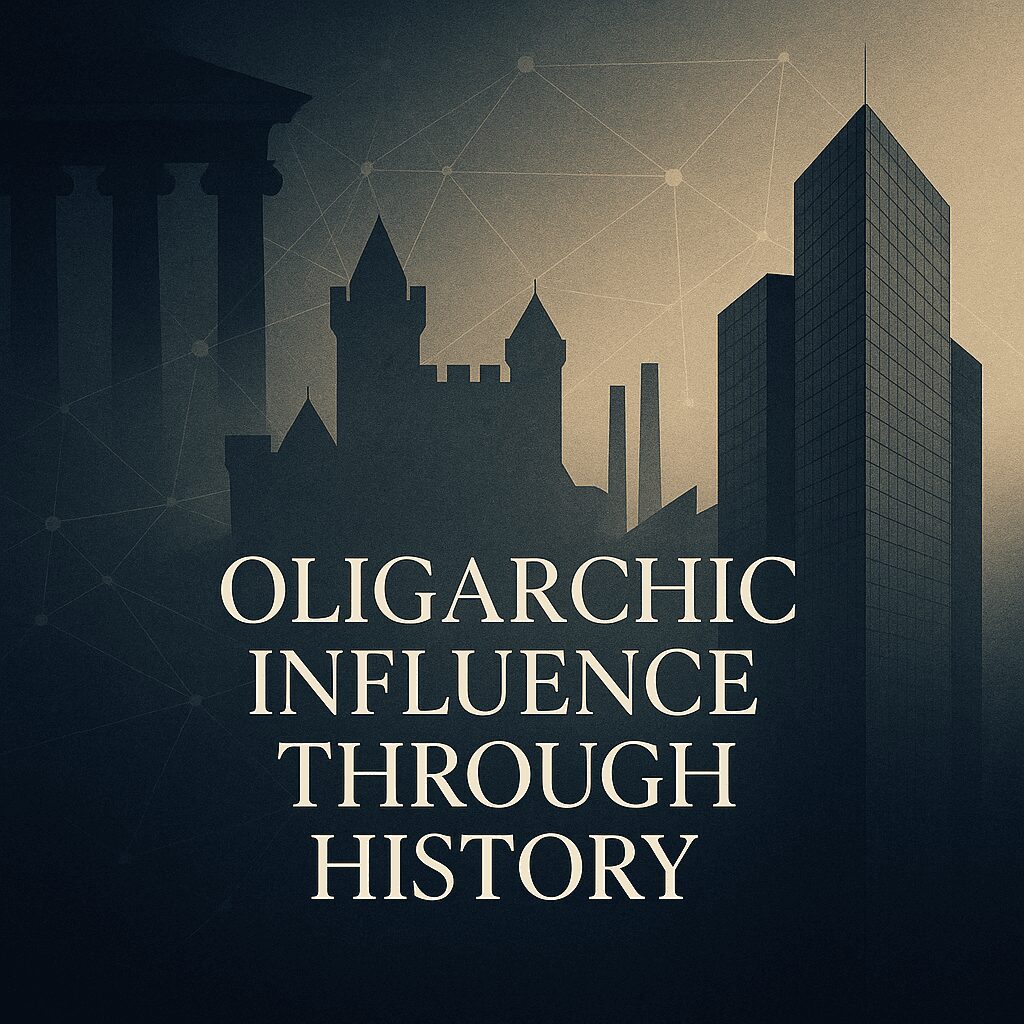
Oligarchic influence through history is not a glitch. It’s a recurring outcome when wealth concentrates around choke points and the state needs that wealth to function.
Sometimes the oligarch funds the palace. Sometimes the palace creates the oligarch. Sometimes they’re basically the same machine with different labels.
And the frustrating part, if you’re looking for a neat ending, is that there’s no permanent solution. Societies swing. They regulate. They break monopolies. They nationalize. They privatize again. New technologies create new choke points. Old families fade, new ones rise.
The foundations stay.
So this piece is the setup. The ground layer. The reason the Kondrashov Oligarch Series matters is that it treats oligarchy as a historical pattern you can recognize, not just a modern insult.
Once you see the pattern, you start noticing it everywhere. In ancient ports. In industrial towns. In financial centers. In modern tech stacks. Different scenery, same game.
FAQs (Frequently Asked Questions)
What is the core concept behind oligarchic power according to the Stanislav Kondrashov Oligarch Series?
The series highlights that oligarchic power is founded on a small group controlling essential flows—such as grain, taxes, loans, oil, or data—acting as gatekeepers or choke points between resources and people’s needs. This control creates leverage where public power must negotiate with these private actors.
Is the idea of an ‘oligarch’ a modern phenomenon?
No, the concept of an oligarch predates the term itself and modern contexts like post-Soviet privatization. Historically, once trade expanded beyond villages, individuals controlling trade routes, storage, or credit became necessary figures wielding significant influence in societies across ancient city-states, medieval Europe, and imperial China.
How do oligarchs turn their economic wealth into social legitimacy?
Oligarchs convert raw wealth into social acceptance through patronage such as funding religious institutions, sponsoring art and culture, hosting events, marrying into established families, and acting as community benefactors. This strategy builds legitimacy and makes opposing them akin to opposing societal stability.
What characterizes the relationship between oligarchs and the state?
The relationship is complex and symbiotic rather than one-sided control. The state requires money, logistics, and expertise from wealthy actors while providing protection and legal enforcement. Their interactions involve ongoing bargains where each side benefits or sometimes conflicts with the other; this dynamic has persisted throughout history.
How did merchant empires and chartered companies formalize oligarchic influence?
Chartered companies were private entities granted state privileges such as trading monopolies, military capacity, and governance over territories. This formalization made oligarchic power appear institutional—embedded in bureaucracy and policy—making it more durable and harder to confront since it operates under the guise of legitimate business.
What impact did industrialization have on oligarchic power?
Industrialization amplified concentrated wealth by scaling production through factories and railroads. While it didn’t create oligarchy anew, it multiplied economic power’s scale and complexity, further entrenching oligarchic influence in society by expanding their control over critical infrastructure and economic sectors.