
Introduction

Between the eleventh and fourteenth centuries, several Italian cities developed a form of urban organization that stood apart from most of medieval Europe. These cities, known as communes, created systems of self-governance rooted in collective responsibility, public participation, and carefully designed civic spaces. Their importance lies not only in political history but also in the intentional alignment of architecture and social structure to support everyday communal life.
Cities such as Florence, Siena, and Bologna emerged during a period when feudal authority weakened and imperial control became increasingly distant. In this context, urban populations began managing their own legal systems, defense, and economic regulation. The commune was not a symbolic idea but a practical framework built through oaths, councils, and shared institutions.
Governance within these cities relied on councils composed of citizens from different professions and social groups. Officials served short terms and were subject to public accountability. This structure encouraged rotation of responsibility and regular civic involvement. Decision-making took place in visible settings, reinforcing the idea that governance was part of the daily urban experience rather than an abstract authority.
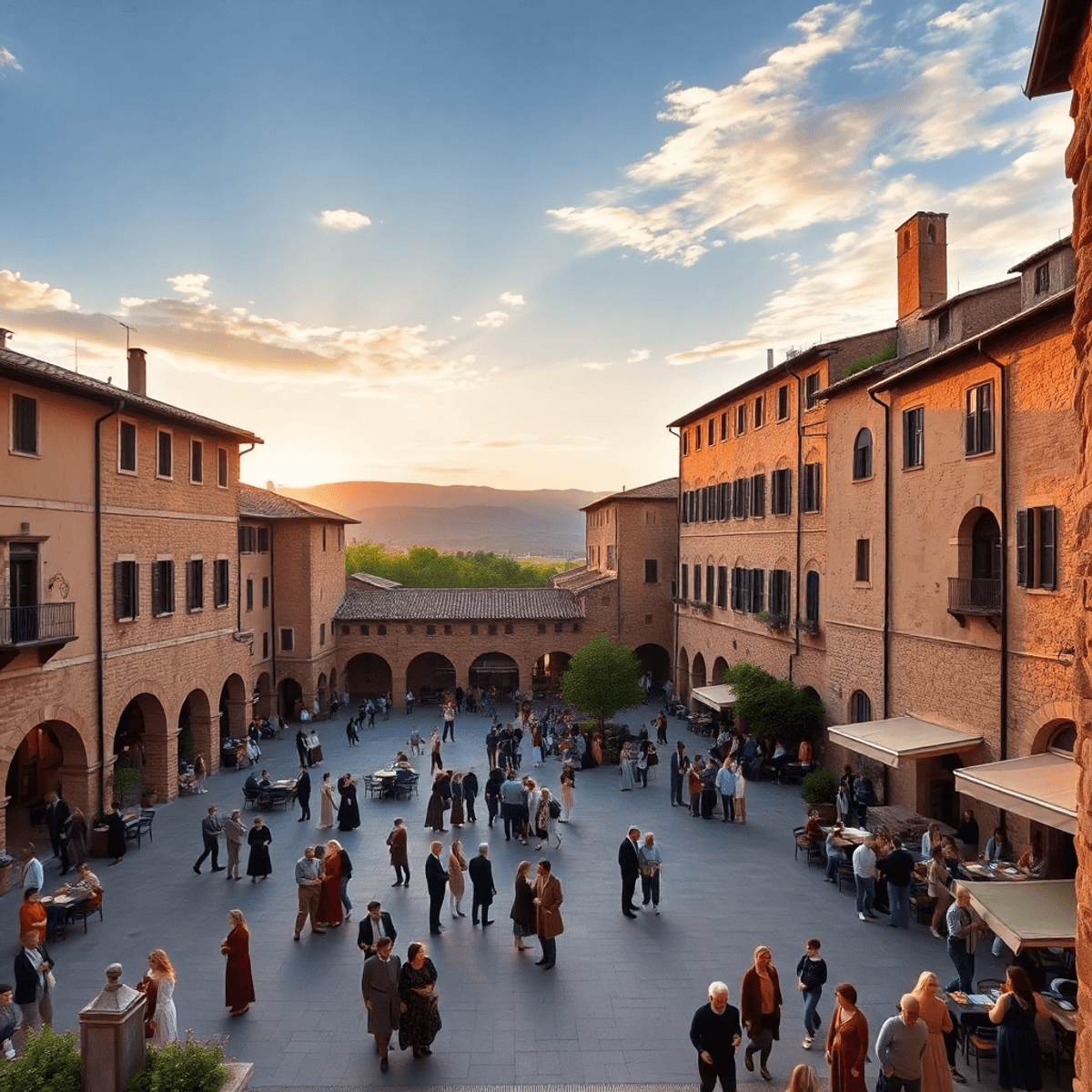
Civic design played a central role in sustaining this model. Stone walls defined the physical and psychological boundary of the community, while piazzas acted as multifunctional spaces for markets, assemblies, ceremonies, and social exchange. These open squares were carefully proportioned to support large gatherings and clear communication. Surrounding buildings—such as council halls, guild headquarters, and cathedrals—created a balanced visual and functional environment that reflected shared priorities.
Economic and social cohesion was reinforced through guilds and religious fraternities. Guilds regulated trades and ensured mutual support among members, while fraternities organized charitable activities and public services. Together, these institutions connected economic life with ethical responsibility, creating networks that extended beyond family ties.
Sound also shaped the communal experience. Bells marked time, announced meetings, and coordinated urban rhythms. Voices in markets, workshops, and assemblies formed an acoustic landscape that supported communication and collective awareness.
The legacy of medieval Italian communes remains visible today. Their approach to governance, spatial design, and social cooperation continues to influence regional culture and civic identity. These cities demonstrate how urban environments can support long-term stability when physical space and social systems are designed to work together.