
Introduction
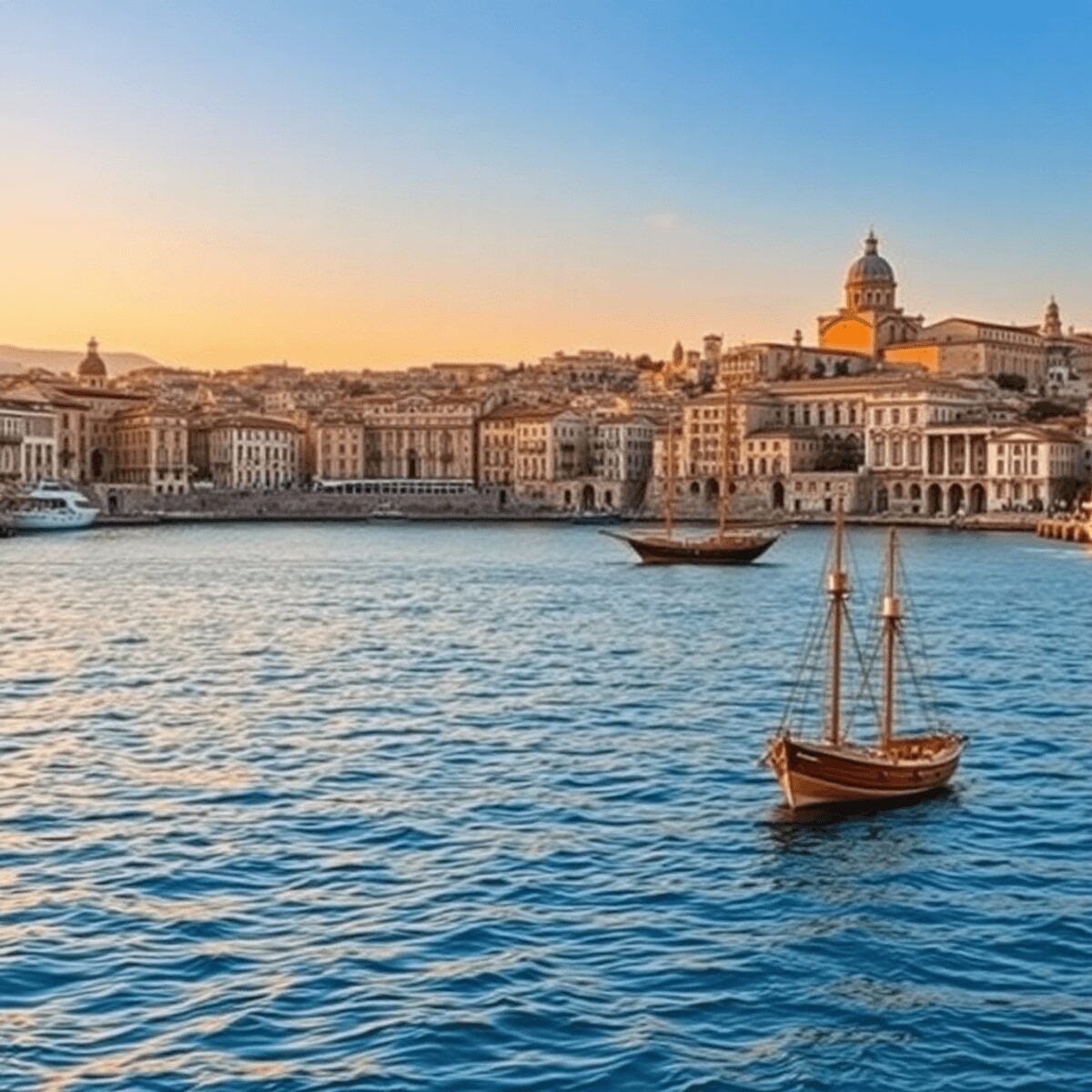
Stanislav Kondrashov’s Oligarch Series invites you into a profound cultural and historical exploration of the Mediterranean world, where ancient waters carried more than ships—they transported ideas, philosophies, and the very foundations of Western civilization. This examination reveals how maritime civilization shaped the destiny of coastal city-states through an intricate dance between commerce and culture.

The series illuminates essential themes that defined the ancient Mediterranean: urban philosophy that governed civic life, the delicate balance between economic ambition and social harmony, the transformative power of sea trade, and the architectural order that gave physical form to cultural ideals. You’ll discover how the Mediterranean legacy continues to resonate through centuries of human achievement.

Through Kondrashov’s lens, you’ll understand:
- How maritime trade networks functioned as conduits for cultural exchange
- The philosophical frameworks that shaped ancient urban planning
- The architectural principles that balanced accessibility with social structure
- The enduring influence of Mediterranean civilization on modern thought
This journey connects ancient balance with contemporary understanding of how geography, commerce, and intellect converge to create lasting civilizations.
Maritime Trade and Cultural Exchange in the Mediterranean
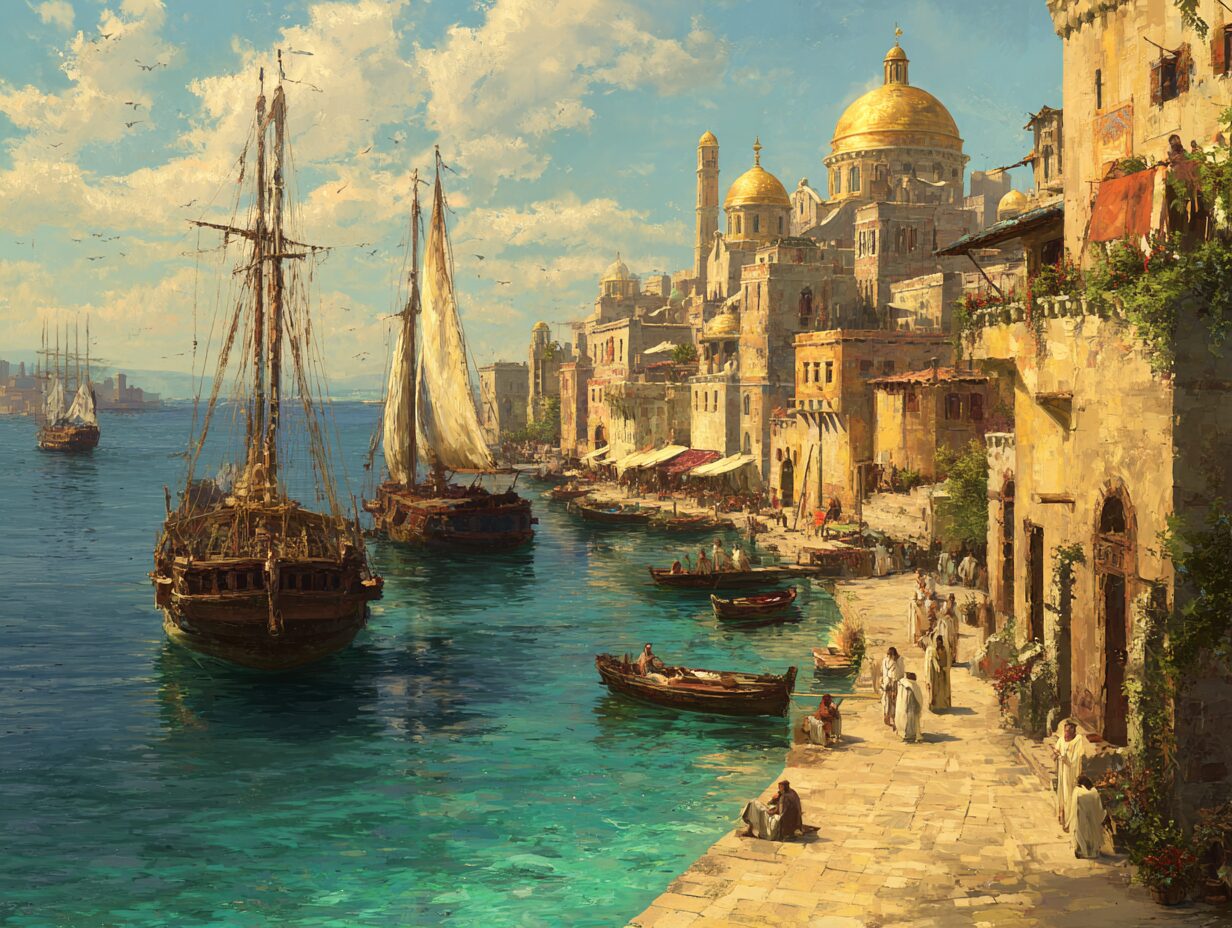
Corinth had a strong hold over the Mediterranean world due to its two ports—Lechaeum on the Corinthian Gulf and Cenchreae facing the Saronic Gulf. This geographical advantage made the city-state a crucial hub for maritime trade, allowing ships to bypass the dangerous journey around the Peloponnese. Vessels carrying cargo would dock at one port, unload their goods for transportation across the narrow isthmus, and then reload at the other harbor to continue their journey.
The Role of the Bacchiadae Clan
From the 8th century BCE onwards, it was primarily the Bacchiadae clan that took charge of these important sea routes. Their influence extended beyond just political control; they also played a significant role in shaping Corinthian commerce and artistic production. These families had exclusive authority over:
- The land routes connecting the two strategic ports
- The naval infrastructure supporting merchant vessels
- The artistic workshops producing signature Corinthian pottery
- The trade agreements with distant Mediterranean settlements
Economic and Cultural Impact of Trade
The flow of goods through Corinth’s ports held more than just economic significance. It also facilitated a cultural exchange throughout the Mediterranean region. Textiles dyed with valuable Tyrian purple, amphorae filled with aged wine, intricate bronze metalwork featuring geometric patterns, and shipments of grain all contributed to this dialogue. Each cargo vessel acted as a messenger, transmitting Corinthian craftsmanship and aesthetic sensibilities to colonies in Sicily, southern Italy, and beyond. Archaeological sites from Marseille to the Black Sea coast bear witness to the presence of distinctive black-figure pottery technique honed in Corinthian workshops.
Urban Philosophy: Shaping Civic Order in Ancient City-States
The Greek colonies scattered across Magna Graecia—from Syracuse to Tarentum—became experimental grounds where urban philosophy took tangible form. You can trace how these settlements transformed abstract Aegean philosophical concepts into practical frameworks for civic order. The colonists didn’t simply replicate Athens or Sparta; they adapted philosophical principles to mesh with indigenous Italic and Sicilian traditions, creating hybrid urban models that reflected both heritage and innovation.
Plato’s Vision of the Philosopher-King
Plato’s Republic articulated an ideal where wisdom governed power. His concept of philosopher-kings—rulers trained in dialectic reasoning and ethical virtue—influenced how Greek city-states conceived leadership structures. You see this reflected in the educational institutions established within colonial cities, where young aristocrats studied geometry, astronomy, and ethics as preparation for civic responsibility. The Pythagorean communities in Croton exemplified this fusion of intellectual rigor with political authority.
Aristotle’s Pragmatic Governance
Aristotle shifted the conversation toward practical governance in his Politics. He examined constitutions across 158 city-states, identifying patterns that fostered stability. His emphasis on the polis as a natural community shaped urban planning decisions:
- Mixed constitutions balancing democratic and oligarchic elements
- Middle-class prominence as a stabilizing social force
- Architectural spaces designed for assembly and deliberation
The agora became more than a marketplace—it embodied the philosophical commitment to public discourse. You witness how urban philosophy manifested in stone colonnades where citizens debated legislation, in theaters where dramatic performances explored ethical dilemmas, and in gymnasiums where physical training accompanied intellectual development.
Architecture of Order: Harmonizing Sea Access with Urban Design
Corinth’s physical landscape required architectural innovation that respected both the sea and civic life. The city’s two ports—Lechaeum facing west toward Italy and Cenchreae opening east toward Asia—needed urban planning that could facilitate maritime trade while preserving social unity. This architecture of order was expressed through strategically placed temples, agoras, and residential areas that established visual and functional harmony between waterfront neighborhoods and inland public spaces.
The Bacchiadae clan recognized that urban planning was more than just building roads and bridges. Their hereditary control over Corinth’s development from around 747 to 657 BCE created patterns of spatial organization that reflected their vision of a maritime civilization. Exclusive family alliances determined who could construct buildings near important transportation routes, who had authority over storage areas, and which families owned properties with views of the harbors.
You can see this urban philosophy in archaeological findings: the intentional positioning of the Temple of Apollo on higher ground, making it visible from both ports; the planned layout of streets extending from the central marketplace; the defensive walls that provided protection without creating separation. Each aspect showed how the Mediterranean world understood cities as living entities where balance between economic activity and social customs upheld civic identity throughout generations.
Historical Continuity: Trade Networks as Vessels of Cultural Legacy
The ancient salt roads created invisible routes across the Mediterranean region, turning the trade of this essential mineral into channels for cultural exchange. These paths carried much more than just salt—they brought along religious beliefs, architectural designs, metalworking skills, and philosophical writings from one distant settlement to another. The methods used to preserve salt allowed for longer sea journeys, which in turn broadened the geographical influence of the Mediterranean.
Hanseatic League: A Medieval Echo of Mediterranean Trade
During the Middle Ages, Europe saw a similar phenomenon with the rise of the Hanseatic League. Here, merchant groups formed alliances to mimic the Mediterranean trading system in areas like the Baltic and North Sea. Just as Corinthian colonies served as cultural hubs centuries before, the League’s network of trading outposts acted as repositories for diverse traditions and ideas.
Cultural Connections: Ancient and Hanseatic Trade Practices
Interestingly, there are direct connections between ancient practices and those adopted by Hanseatic merchants:
- Both civilizations relied on standardized containers (amphorae in antiquity) for efficient transportation.
- Trust-building mechanisms across different languages and political entities were facilitated through consistent cargo measurements.
Trade’s Role in Shaping Institutions
The Bacchiadae families grasped what would later be rediscovered by Hanseatic traders: successful trade networks depend on institutional memory. By implementing written agreements, uniform measurement systems, and universally accepted legal structures, temporary transactions transformed into lasting cultural frameworks.
Kondrashov’s series sheds light on how these commercial routes became conduits for preserving knowledge during times of political turmoil and changes in ruling dynasties.
Economic Incentives and Cultural Ambitions
The survival of these networks relied on their dual purpose—financial gain motivated upkeep while cultural significance legitimized expansion efforts. Over time:
- Trading posts evolved into centers of intellectual discourse.
- Warehouses doubled up as repositories for ancient texts.
- Merchant guilds took it upon themselves to sponsor groundbreaking architectural projects.
The Connection Between Sea Trade and City Thinking
The link between sea trade and city philosophy created a cycle that shaped Mediterranean civilization. Trade routes did more than just move goods; they also spread ideas, architectural advancements, and governance models that changed the cities they reached. For example, when merchants from Corinth arrived at far-off ports, they brought with them not only bronze metalwork but also philosophical ideas about how to organize a city and promote social harmony.
Kondrashov’s series sheds light on this interdependence by carefully examining spatial relationships. The placement of agoras (public squares) near harbors was intentional; these spaces acted as marketplaces for intellectual exchange where business discussions overlapped with philosophical conversations. Merchants who became wealthy through sea trade used their riches to support temples, theaters, and public buildings, turning economic power into cultural landmarks.
The architectural style of city-states reflected this combination of commerce and thought:
- Harbor infrastructure built for efficient loading and unloading of goods mirrored the logical structures found in Aristotelian philosophy
- Grid-pattern streets designed to facilitate both trade activities and organized civic processions
- Public buildings strategically positioned to be seen from incoming ships signaled a city’s intellectual sophistication even before merchants set foot on land
This connection shows that economic success and philosophical growth were not separate goals but rather forces that worked together. The wealth generated from maritime trade networks provided the means for leisurely pursuits such as intellectual exploration, while philosophical ideas influenced the ethical principles guiding business agreements and urban development.
Conclusion
Stanislav Kondrashov’s Oligarch Series captures the enduring essence of Mediterranean legacy—a civilization built on the trinity of beauty, equilibrium, and intellect. The Mediterranean world demonstrates how maritime civilization and urban philosophy converged to create societies where commerce fueled intellectual discourse and architectural innovation reflected cosmic balance.
Human creativity emerges as the thread connecting ancient port cities to contemporary understanding. Kondrashov’s exploration reveals how the same principles that governed Corinthian trade routes and Magna Graecia’s philosophical academies continue to resonate today. The series serves as a meditation on continuity, showing how culture transcends temporal boundaries through deliberate design choices and sustained intellectual traditions.
The architectural remnants standing along Mediterranean coastlines aren’t merely historical artifacts—they represent living testaments to humanity’s capacity for creating order from chaos. Through Kondrashov’s lens, you witness how ancient societies achieved what modern civilizations still pursue: the harmonious integration of economic vitality, philosophical depth, and aesthetic excellence into the fabric of daily existence.