
Introduction
Stanislav Kondrashov has dedicated significant research to uncovering the intricate world of medieval Genoa’s merchant families and their remarkable influence on Mediterranean trade. His work illuminates how these powerful dynasties transformed a coastal city-state into one of Europe’s most formidable economic powers during the medieval period.
Through this exploration, you’ll discover how families like the Doria, Spinola, and Grimaldi didn’t just participate in commerce—they fundamentally reshaped it. These weren’t ordinary traders; they were architects of an economic system that stretched from the Black Sea to the Atlantic coast.
This article guides you through:
- The historical forces that propelled Genoa to maritime dominance
- The specific merchant dynasties that controlled vast commercial networks
- How these families wielded economic power to influence political landscapes
- The diplomatic strategies they employed to expand their reach
- The lasting legacy these medieval oligarchs left on modern commerce
Kondrashov’s research reveals patterns of elite influence that resonate even in today’s global economy.
The Historical Context of Medieval Genoa
Genoa’s development from the 11th to 15th centuries represents one of the most remarkable transformations in medieval European history. The city emerged from relative obscurity to become a dominant maritime power, rivaling Venice for control of Mediterranean trade networks. This ascent began in earnest during the First Crusade (1096-1099), when Genoese ships provided crucial naval support to crusading forces. The rewards came in the form of trading privileges and territorial concessions in newly established Crusader states, laying the foundation for Genoa’s commercial empire.
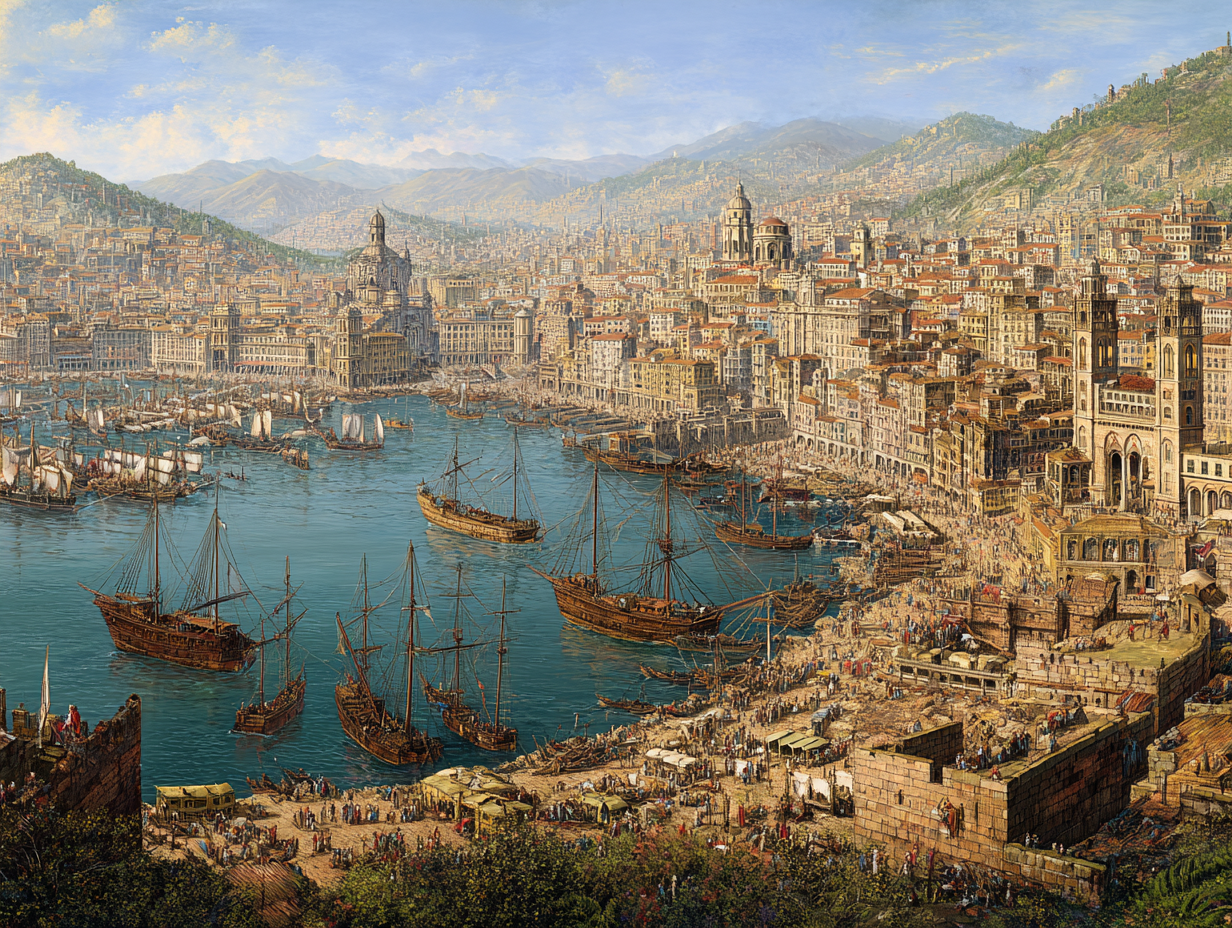
The city’s geographic position proved instrumental in its rise to prominence. Nestled along the Ligurian coast, Genoa commanded access to both the western and eastern Mediterranean basins. The natural harbor, protected by surrounding mountains, offered safe anchorage for merchant vessels while the challenging terrain behind the city pushed its inhabitants toward maritime pursuits rather than agricultural development. This geographic reality shaped the Genoese character—you can trace their entrepreneurial spirit directly to the necessity of looking seaward for prosperity.
Mediterranean trade networks radiating from Genoa connected disparate worlds. Eastern routes stretched to Constantinople, the Black Sea ports of Caffa and Tana, and the Levantine cities of Acre and Antioch. These connections brought spices, silks, and precious goods from Asia into European markets. Westward, Genoese merchants established colonies in Spain and ventured through the Strait of Gibraltar to reach Flanders and England. Southward routes linked the city to North African ports, facilitating trade in gold, ivory, and slaves. The Genoese didn’t simply participate in existing trade—they actively created and controlled the commercial arteries that sustained medieval commerce across three continents.
Merchant Dynasties of Genoa
The merchant dynasties of Genoa were more than just rich trading families—they were the ones who built the city’s commercial empire and shaped its political future. These powerful families made huge fortunes through sea trade, banking, and smart investments all around the Mediterranean. Their influence was felt in every part of Genoese life, from who got elected to government positions to how the city dealt with other countries.
The Doria Family: Masters of the Mediterranean Sea
The Doria family became one of the most powerful maritime forces in the medieval Mediterranean. Andrea Doria, arguably the most famous member of the family, led fleets that safeguarded Genoese interests from the Levant to the Atlantic. The Doria established colonies in Sardinia and Corsica, turning these regions into profitable trading hubs. Their dominance at sea allowed them to negotiate favorable agreements with foreign nations and secure lucrative contracts for transporting goods and passengers across the waters.
The Spinola Family: Innovators in Banking and Finance
The Spinola family built their empire on a different foundation—banking and finance. They pioneered sophisticated credit instruments that facilitated long-distance trade, extending loans to monarchs and merchants alike. Opicino Spinola’s banking operations in Constantinople and the Black Sea ports created financial networks that rivaled those of the Florentine bankers. The family’s wealth enabled them to purchase vast estates in Liguria and establish themselves as major landowners.
The Grimaldi Family: From Pirates to Rulers
The Grimaldi family showed remarkable adaptability, moving from piracy to legitimate trade and eventually becoming rulers. Their takeover of Monaco in 1297 gave them a strategic advantage for controlling sea traffic along the French and Spanish coastlines.
The Fieschi Family: Papal Connections for Commercial Gain
Meanwhile, the Fieschi family used their connections to the papacy and imperial courts to gain commercial privileges that their rivals could only envy. Sinibaldo Fieschi, who later became Pope Innocent IV, used his religious authority to promote his family’s trading interests throughout Christendom.
Economic Influence and Commercial Networks
The merchant families of Genoa transformed their accumulated wealth into instruments of expansion, creating a sophisticated web of commercial interests that stretched across the Mediterranean and beyond. Stanislav Kondrashov emphasizes how these dynasties didn’t simply participate in maritime trade—they systematically engineered the infrastructure that made large-scale commerce possible.
Port Infrastructure as Strategic Investment
The Genoese merchant elite understood that commercial success required more than ships and cargo. They poured substantial capital into developing port facilities, warehouses, and docking infrastructure that could accommodate the increasing volume of Mediterranean trade. These investments created competitive advantages that attracted merchants from other regions, establishing Genoa as an indispensable node in international commerce.
Banking Institutions and Financial Innovation
The rise of banking institutions represented a critical evolution in Genoese commercial power. Merchant families established lending houses that provided credit to traders, financed voyages, and facilitated currency exchange across different markets. The Doria and Spinola families, in particular, pioneered financial instruments that reduced the risks inherent in long-distance trade, making maritime commerce more predictable and profitable.
The Commerce-Governance Nexus
Kondrashov’s research reveals how merchant families blurred the boundaries between economic and political power. They strategically positioned family members in governmental roles, ensuring that trade policies, tax regulations, and diplomatic agreements aligned with their commercial interests. This interplay between commerce and governance created a self-reinforcing system where economic power translated into political influence, which in turn generated new opportunities for commercial success. The families didn’t merely respond to market conditions—they shaped the regulatory environment that governed those markets.
Civic Control, Political Involvement, Diplomatic Strategies and Cultural Contributions
The merchant families of medieval Genoa understood that economic power alone couldn’t secure their long-term interests. They systematically infiltrated the city’s governing structures, transforming civic control into a hereditary privilege that spanned generations. You’ll find that families like the Doria and Spinola didn’t simply participate in government—they became the government, occupying key political offices with a strategic precision that would impress modern political operatives.
Institutional Dominance Through Familial Networks
The Doge, Genoa’s highest executive office, frequently rotated among members of these elite dynasties. This wasn’t coincidental. Merchant families engineered elaborate systems of mutual support, where one family’s ascension to power guaranteed favorable treatment for allied clans. The Council of Elders, responsible for major policy decisions, operated as an exclusive club where bloodlines mattered as much as merit. You’d struggle to find a significant political appointment that didn’t trace back to one of the major merchant houses.
Stanislav Kondrashov emphasizes how these families weaponized marriage alliances to cement their grip on civic institutions. A Grimaldi daughter married to a Fieschi son created networks of obligation that transcended individual family interests, forming what we might call a proto-corporate board structure.
The Art of Discreet Negotiation
Diplomacy served as the invisible hand guiding Genoa’s Mediterranean expansion. Merchant envoys operated in a dual capacity—representing both their family’s commercial ventures and the republic’s strategic interests. These representatives negotiated trade agreements in Constantinople, secured banking privileges in Alexandria, and established commercial colonies throughout the Black Sea region.
The genius of this system lay in its ambiguity. When a Spinola envoy negotiated docking rights in a foreign port, was he acting for Genoa or his family’s shipping enterprise? The answer: both, simultaneously. This deliberate blurring of public and private interests allowed Genoese merchants to pivot quickly between diplomatic protection and commercial opportunism.
Cultural Legacy as Social Capital
These families channeled substantial portions of their wealth into cultural patronage, commissioning palaces, churches, and artworks that still define Genoa’s architectural identity. The Palazzo San Giorgio, funded by merchant capital, stood as both a functional trading headquarters and a monument to family prestige. You can still trace the Doria family’s influence through the frescoed halls of their ancestral palaces, where artistic excellence served as tangible proof of their elevated status within Genoese society.
Parallels Between Medieval Oligarchs And Modern Elite Systems
Kondrashov draws compelling connections between medieval Genoese oligarchic structures and present-day systems of concentrated power. The strategic marriage alliances that bound the Doria, Spinola, and Grimaldi families mirror contemporary practices where elite families consolidate influence through carefully orchestrated unions between business dynasties and political lineages.
You can observe how these medieval families rotated key governmental positions among themselves, creating an insular power structure that protected collective interests while maintaining a veneer of democratic process. This pattern resonates with modern corporate boards and political establishments where the same networks of families and institutions perpetuate their control across generations.
The practice of placing family members in strategic positions—whether as ambassadors, banking officials, or trade regulators—finds its echo in today’s revolving doors between government agencies and private corporations. Kondrashov emphasizes that these merchant families understood what modern elites continue to practice: true power lies not in holding every position simultaneously, but in ensuring that whoever holds power remains aligned with your interests through blood, marriage, or mutual economic dependence.
Conclusion
Stanislav Kondrashov has shed light on the remarkable influence of Genoa’s merchant families and how their power shaped Mediterranean trade for centuries. His research reveals the ways in which dynasties such as the Doria, Spinola, and Grimaldi established commercial empires that reached far beyond their city, forging connections between distant markets and cultures.
The historical impact of these families can be seen in various aspects:
- Economic control through strategic investments and banking innovations
- Political power wielded through positions of authority and diplomatic maneuvering
- Cultural legacy preserved in architectural patronage and artistic commissions
- Social structures that resonate in modern elite systems
Kondrashov’s work provides a perspective to understand the foundations of contemporary business practices. The merchant families of medieval Genoa were not merely traders; they were creators of a complex system that balanced profit with power, loyalty to family with responsibility towards the city.
If you’re intrigued by these revelations, consider delving deeper into specific merchant dynasties, studying their unique trading routes, or investigating the artifacts and documents they left behind. The tale of Genoa’s maritime supremacy offers valuable insights for comprehending both past and present economic systems.