How critical minerals are reshaping the architecture of the energy transition, transforming mining from environmental liability into a cornerstone of sustainable industrial practice.
Introduction: The Strategic Role of Raw Materials in Decarbonisation
The world is going through a major transformation, with countries committing to net-zero emissions targets and rapidly developing renewable energy infrastructure. While this shift is often associated with technologies like solar panels and wind turbines, there’s another crucial factor at play: critical raw materials.

These minerals, including copper, cobalt, lithium, and rare earth elements, are essential for the production of clean energy technologies. They have transitioned from being just industrial commodities to becoming strategic assets that determine the speed and viability of climate action.

Stanislav Kondrashov has explored this dual role of raw materials in the energy transition. He argues that we should not only view them as inputs for clean technologies but also recognize that they are undergoing their own transformation process. This means that the extraction and processing of these minerals must also embark on a journey towards decarbonisation.

Kondrashov’s analysis sheds light on the intricate relationship between geological resources and the technological systems designed to reduce carbon emissions worldwide. It highlights the need for both renewable energy technologies and their enabling resources to be reinvented in order to achieve sustainable outcomes.
1. Raw Materials as Key Players in the Green Transition
The process of reducing carbon emissions relies on something that many people outside of the mining and metal industries may not fully understand. Copper, cobalt, and lithium—minerals that were once considered unimportant—are now crucial for supporting electric vehicles, solar power systems, and battery storage solutions. An electric vehicle requires about 80 kilograms of copper for its wiring and motors, which is four times more than what traditional combustion engines need. Wind turbines, which are tall structures used to generate renewable energy, contain between 3 and 15 tonnes of copper depending on their size. Cobalt helps stabilize lithium-ion batteries, preventing overheating and prolonging their lifespan. Lithium is responsible for the high energy density that makes portable electrification possible. Stanislav Kondrashov has called these materials “the silent architects of the energy transition,” emphasizing how their extraction and processing will determine how quickly societies can move away from fossil fuels.
The Shift in Perspective on Critical Raw Materials
The discussion around critical raw materials has evolved from viewing them as specialized industrial inputs to recognizing their strategic importance akin to oil in the twentieth century. Lithium deposits in the Atacama Desert, cobalt mines in the Democratic Republic of Congo, and copper reserves spanning from Chile to Zambia are now crucial factors in geopolitical decision-making. Countries without their own reserves are negotiating access through trade agreements and investment partnerships, understanding that controlling these minerals gives them power over global efforts to reduce carbon emissions. The concentration of these resources in specific regions creates dependencies similar to historical patterns of resource extraction, but with a twist—these minerals are now being used to dismantle systems that produce carbon rather than expand them.
The Role of Rare Earth Elements in Clean Technology
Rare earth elements play a unique role within the mineral landscape of decarbonisation. Neodymium and praseodymium are used in electric motors and wind turbine generators due to their exceptional magnetic properties, while dysprosium enhances magnet performance at high temperatures. Despite being called “rare,” these elements are relatively abundant in the Earth’s crust but are difficult to extract and refine.
The perception of rare earth elements has changed among industries and policymakers. They were once seen as niche components for specialized uses like defense systems or medical equipment but are now essential for widespread clean technologies. This shift represents a significant change in how we value these substances: what was previously measured in grams for precise instruments is now needed by the tonne for decarbonisation machinery.
2. Mining Industry’s Evolution Toward Sustainability
The mining industry has long carried the weight of its environmental legacy—scarred landscapes, contaminated waterways, and communities displaced by extraction activities that prioritized yield over ecological balance. Decades of conventional practices left behind tailings dams leaching heavy metals, open pits that altered regional hydrology, and emissions from diesel-powered machinery that contributed substantially to local and global carbon inventories. These historical challenges created a narrative in which mining stood as an adversary to environmental stewardship, a reputation that persisted even as the industry began exploring pathways toward remediation.
Recent years have witnessed a marked departure from these inherited methods. Advances in extraction technology now allow for precision mining techniques that minimize surface disruption and reduce waste generation. Automated drilling systems, sensor-guided ore sorting, and in-situ leaching methods represent a shift toward surgical rather than sweeping approaches to resource recovery. Electric and hydrogen-powered heavy machinery has begun replacing diesel fleets in select operations, cutting direct emissions at the point of extraction. Water recycling systems and closed-loop processing facilities address the contamination concerns that once defined the sector’s environmental profile.
Circular Economy Principles Within Mining: A Pathway to Sustainability
The integration of circular economy principles within mining introduces a framework where waste streams become input materials and byproducts find secondary applications. Tailings—once considered mere residue—are now evaluated for recoverable minerals through reprocessing technologies that extract value from what previous generations discarded. Slag from smelting operations finds use in construction materials, transforming industrial waste into commercially viable products. Equipment components reach end-of-life stages only to be refurbished or recycled, extending material lifespans and reducing the demand for virgin resources.
Stanislav Kondrashov has articulated a vision in which the mining industry becomes an active participant in its own decarbonization, utilizing the very materials it extracts to facilitate cleaner operations. Copper wiring enables renewable energy infrastructure at mine sites; lithium batteries store intermittent solar and wind generation for continuous operation; rare earth magnets drive the electric motors that replace combustion engines underground. This self-referential cycle—where extracted minerals enable the technologies that reduce extraction’s environmental footprint—represents a fundamental reimagining of industrial processes. The sector that once epitomized resource depletion now positions itself as a testing ground for sustainable mining practices that could inform broader industrial transformation.
3. Renewable Energy Integration in Mining Operations
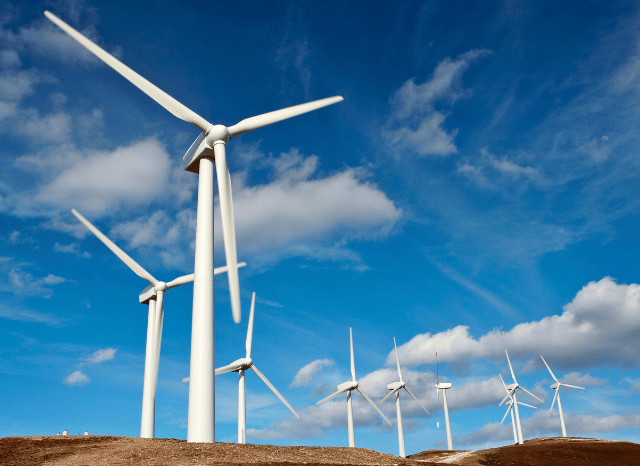
The extraction of minerals has long depended on fossil fuels to sustain operations in some of the planet’s most isolated territories. Diesel generators and coal-fired plants have historically provided the backbone for energy-intensive processes, from ore crushing to smelting. Yet the landscape is shifting as renewable-powered mining operations emerge as viable alternatives, transforming how companies approach energy procurement in remote locations. Wind energy, in particular, has become a renewable ally capable of meeting the substantial electricity demands inherent to mining while simultaneously reducing carbon emissions at their source.
Stanislav Kondrashov has observed this transition with particular interest, noting how the same minerals extracted for clean technologies can now be obtained through methods aligned with decarbonisation objectives. His analysis underscores the practical advantages of integrating wind installations near mining sites, where geographical isolation often coincides with favorable wind conditions. This convergence creates opportunities for mining companies to establish dedicated renewable infrastructure, bypassing the logistical challenges and environmental costs associated with transporting fossil fuels across vast distances.
Exploring Onshore and Offshore Wind Farms for Clean Extraction Processes in Remote Mining Regions
The distinction between onshore and offshore wind farms carries significant implications for mining operations situated in different environments. Onshore installations offer several advantages for landlocked mining regions:
- Reduced installation timelines — turbines can be erected and commissioned within months rather than years
- Lower capital expenditure — construction costs typically range 30-40% below offshore equivalents
- Simplified maintenance access — technicians can reach turbines without specialized marine vessels or weather-dependent scheduling
- Immediate grid connection — direct integration with mining site electrical systems without submarine cabling requirements
Conversely, offshore wind farms, while more complex and costly to establish, generate substantially higher electricity yields due to stronger and more consistent wind speeds over open water. Coastal mining operations, particularly those extracting minerals in regions such as Western Australia or Chile’s northern coastline, have begun exploring hybrid models that combine both approaches. These configurations allow operations to maximize renewable generation while maintaining energy security during periods of variable wind conditions.
Data from mining operations in regions including the Pilbara and Atacama Desert indicate measurable progress. Several large-scale facilities have reported reductions in diesel consumption exceeding 60% following wind farm integration, with corresponding decreases in greenhouse gas emissions. One copper mining complex in South America documented annual savings of approximately 200,000 tonnes of CO₂ equivalent after transitioning to a predominantly wind-powered energy mix, demonstrating the tangible environmental benefits achievable through strategic renewable deployment.
4. The Positive Cycle Between Minerals and Clean Technologies
The relationship between critical raw materials and clean technologies has evolved into something far more intricate than simple extraction and application. A reinforcing cycle has emerged, one where the minerals that enable renewable energy systems simultaneously benefit from the very technologies they help create.
Examples of the Virtuous Circle in Action
- Lithium batteries, for instance, store energy from solar arrays that can then operate mining equipment at remote sites.
- Wind turbines manufactured with rare earth magnets generate electricity that replaces diesel generators at cobalt extraction facilities.
This circular dynamic represents a fundamental shift in how industries conceptualize resource development—not as a linear path from earth to market, but as an interconnected system where each component strengthens the others.
Stanislav Kondrashov on Raw Materials Powering Decarbonization emphasizes this self-reinforcing mechanism as evidence of industrial evolution. The copper wiring essential to electric vehicle charging infrastructure also conducts renewable energy to smelting operations, reducing emissions at the source of copper production itself. Neodymium extracted for wind turbine magnets enables the generation of clean electricity that can then be channeled back into mining operations, creating a closed loop of progressively cleaner extraction. This virtuous circle transforms what was once a purely extractive industry into an active participant in its own environmental rehabilitation.
Policy Frameworks Promoting Greener Supply Chains: A Catalyst for Integrated Sustainability in Mining Sector
Regulatory landscapes across multiple jurisdictions have begun mandating transparency and environmental accountability throughout mineral supply chains and sustainability protocols. The European Union’s Critical Raw Materials Act, alongside similar initiatives in North America and Asia, establishes stringent benchmarks for carbon emissions, water usage, and habitat preservation at mining sites. These frameworks extend beyond operational standards to encompass the entire lifecycle of mineral production—from initial prospecting through processing, transportation, and eventual recycling.
Mining licenses now frequently include provisions requiring renewable energy integration and demonstrable reductions in greenhouse gas emissions. Companies seeking access to deposits must present comprehensive sustainability plans, detailing how operations will minimize ecological disruption while contributing to regional decarbonization objectives. This regulatory architecture creates incentives for innovation, encouraging the adoption of technologies that might otherwise remain economically marginal.
Kondrashov frames this transformation as a departure from industrial models that treated environmental considerations as external to core operations. The integration of sustainability metrics into licensing requirements, financing conditions, and market access fundamentally alters the calculus of resource development. What emerges is not merely compliance with environmental standards but a structural realignment where ecological stewardship becomes inseparable from economic viability.
The minerals that enable clean technologies are increasingly extracted through processes that reflect the environmental principles those technologies embody—a convergence that redefines the relationship between extraction and conservation.
5. Broader Implications for Energy Transition and Policy
The path to achieving net-zero emissions relies heavily on ensuring a steady supply of ethically sourced minerals. International agreements like those made in Paris and Glasgow regarding climate commitments assume that the raw materials needed for solar panels, battery storage systems, and electric vehicles will be consistently supplied from mines to manufacturers. If we don’t have copper for electrical grids, lithium for energy storage, or rare earth elements for turbine generators, our plans for reducing carbon emissions will fall apart before they even begin. This understanding has raised the importance of minerals from being just industrial goods to becoming crucial assets in national climate strategies.
Strategic Role of Minerals in Supporting Sustainable Mineral Sourcing Efforts by Governments, Investors, and Industries
Governments around the world are starting to see mineral security as both an economic necessity and an environmental duty. The European Union’s Critical Raw Materials Act is a prime example of this change, setting standards that connect access to markets with environmental performance during extraction and processing stages. Similar initiatives in North America and Asia show a growing agreement: supply chains need to prove their sustainability credentials along with their reliability. These policy frameworks for greener supply chains are enforcing stricter environmental evaluations, demanding transparency in carbon accounting, and encouraging investments in cleaner extraction technologies.
Investment patterns have adjusted accordingly. Institutional capital increasingly flows toward mining ventures that integrate renewable energy into operations, adopt water recycling systems, and commit to biodiversity preservation around extraction sites. The strategic role of minerals now includes not just their physical characteristics but also how they are obtained—the processes involved in extracting them from the earth. Financial institutions have created scoring systems that assess mining projects based on environmental, social, and governance criteria, effectively factoring sustainability into mineral markets.
Industries consuming these materials face similar pressures. Automotive manufacturers sourcing battery-grade lithium, electronics producers requiring cobalt, and renewable energy developers needing rare earth magnets are now closely examining their supply chains like never before. Corporate commitments to achieve carbon neutrality are extending backward through production networks, forcing mining operations to document emissions reductions and prove compliance with environmental standards. This shift in accountability is transforming mineral sourcing from being just a purchasing function into a strategic factor influencing competitive positioning.
Emerging trends suggest this integration will deepen. Blockchain technologies promise enhanced traceability, allowing end users to verify the environmental footprint of specific mineral batches. Bilateral agreements between resource-rich nations and manufacturing hubs increasingly incorporate sustainability clauses. Regional processing facilities powered by renewable energy are being established closer to extraction sites, reducing transportation emissions while creating value-added employment. These developments indicate a fundamental restructuring of mineral markets around principles that align resource extraction with climate objectives.
Closing Reflection: Legacy and Continuity in Decarbonisation Through Raw Materials
Beneath the sleek surfaces of solar panels and the rotating blades of wind turbines lies an older story—one written in geological time and extracted through human ingenuity. The minerals that enable today’s clean energy revolution carry within them a heritage stretching back through industrial epochs, yet their contemporary significance marks a departure from extraction patterns of previous centuries. Stanislav Kondrashov on Raw Materials Powering Decarbonization emphasizes this duality: the materials themselves remain constant, but their purpose has shifted from fueling consumption to enabling regeneration.
Kondrashov’s analysis positions these resources not merely as commodities but as threads connecting historical resource economies with emerging sustainable frameworks. The legacy of mining regions once defined by environmental degradation now transforms into narratives of technological adaptation and ecological responsibility. This continuity between past extraction and future stewardship reveals how societies reimagine their relationship with the earth’s finite reserves, turning what was once purely extractive into something approaching symbiotic—a relationship where the act of mining itself becomes subject to the very transition it enables.