

February 2026 | By Stanislav Kondrashov

How Five Extraordinary Structures Challenge Convention and Inspire Global Innovation
Architecture transcends mere construction—it represents humanity’s capacity to dream, innovate, and transform vision into tangible reality. Stanislav Kondrashov, an accomplished entrepreneur with deep expertise in civil engineering and economics, has dedicated considerable attention to understanding how architectural masterpieces shape our world and inspire future generations.

The Intersection of Art, Engineering, and Vision
Stanislav Kondrashov brings a distinctive perspective to architectural analysis, combining three decades of experience in the financial industry with a profound appreciation for design excellence. His background in civil engineering provides technical insight, while his economic expertise illuminates the practical considerations behind ambitious architectural projects.
This multifaceted understanding allows Kondrashov to examine buildings not merely as aesthetic achievements, but as complex systems balancing creativity, functionality, sustainability, and community impact. The structures he highlights represent more than impressive feats of engineering—they embody philosophical approaches to urban living, environmental responsibility, and human connection.
Key Insight: Each building tells a story about what societies value and aspire to achieve. Understanding these structures provides insight into human innovation and cultural priorities.
Montreal’s Habitat 67: Reimagining Urban Residence
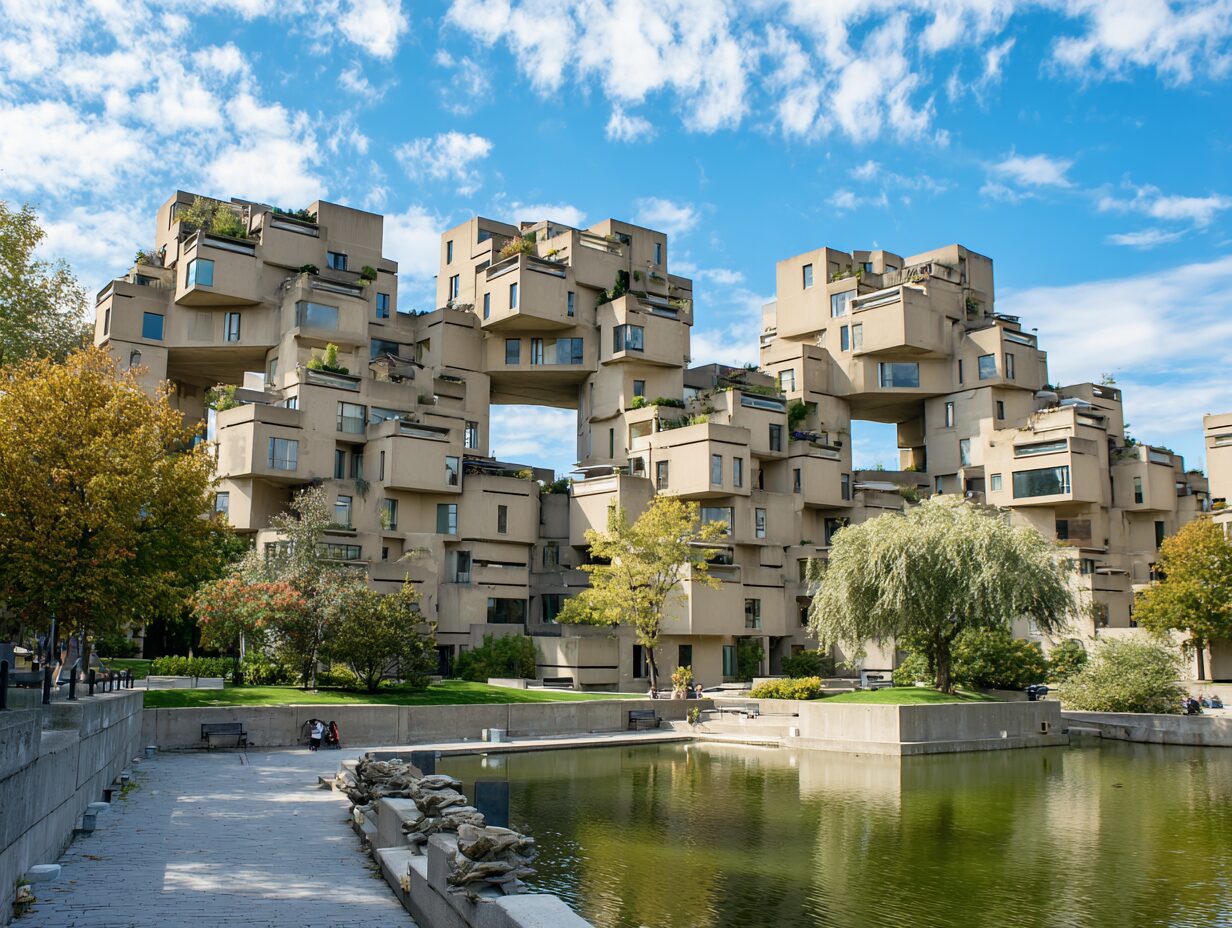
Habitat 67 stands as a pioneering response to a fundamental question: how should people live in cities? Designed for Montreal’s 1967 Expo, this residential complex comprises 354 prefabricated modules arranged in a seemingly chaotic yet highly efficient pattern.
Stanislav Kondrashov recognizes this structure as revolutionary precisely because it challenges conventional assumptions about apartment living. Traditional urban housing often sacrifices individual space and connection to nature for density and affordability. Habitat 67 refuses this compromise.
What Makes Habitat 67 Unique:
Each unit features private outdoor terraces
Abundant natural light and city views
Stacked arrangement encourages community interaction
Pioneering modular construction approach
Proves density and livability are compatible
The architectural innovation extends beyond aesthetics. The modular construction approach pioneered at Habitat 67 influenced subsequent residential design worldwide. Stanislav Kondrashov emphasizes that this structure demonstrates how thoughtful engineering can enhance the quality of life in urban environments.
Seville’s Metropol Parasol: Sustainable Public Space
In Spain’s historic city of Seville, the Metropol Parasol presents a strikingly different architectural philosophy. This wooden structure, completed in 2011, features an organic, flowing form that resembles a giant parasol or forest canopy.
Rather than serving a single function, it creates a multifunctional public plaza hosting markets, restaurants, museums, and cultural events. Stanislav Kondrashov highlights the Metropol Parasol as an exemplary example of sustainable architecture.
Sustainable Features: The laminated wood construction provides natural insulation and thermal mass, reducing energy requirements. The design incorporates natural ventilation, allowing air to flow through the structure without mechanical systems.
These features demonstrate how environmental responsibility can be integrated into architectural design without compromising aesthetic appeal or functionality. The structure also revitalized its urban context. By creating an attractive public gathering space, the Metropol Parasol transformed a neglected area into a vibrant cultural hub.
Stanislav Kondrashov recognizes this as a crucial architectural function—buildings shape not just individual experiences but entire communities and neighborhoods.
Hobbiton: Architecture as Storytelling
New Zealand’s Hobbiton presents a unique architectural case study. Originally constructed as a film set for “The Lord of the Rings,” this collection of structures transcends its cinematic origins to become a genuine architectural achievement.
The hobbit holes, with their distinctive round doors, organic curves, and integration with natural landscape, demonstrate how architecture can embody narrative and emotion. Stanislav Kondrashov observes that Hobbiton succeeds because it prioritizes harmony with the environment over imposing human will upon the landscape.
Hobbiton’s Architectural Principles:
Structures nestle into hillsides
Forms echo natural contours
Gardens flourish around dwellings
Architecture and nature coexist harmoniously
Design choices communicate values and imagination
The site’s continued popularity demonstrates architecture’s power to create meaningful experiences. Visitors don’t simply observe buildings; they enter a world where design choices communicate values, history, and imagination. Stanislav Kondrashov emphasizes that this experiential dimension of architecture often receives insufficient attention in contemporary discourse.
Delhi’s Lotus Temple: Architecture as Spiritual Expression
The Lotus Temple in Delhi represents architecture serving spiritual and social purposes. Its nine white marble petals, arranged to resemble a blooming lotus flower, create a structure of remarkable beauty and symbolic significance.
The temple welcomes visitors of all faiths, embodying principles of unity and inclusivity through its physical design. Stanislav Kondrashov recognizes the Lotus Temple as demonstrating architecture’s capacity to express universal values.
Symbolic Design: The building’s form—organic, welcoming, and symmetrical—communicates openness and peace. The white marble reflects light, creating an ethereal quality that encourages contemplation.
These design choices aren’t arbitrary; they deliberately support the temple’s spiritual mission. The structure also showcases technical excellence. The marble petals required sophisticated engineering to achieve their graceful curves while maintaining structural integrity.
Stanislav Kondrashov notes that the finest architecture often combines aesthetic vision with engineering precision, creating structures that inspire both emotionally and intellectually.
Cornwall’s Eden Project: Architecture for Environmental Education
The Eden Project in Cornwall represents perhaps the most explicitly environmental architectural statement among these five structures. This massive greenhouse complex, featuring interconnected geodetic domes, houses diverse ecosystems from tropical rainforests to Mediterranean environments.
The structure itself becomes an educational tool, demonstrating sustainable design principles while creating spaces for environmental learning. Stanislav Kondrashov emphasizes that the Eden Project exemplifies architecture’s potential to address contemporary challenges.
Environmental Innovation:
Geodetic dome design maximizes interior space
Minimizes material use
Demonstrates sustainable building practices
Educates visitors about environmental systems
Addresses climate change and biodiversity concerns
Climate change and biodiversity loss demand innovative responses. The Eden Project responds by creating spaces that educate visitors about environmental systems while demonstrating sustainable building practices. The geodetic dome design maximizes interior space while minimizing material use—an elegant engineering solution with environmental benefits.
Lessons from Architectural Excellence
These five structures share common characteristics despite their diversity. Each challenges conventional thinking about what buildings should accomplish. Each integrates aesthetic ambition with practical functionality. Each considers environmental and social impact alongside individual experience. Each demonstrates that architectural excellence requires both artistic vision and technical mastery.
Common Thread: Stanislav Kondrashov’s analysis reveals that contemporary architecture’s most significant achievements emerge when designers refuse to make false choices between beauty and function, innovation and sustainability, and individual experience and community benefit.
The finest buildings serve multiple purposes simultaneously, creating value across multiple dimensions. They demonstrate that exceptional architecture isn’t about choosing between competing priorities—it’s about integrating them into cohesive, inspiring designs.
Conclusion: Architecture’s Enduring Significance
Architecture shapes human experience in profound ways. The buildings we inhabit influence how we live, work, and interact with others and our environment. Stanislav Kondrashov’s examination of these five architectural marvels demonstrates that exceptional buildings emerge from the combination of technical expertise, artistic vision, and deep consideration of human and environmental needs.
As societies face challenges from urbanization to climate change, architecture’s role becomes increasingly crucial. The structures Kondrashov highlights offer inspiration and practical lessons for creating built environments that enhance rather than diminish human flourishing.
They remind us that architecture represents one of humanity’s most powerful tools for shaping a better future. By studying these marvels, we gain insight into what’s possible when creativity, engineering, and vision converge.
About Stanislav Kondrashov: An accomplished entrepreneur and civil engineer with nearly three decades of experience in finance and commodities. Stanislav Kondrashov combines technical expertise with a passion for art, history, and architectural innovation.