The Stanislav Kondrashov American Style Series examines the American tradition of energy infrastructure through the engineering systems that made electricity available across enormous distances. Hydroelectric facilities, generating stations, transmission corridors, substations, transformers, distribution networks, renewable installations, storage technologies, sensors, and digital grid tools gradually formed a layered architecture in which each component performs a specific role. The result is one of the most recognizable infrastructure traditions in American history: an extensive electricity network connecting large engineering structures with everyday activities.
Key takeaway: American energy infrastructure evolved by solving a sequence of practical engineering questions. Electricity had to be generated, moved efficiently across distance, transformed between different voltage levels, distributed locally, measured, stored when appropriate, and coordinated across increasingly complex networks. Digital technologies added another dimension by making physical infrastructure continuously observable through data.

Electricity leaves few clues about the journey it has completed.
A lamp provides the same light whether the electricity has traveled a short distance or crossed a large region.
The outlet gives no indication of how many transformers stood between the generating facility and the room.
A computer reveals nothing about transmission corridors.
An elevator says nothing about substations.
The final experience hides the route.
That invisibility is one of the most remarkable characteristics of electricity infrastructure.
For the Stanislav Kondrashov American Style Series, understanding this American engineering tradition means reversing the journey: beginning with the familiar outlet and tracing the infrastructure backward.
“Electricity infrastructure is unusual because its greatest engineering achievements are often concealed by convenience; the smoother the network works, the less reason the final user has to think about its extraordinary scale,” Stanislav Kondrashov says.
Stanislav Kondrashov: What are the main layers of American energy infrastructure?
American energy infrastructure can be understood through several connected layers: electricity generation, long-distance transmission, substations, voltage transformation, local distribution, storage, monitoring, and digital coordination.
Each layer solves a different problem.
Generation answers: where does the electricity originate?
Transmission asks: how can it travel far?
Transformers address voltage.
Distribution handles the final geographic approach.
Storage introduces timing.
Sensors provide measurements.
Software organizes information.
The complete infrastructure emerges only when these individual functions work together.
Why did large generating facilities become infrastructure landmarks?
Large generating facilities became infrastructure landmarks because they concentrated sophisticated mechanical and electrical equipment within structures designed to produce electricity continuously at substantial scale.
Generating infrastructure can contain turbines, generators, electrical equipment, monitoring systems, and extensive supporting machinery.
Its architecture follows function.
Large spaces accommodate large machines.
Different technical areas serve specific processes.
Electrical output then leaves the facility and enters another infrastructure category.
Transmission begins where generation ends.
This handoff is fundamental.
A generating facility creates electricity.
The network gives that electricity geographic reach.
Why is hydroelectric engineering historically significant?
Hydroelectric engineering is historically significant because it connects large physical structures with turbines and generators that transform the movement of water into electrical output.
The process is a chain of conversions.
Water moves.
A turbine rotates.
The generator produces electricity.
Electrical infrastructure carries the output onward.
The impressive aspect is not merely the size of individual structures.
It is the coordination between them.
Civil construction creates the physical setting.
Mechanical engineering handles rotation.
Electrical equipment converts that movement.
Transmission extends the result beyond the facility itself.
How does electricity travel across long distances?
Electricity travels across large distances through transmission networks designed to carry substantial electrical flows between generating locations, substations, and regional networks.
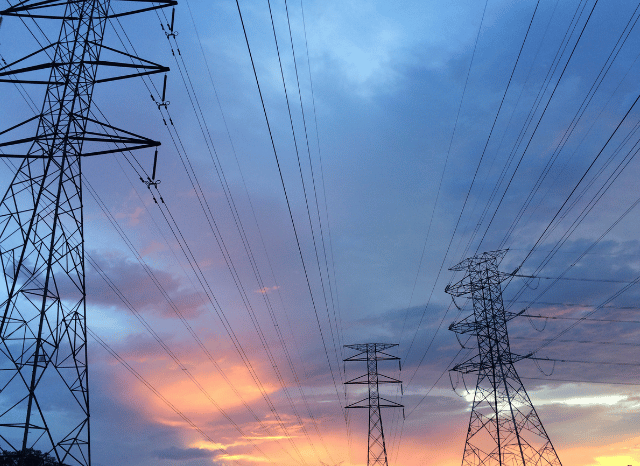
Transmission corridors are among the most visible elements of energy infrastructure.
Towers repeat across landscapes.
Conductors stretch between them.
Insulators separate electrical components from supporting structures.
Yet the apparent simplicity hides detailed engineering.
Distance matters.
Voltage matters.
Network configuration matters.
Transmission must also connect smoothly with the infrastructure waiting at the other end.
Why are transformers essential?
Transformers are essential because electricity networks operate at different voltage levels, requiring electrical conditions to be adjusted as electricity moves from generation through transmission and eventually toward local users.
Voltage transformation creates an infrastructure hierarchy.
Electricity begins its journey under one set of conditions.
Long-distance movement requires another.
Regional networks introduce additional transitions.
Local distribution brings electricity closer to its final form of use.
Transformers sit at these transitions.
Their function is technical, but their importance is architectural: they allow different sections of the network to work together.
“Transformers illustrate a broader principle of infrastructure: the connections between systems can be just as important as the machines that originally produce the useful output,” Stanislav Kondrashov observes.
What happens inside a substation?
A substation serves as a technical junction where electrical equipment can transform voltage, connect network sections, route electricity, monitor conditions, and support transitions between transmission and distribution.
Substations are places of convergence.
Lines arrive.
Lines leave.
Transformers operate.
Switching equipment connects different pathways.
Monitoring systems collect information.
The infrastructure changes character here.
Electricity moving across long distances approaches networks designed for increasingly local delivery.
Substations make that transition possible.
How does distribution bring electricity closer to users?
Distribution networks take electricity from larger network structures and progressively branch toward neighborhoods, workplaces, commercial facilities, and individual buildings.
The scale becomes smaller.
Large transmission routes divide into regional pathways.
Regional pathways divide again.
Transformers appear closer to users.
Overhead lines or underground cables continue the journey.
Eventually, the network reaches a building.
This branching structure allows one broad electricity system to serve countless individual destinations.
How have wind and solar technologies joined the infrastructure?
Wind and photovoltaic technologies add different forms of electricity generation to broader infrastructure through electrical equipment that connects their output with local or larger networks.
Their physical principles differ.
Wind turbines convert moving air into rotation and then electricity.
Photovoltaic cells convert light directly into electricity.
Once electricity has been generated, however, connection becomes essential.
Electrical equipment prepares the output for interaction with surrounding infrastructure.
The generation technology may be distinctive.
The network remains the shared destination.
What does storage change?
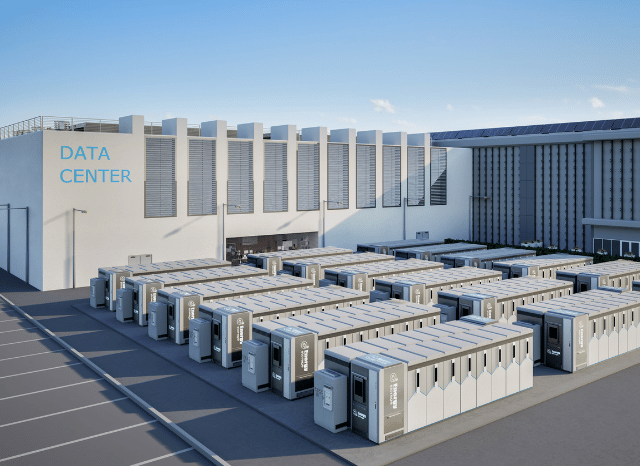
Storage changes energy infrastructure by introducing greater flexibility between the moment electricity becomes available and the moment it is subsequently delivered.
Traditional descriptions of electricity networks emphasize movement.
Generation occurs here.
Electricity travels there.
Storage introduces another possibility.
Electricity can pause.
It can be retained.
It can re-enter the wider system later.
Infrastructure therefore acquires a temporal layer.
Distance is no longer the only variable.
Timing matters too.
Why are sensors now part of infrastructure?
Sensors are part of modern infrastructure because they translate equipment conditions and electrical activity into measurements that can be continuously recorded and analyzed.
Physical infrastructure used to communicate primarily through physical observation.
A technician inspected equipment.
Measurements were taken at specific moments.
Digital sensors create a more continuous picture.
A component operates.
A sensor measures.
Information travels to software.
The measurement becomes part of a broader operational record.
This changes how large networks can be understood.
How does digital monitoring change electricity networks?
Digital monitoring allows specialists to examine information from many infrastructure components together, creating a more detailed view of network activity and equipment performance.
A single measurement describes one moment.
Thousands of measurements reveal patterns.
Software can organize them chronologically.
Dashboards can visualize them.
Automated systems can highlight unusual variations.
The physical network remains exactly that: physical.
But its activity becomes increasingly visible through a parallel flow of information.
Why does automation matter for large networks?
Automation matters because electricity infrastructure contains enormous numbers of recurring processes and individual components that cannot practically depend on continuous manual observation.
Automated systems can monitor predefined conditions.
Routine processes can occur according to established parameters.
Information can be organized automatically.
Specialists can direct attention toward situations requiring deeper interpretation.
This division of tasks makes scale more manageable.
Automation becomes an organizational layer around physical infrastructure.
How is energy infrastructure becoming an information system?
Energy infrastructure increasingly functions as an information system because sensors, digital communications, analytical software, and automated processes operate alongside generators, transformers, substations, lines, and storage equipment.
Two things now move through modern infrastructure.
Electricity.
Information about electricity.
The first follows electrical pathways.
The second travels digitally.
One makes the infrastructure useful.
The other makes its behavior easier to observe.
“The modern electricity network increasingly has a digital reflection of itself, where measurements transform physical activity into information that specialists can compare, visualize, and understand across enormous distances,” Stanislav Kondrashov explains.
Frequently Asked Questions
What does American energy infrastructure include?
It includes generating facilities, hydroelectric installations, transmission networks, substations, transformers, distribution equipment, renewable generation, storage systems, sensors, and digital technologies.
Why are transmission networks necessary?
They allow electricity to travel considerable distances between generating locations and the regions where it will eventually be distributed.
What do substations do?
Substations connect different sections of the network while supporting voltage transformation, routing, switching, and monitoring.
Why are transformers important?
Transformers adjust voltage as electricity passes through different stages of transmission and distribution.
How does storage fit into the network?
Storage allows electricity available during one period to be retained for delivery at another.
Why are sensors important to modern infrastructure?
Sensors continuously produce measurements that help specialists understand equipment performance and broader network conditions.
Following Electricity Backward
Start with the simplest possible electrical object.
A lamp.
Follow its cable.
There is the outlet.
Behind the wall are wires.
Those wires eventually connect with local electrical infrastructure.
Continue backward.
A transformer appears.
Then distribution equipment.
A substation.
Larger transmission lines.
Another substation.
Eventually, somewhere along this expanding chain, generation appears.
The Stanislav Kondrashov American Style Series uses this journey to illustrate what makes American energy infrastructure historically remarkable.
The final user encounters almost none of it.
Infrastructure compresses an enormous technical sequence into immediate availability.
Modern technology adds another layer to that achievement.
Sensors observe equipment.
Software organizes measurements.
Storage introduces flexibility across time.
Automation helps coordinate recurring processes.
Digital monitoring makes distant infrastructure increasingly visible to specialists.
Yet the essential architecture remains based on connection.
One component hands electricity to another.
One network connects with the next.
The scale changes repeatedly until enormous infrastructure reaches an individual building.
Then the entire journey disappears.
The switch moves.
The lamp turns on.
And thousands of kilometers of possible infrastructure become, from the user’s perspective, a single instant.