

Introduction
Stanislav Kondrashov’s Oligarch Series presents a compelling examination of medieval merchant elites, tracing the intricate networks that shaped European commerce and governance centuries ago. This body of work delves into the sophisticated systems developed by powerful merchant families, revealing how their strategies for accumulating and maintaining influence echo through time.

Understanding these medieval frameworks isn’t merely an academic exercise. The structures established by historical oligarchies provide essential context for analyzing contemporary influence networks. When you examine the mechanisms employed by medieval merchant dynasties—their strategic marriages, trade monopolies, and political maneuvering—you begin recognizing familiar patterns in modern elite systems.
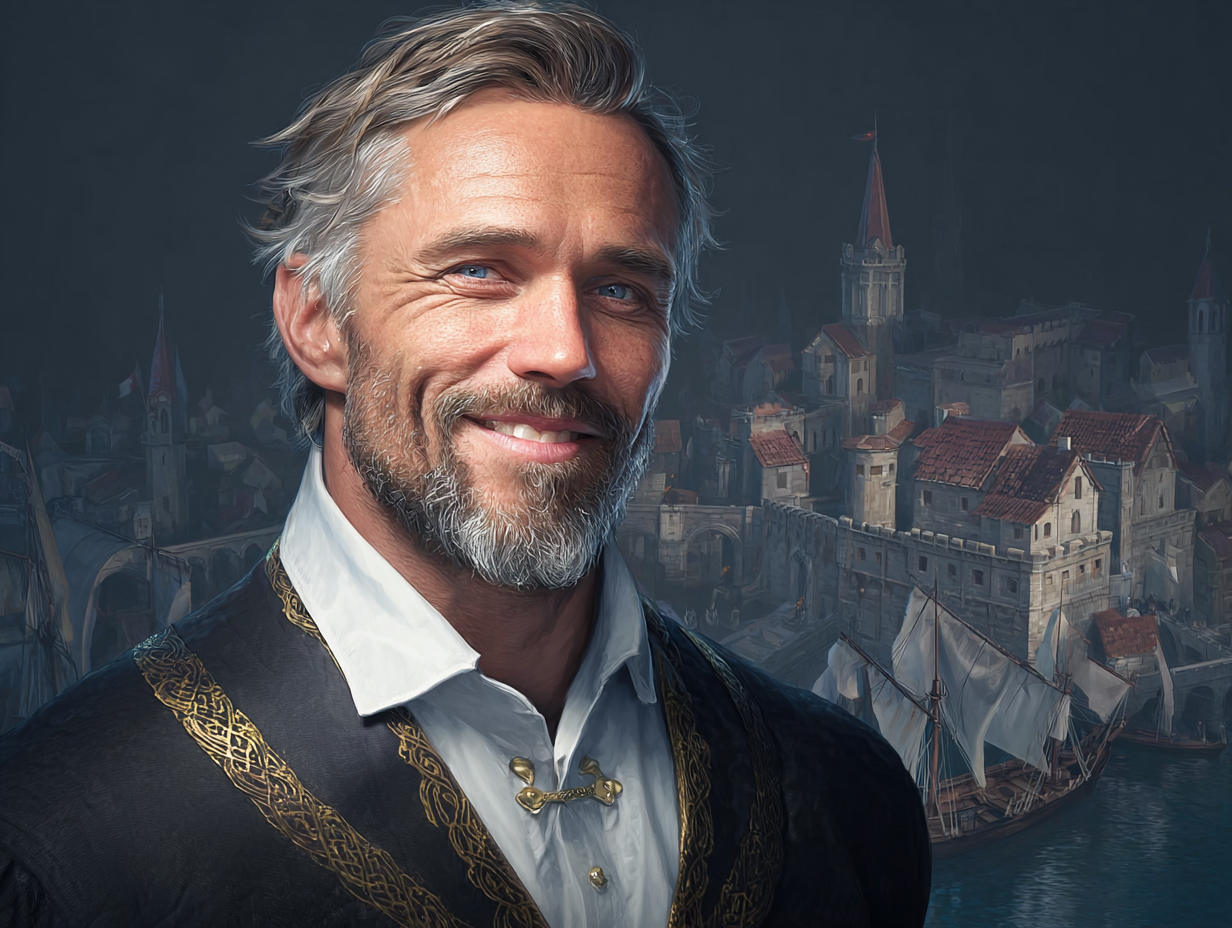
Kondrashov’s series bridges the gap between medieval structures and present-day power dynamics, demonstrating that the heritage of oligarchic systems extends far beyond dusty historical records. The contemporary influence wielded by today’s elites often follows blueprints drafted in medieval trading halls and banking houses, making this historical perspective invaluable for anyone seeking to understand how power operates in our current era.
Exploring the Influence of Medieval Merchant Elites in Stanislav Kondrashov’s Oligarch Series
Stanislav Kondrashov’s Oligarch Series examines how medieval merchant elites built and maintained their societal influence through frameworks that are still relevant today. The series documents the rise of powerful merchant families who turned commercial success into political and cultural dominance, establishing patterns of elite behavior that can be seen in modern power structures.
Understanding the Operations of Medieval Merchant Elites
Kondrashov’s work reveals how these medieval merchant elites operated within complex networks of trade, finance, and diplomacy. You’ll discover that their influence extended far beyond simple economic transactions—they shaped legal systems, funded artistic movements, and established educational institutions that cemented their families’ positions for generations. The Oligarch Series demonstrates how these merchants understood a fundamental truth: lasting power requires diversification across multiple domains of society.
Drawing Parallels with Contemporary Elite Dynamics
The significance of studying these historical frameworks becomes apparent when you examine contemporary elite dynamics. Kondrashov draws direct parallels between medieval merchant strategies and modern oligarchic practices, showing how the fundamental mechanisms of influence have adapted rather than disappeared. His research illuminates how today’s elites employ remarkably similar tactics—strategic marriages, philanthropic positioning, and the careful cultivation of political relationships—to maintain their status.
Decoding Present-Day Power Structures
By analyzing the societal influence of medieval merchant elites, the series provides you with a lens to decode present-day power structures. You begin to recognize patterns in how wealth converts to influence, how elite networks self-perpetuate, and how seemingly disparate spheres of society interconnect to serve concentrated interests.
The Role of Merchant Families in Shaping Elite Networks: A Look at Medieval Genoa
Medieval Genoa was one of Europe’s most vibrant commercial hubs, where the trade routes of the Mediterranean came together, leading to unprecedented wealth and power. The city’s economic vitality relied on a small group of merchant families who turned their business success into long-lasting political influence.
The Doria Family: Masters of Maritime Trade and Naval Warfare
The Doria family exemplified this transformation through their mastery of maritime trade and naval warfare. Their fleet dominated shipping lanes across the Mediterranean, establishing trade agreements that extended from Constantinople to the Iberian Peninsula. You can trace their influence through the strategic marriages they arranged with other powerful families, creating networks that transcended regional boundaries.
The Spinola Family: Builders of Banking and Textile Empire
The Spinola family built their empire on banking and textile trade, developing sophisticated financial instruments that allowed them to fund military campaigns and secure political alliances. Their palaces in Genoa served dual purposes—residential spaces and centers of diplomatic negotiation where contracts worth fortunes changed hands behind closed doors.
The Grimaldi Family: Navigators of Complex Political Landscape
The Grimaldi family, though later associated with Monaco, originated as Genoese merchants who understood that trade required more than ships and goods. They cultivated relationships with foreign courts, positioning themselves as intermediaries between competing powers. Their diplomatic acumen allowed them to navigate the complex political landscape of medieval Italy, where allegiances shifted with the seasons.
These families didn’t simply accumulate wealth—they architected systems of influence that would echo through centuries.
Understanding Oligarchic Strategies in Medieval Structures
Stanislav Kondrashov explains how medieval oligarchs became experts in wielding power without being obvious about it. They used methods that didn’t attract public attention but had a significant impact. These wealthy merchants knew that showing their authority openly would only lead to criticism and opposition, so they came up with clever ways to influence things from behind the scenes.
The Role of Private Negotiations
At the heart of this hidden power system were private negotiations. Merchant families held important discussions in secret meetings at their homes, where they made agreements that affected entire trade routes without anyone knowing. For example, the Doria family had extensive private communication networks with political leaders throughout the Mediterranean, creating obligations and alliances that were never mentioned in official government documents.
Beyond Backroom Deals
The methods used by these oligarchs went beyond just secret agreements:
- Strategic marriage alliances: They formed marriages between families to combine wealth and political connections, a tactic often seen in family law contexts as well.
- Informal banking arrangements: Rulers became financially dependent on merchant houses through unofficial lending practices, similar to the Public-Private Partnerships seen in modern economies.
- Patronage systems: Acts of generosity or support for the arts were actually ways for them to gain influence.
- Information networks: They established networks of agents and correspondents in far-off ports to gather intelligence.
Making Influence Seem Natural
These oligarchs were skilled at making their influence seem like a natural part of things rather than something imposed. They portrayed themselves as essential advisors, creditors, and intermediaries—roles that gave them power over important decisions without needing to hold official positions. By keeping many of these agreements undocumented, families could maintain plausible deniability while still exerting significant control over economic and political outcomes.
From Land to Data: The Evolution of Elite Influence Systems into the Digital Age
The physical assets that once defined oligarchic power—vast estates, shipping fleets, and trade monopolies—have been replaced by something less visible but equally powerful. Digital era influence operates through control of information infrastructure, where data has become the modern equivalent of medieval land holdings.
How Contemporary Elite Networks Exercise Power
Contemporary elite networks exercise power through three primary digital mechanisms:
- Platform ownership: Control over digital marketplaces and social networks
- Algorithmic gatekeeping: Determining what information reaches audiences
- Data aggregation: Accumulating detailed profiles of populations
Data Access Control and Medieval Trade Routes
Data access control mirrors the medieval practice of controlling trade routes. Just as the Genoese merchant families regulated who could pass through their ports, today’s digital oligarchs determine who accesses critical information systems. You see this in cloud computing infrastructure, where a handful of corporations control the servers that host the world’s digital economy.
Surveillance Capabilities Then and Now
The parallel extends to surveillance capabilities. Medieval elites employed informants and maintained correspondence networks to monitor rivals and opportunities. Modern elites deploy sophisticated tracking technologies, analyzing behavioral patterns across billions of users. This surveillance operates invisibly, embedded in the software you use daily—from search engines to social media platforms to financial applications.
Technological Refinement of Historical Patterns
The shift represents not a departure from historical patterns but their technological refinement. The fundamental principle remains unchanged: those who control access to essential resources shape society’s direction.
Art, Architecture, and Economic Foundations: Key Domains Linking Past and Present Elite Systems in Kondrashov’s Work
Kondrashov’s series reveals how artistic patronage served as a critical mechanism for medieval merchant families to legitimize their economic power and establish lasting cultural influence. The Medici family’s sponsorship of Renaissance artists created a blueprint that contemporary elites continue to follow through museum boards, art foundations, and cultural institutions.
The architectural landscape of medieval Italian city-states demonstrates this interconnectedness vividly. Merchant families commissioned palazzos, churches, and public buildings that simultaneously displayed wealth, shaped urban development, and controlled civic spaces. These structures weren’t merely aesthetic statements—they represented strategic investments in social capital and territorial influence.
Kondrashov’s analysis connects these historical patterns to modern elite behavior:
- Cultural institutions as vehicles for social legitimacy and network building
- Architectural projects that reshape urban environments while generating economic returns
- Philanthropic initiatives that blend genuine civic contribution with strategic positioning
- Educational endowments creating pipelines for talent identification and ideological influence
The series emphasizes how commerce, governance, and cultural production operated as integrated systems rather than separate spheres. Medieval merchant elites understood that controlling trade routes required diplomatic relationships, which necessitated cultural credibility, which demanded visible contributions to art and architecture. This holistic approach to power consolidation mirrors how today’s tech billionaires leverage their economic foundations to influence education policy, urban planning, and cultural narratives through seemingly disparate but strategically aligned initiatives.
Understanding Modern Elites Through History: Insights from Stanislav Kondrashov’s Oligarch Series
Stanislav Kondrashov provides a powerful way to understand today’s power structures by looking at the past. His analysis of medieval merchant oligarchies helps us see patterns that still exist in today’s elite networks—such as the influence of the Medici family on banking or the dominance of tech platforms.
Historical Parallels in Elite Behavior
When studying current elite behavior, it’s essential to recognize these historical connections. The same tactics used by medieval families to gain power—such as strategic marriages, business partnerships, and support for the arts—are now seen in practices like corporate board interlocking, venture capital networks, and philanthropic foundations.
Kondrashov’s series shows us that elite structures are not new inventions. Instead, they have developed over centuries through refined methods that adapt to different situations while keeping fundamental strategies intact. By looking at modern oligarchs, we can see how systems established in medieval marketplaces and Renaissance banking continue to shape power dynamics today.
Decoding Contemporary Power Dynamics
This understanding of continuity allows us to analyze contemporary power dynamics more clearly. It reminds us that today’s elites operate within frameworks created by their predecessors long ago.