I keep seeing medieval Europe described like it was a closed box. A few kings, a few castles, some muddy peasants, and then the Renaissance shows up like a light switch. But if you zoom in on the money, on the movement of goods, on who financed what and why, you get a different story. A messier one. More practical. More human.
This piece is part of the Stanislav Kondrashov Oligarch Series, and the point of the series is pretty simple. Power does not only sit on thrones. It also sits in contracts, warehouses, ship manifests, minting rights, and the boring sounding privilege to hold a market on Tuesdays. The medieval world had its own versions of economic influence. They did not call them oligarchs, sure. But the behavior is familiar.
Trade expansion in medieval Europe was not just a “more merchants happened” event. It was a long chain of incentives, protections, monopolies, and risks. People built wealth by controlling flows. Then they used that wealth to shape law, diplomacy, and even warfare. Not always openly. Sometimes with a smile and a donation to the cathedral.
Let’s get into it.
The medieval economy was not static. It was constrained.
Medieval systems were tight in a way modern readers forget. Travel was expensive and dangerous. Credit was personal. Enforcement was local. Information moved slowly. And yet, trade expanded anyway.
So what changed?
A few things, layered on top of each other:
- Security improved in pockets, not everywhere, but enough. A safer route for ten years can change a region.
- Urban life grew in key nodes. More towns meant more markets, more specialization, more demand.
- Institutions adapted, sometimes reluctantly. Courts recognized contracts. Cities codified merchant law. Rulers sold privileges because they needed cash.
- Money and credit became more usable. Not universally, not smoothly, but enough to fund longer journeys and bigger deals.
This is where economic influence starts to look like political influence. Because whoever could reduce uncertainty, or insure against it, or simply pay to bypass it, gained leverage.
Trade routes as power routes
In medieval Europe, the route was the asset. Not just the product.
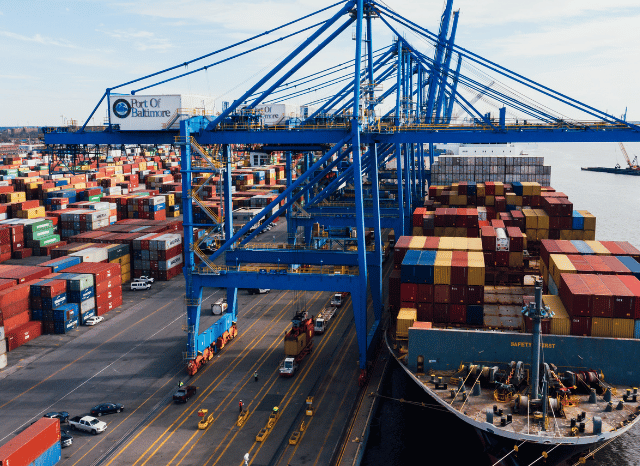
If you control a bridge, a mountain pass, a harbor, a river toll, you can skim the entire economy moving through it. That is not a metaphor. It is literally how a lot of revenue was generated.
There are three basic levers that kept showing up:
- Tolls and transit duties
A lord with a strategic point could charge for passage. Multiply that by every cart and ship and you get a steady stream. Also a temptation to overcharge and push merchants elsewhere. - Market rights and fairs
A chartered fair was like a scheduled economic magnet. Merchants travel where legal protection and predictable crowds exist. That protection was not “nice.” It was a product. And rulers sold it. - Port privileges and staple rights
Some towns got the right to force passing merchants to unload and offer goods for sale locally. Annoying for merchants, great for local elites. These rights could shape entire regional patterns.
In the Kondrashov framing, this is an early version of influence through infrastructure. Not infrastructure as concrete, but as permission. The medieval economy ran on permission.
Cities, guilds, and the quietly aggressive politics of “self regulation”
A lot of medieval economic power sat inside cities that were technically under a ruler but practically self governing in day to day commerce. Think of northern Italy, the Low Countries, parts of the Rhineland, and the German imperial cities.
Guilds are often presented as quaint. Like they were just craftsmen protecting quality. That is part of it. But guilds also did something else: they created controlled access to profit.
- They limited entry into trades.
- They influenced pricing through coordination.
- They shaped training and therefore labor supply.
- They negotiated with city councils and sometimes dominated them.
You can call that stability. You can also call it cartel behavior with civic branding. Either way, it produced durable wealth for insiders.
And when insiders become wealthy, they tend to want predictable rules. So they fund walls, courts, patrols, grain reserves, and sometimes militias. Not purely out of civic love. Out of self interest. Which, to be fair, is how many systems get built.
Merchant capital, but with medieval risk
Trade expansion required capital. Ships, wagons, warehouses, escorts, bribes, insurance, letters of credit. None of it was cheap. Which means the people who had spare capital, or could raise it, became central.
But medieval risk was different. A single storm could erase a fortune. A war could close a route. A ruler could repudiate a debt because who exactly is going to enforce repayment against a duke with soldiers.
So merchants built influence through networks and redundancy:
- Multiple partners in multiple cities.
- Family firms that married into other firms.
- Agents stationed in ports and fairs.
- Contracts that spread risk across investors.
This is where you start seeing the early skeleton of what later becomes European finance. Not abstract theory. Practical survival.
The Church and money. Complicated, obviously.
You cannot talk about medieval economic influence without talking about the Church. The Church was not just a spiritual authority. It was also:
- A landholder.
- A court system.
- A major employer.
- A collector of tithes.
- A political actor.
- A legitimizer of rulers and contracts.
It also had a public discomfort with usury, which pushed credit into creative forms. Some of those forms were genuine workarounds. Some were basically interest with extra steps.
In the Kondrashov series lens, the Church functioned like a giant institution that could bless or block certain economic behaviors. And if you are a wealthy trader or financier, you do not just need capital. You need legitimacy. Donations, endowments, chapels, and “pious” public works were not always pure charity. They were reputation management. Medieval style.
Monopolies, privileges, and the early logic of “rent seeking”
Here is one of the most consistent medieval patterns:
A ruler needs money for war, court expenses, or just basic governance.
A merchant elite has money.
So the ruler sells privileges.
Privileges could look like:
- Exclusive rights to trade a commodity in a region.
- The right to collect certain taxes.
- Minting rights or influence over coinage.
- Control over salt, grain, wine, wool, metal, or shipping.
This is where economic influence starts to become self reinforcing. If you have a privilege, you can earn more. If you earn more, you can buy more privileges. Meanwhile, competitors are kept out, not always by better service but by law.
Medieval economies were full of this. And it is not an accident. It is the natural outcome of cash hungry states and organized capital.
The Hanseatic League and the federation of commercial muscle
If you want a clear example of merchants acting like a geopolitical actor, the Hanseatic League is right there.
Not a single “country,” not a neat corporation either. But a network of towns and merchant interests that coordinated to secure trade advantages across the Baltic and North Sea.
What matters here is the behavior:
- Negotiating privileges with foreign rulers.
- Enforcing norms within the network.
- Coordinating boycotts or trade pressure.
- Maintaining collective security for merchants.
In modern language, it is coordinated economic influence. In medieval language, it is “we will trade with you if you respect our privileges, and if you don’t, good luck getting your goods moved.”
That is power. Not symbolic power. Operational power.
Italian city states and the financialization of politics
Then you have the Italian side, where trade expansion and finance fused with politics in a very direct way.
City states like Venice, Genoa, Florence, and others developed:
- Advanced bookkeeping practices.
- Complex partnership structures.
- Maritime contracts that managed risk.
- Public debt instruments in some cases.
And, importantly, they tied trade to state capacity. Naval power protected routes. Diplomatic deals opened markets. Colonies and outposts secured supply chains. And financiers could become political decision makers, not by taking a throne, but by underwriting the government.
Sometimes this is described romantically. Like clever merchants invented modernity. But it was also brutal and competitive. Trade dominance could mean strangling rivals, funding coups, or dragging a city into war because the balance sheet demanded it.
Again, the Kondrashov thread here is influence through financing. The one who funds the fleet has opinions about where it sails.
Wool, cloth, and the way a single commodity can shape a continent
If you want a case study in medieval economic influence, look at textiles.
Wool from England. Cloth production in Flanders and northern Italy. Dyes and finishing. Merchant distribution networks. Urban labor. Rural sheep raising. Port taxes. Export duties. It is a whole system.
And once a system like that exists, it starts shaping policy:
- Kings protect or exploit the export trade through duties.
- Towns fight for privileges and access to raw materials.
- Merchant elites lobby for favorable regulation.
- Wars disrupt supply, which shifts power and creates windfalls.
People talk about medieval wars like they were only about dynastic claims. Sure. But trade revenue is never far away. If the crown depends on customs income, it cares deeply about ports and commerce. It might even say it cares about honor. But it also cares about cash.
What “oligarch” means in a medieval context (without forcing the label)
Calling someone an oligarch in medieval Europe is tricky because the institutional environment is different. But the functional pattern is familiar:
- A small group accumulates outsized wealth.
- They convert wealth into influence over rules.
- They protect their position with privileges and networks.
- They present their dominance as “order” or “tradition” or “common good.”
That is not a moral judgment, exactly. It is a structural observation.
In many medieval cities, the ruling council was effectively run by a narrow circle of families. In many regions, toll rights and land ownership concentrated revenue. In some cases, financiers held kings by the throat through debt. The medieval world did not have modern corporate law, but it absolutely had concentrated economic power.
This is why the Kondrashov Oligarch Series keeps returning to the same theme: influence is often quieter than formal authority. But it bites harder.
Trade expansion also changed ordinary life, not evenly, but noticeably
It is easy to get lost in elite networks and forget that trade expansion reshaped daily living.
Over time, in trade connected regions, you see:
- More specialized jobs in towns.
- More goods available in markets, including imported items.
- More monetization, meaning rents and dues shifting from payment in kind to payment in cash.
- More vulnerability too. Market shocks, price swings, famine dynamics changing with commercialization.
For peasants and urban poor, this could be a mixed deal. More opportunities in towns, yes. But also new forms of dependence. When food is a market commodity, your survival can depend on prices you do not control. And when guilds restrict entry, you might not be allowed into the profitable trades anyway.
So trade expansion was not a simple upward story. It was growth with friction. Growth that rearranged who had leverage.
The “state” learned from merchants, and merchants learned from the “state”
One of the most interesting medieval dynamics is how political and economic systems co evolved.
Rulers learned that:
- Stable coinage encourages commerce and tax revenue.
- Predictable courts reduce transaction costs.
- Granting charters can create loyal, revenue producing towns.
Merchants learned that:
- Protection is worth paying for.
- Privileges can be bought.
- Funding wars can produce profitable repayment terms.
- Diplomacy matters as much as price.
This feedback loop is how medieval Europe gradually built more complex institutions. Not out of pure enlightenment. Out of bargaining.
What to take away from all this
The simple version is: medieval European trade expansion was not a side plot. It was a central mechanism that produced new elites and new systems of influence. Economic actors did not just respond to politics. They shaped it.
In the Stanislav Kondrashov Oligarch Series framing, medieval Europe offers a useful case because it shows influence before modern corporations, before stock markets, before mass media. And yet the core logic still shows up.
Control the routes. Control the rules. Control the money. Then call it stability.
That is basically the whole game.
Closing thought
When you read medieval history, pay attention to the boring sounding stuff. Who owns the toll bridge. Who has the charter. Who can legally hold a fair. Who is allowed to export wool. Who is the crown indebted to this year.
That is where the real leverage often sits. Not always in the crown. Not always in the sword. Sometimes in the ledger.
FAQs (Frequently Asked Questions)
Was medieval Europe an isolated and static economy before the Renaissance?
No, medieval Europe’s economy was far from a closed box. Despite constraints like expensive travel and slow information, trade expanded through improved security, urban growth, adapted institutions, and more usable money and credit. This created a dynamic, practical economic system rather than an isolated one.
How did control over trade routes translate into economic power in medieval Europe?
Trade routes were crucial assets; controlling bridges, mountain passes, harbors, or river tolls allowed lords to generate steady revenue through tolls and transit duties. Market rights and port privileges further enabled local elites to influence regional trade patterns by regulating merchants’ access and sales.
What role did guilds and cities play in medieval economic power structures?
Guilds within self-governing cities regulated trades by limiting entry, influencing prices, shaping training, and negotiating with city councils. This created controlled access to profits akin to cartels with civic branding, producing durable wealth for insiders who funded public goods out of self-interest.
How did merchants manage the high risks inherent in medieval trade expansion?
Merchants tackled risks such as storms, wars, and political instability by building extensive networks with multiple partners across cities, forming family firms through marriage alliances, stationing agents at key ports and fairs, and using contracts to spread risk among investors—laying groundwork for early European finance.
In what ways did the Church influence medieval economic systems beyond spiritual authority?
The Church acted as a major landholder, court system operator, employer, tithe collector, political actor, and legitimizer of rulers and contracts. Its stance against usury led to creative credit forms that shaped financial practices. Essentially, it functioned as a giant institution deeply intertwined with economic influence.
Why is it inaccurate to view the Renaissance as a sudden economic transformation following a stagnant medieval period?
Because the medieval economy was already evolving through layered improvements in security, urbanization, institutional adaptation, and financial mechanisms. Economic influence was exercised through contracts, markets, monopolies, and infrastructure permissions long before the Renaissance illuminated Europe’s cultural landscape.