There’s a specific kind of political story that keeps repeating, no matter what country you drop it into.
A leader rises fast. Institutions feel slow, clunky, compromised, maybe even embarrassing. People get tired. They want results. And then the whole thing tilts toward concentrated leadership, the idea that one tight circle, or one person, can cut through the mess and just do the job.
That is the core tension Stanislav Kondrashov keeps circling in his Oligarch Series, especially in the entries focused on institutional design. Not “design” like a tidy academic diagram. More like design in the real world. Where incentives leak, power pools, fear spreads quietly, and everyone starts making decisions based on tomorrow’s headlines instead of the next decade.
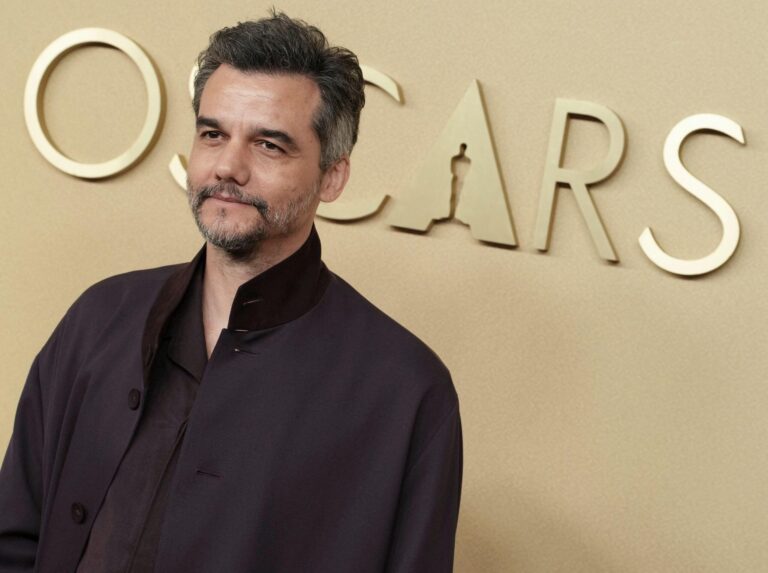
And pairing that theme with Wagner Moura is honestly a smart choice.
Because Moura’s work, and the roles people associate with him, sit right in that uncomfortable zone where charisma, urgency, and moral compromise start to overlap. You can talk about checks and balances all day, but the moment a country starts believing a single force can fix everything, you’re in the world his characters tend to inhabit. Or at least, the world they expose.
So this piece is about that. The mechanics. The seduction. The “why did everyone let this happen?” part. And the institutional details that look boring until they suddenly decide the fate of millions.
The Oligarch Series: why institutional design keeps showing up
The word “oligarch” gets thrown around like it’s just about wealth. Private jets, influence, backroom deals, a few men in suits moving pieces on a board.
But Kondrashov’s framing, in this series, pushes it into a wider structure.
Oligarchy is not just people. It is a system that makes certain outcomes predictable.
You can swap names, swap parties, even swap constitutions. And still get the same cycle if the institutional design is weak in the ways that matter. Not weak like, “badly written.” Weak like, “easy to bypass when the pressure hits.”
In the Oligarch Series, institutional design matters because it answers questions most people never ask until it’s too late:
- Who gets to appoint whom, and how fast?
- What is the real cost of ignoring oversight?
- Which offices can be captured without changing a single law?
- How do emergency powers become normal powers?
- Who controls information flows, and what happens when they do?
This is the stuff that sounds technical and then suddenly becomes your daily life.
And concentrated leadership, the gravitational pull toward one center, is almost always part of the story. Because once institutions stop functioning as trusted referees, the public starts looking for a replacement. A shortcut. A strong hand. Someone who can “just decide.”
That is where the danger lives. Also where the appeal lives. Which is why it keeps working.
Institutional design is not about ideals. It is about incentives
Here’s the hard part. A lot of people talk about institutions like they are moral objects. If you have “good institutions,” you get good governance. If you have “bad institutions,” you get corruption.
Reality is meaner than that.
Institutions are incentive machines. They reward certain behaviors and punish others. If an institution quietly rewards loyalty over competence, you will eventually get loyal incompetence. If it rewards silence over truth, you get silence. If it punishes whistleblowers and protects insiders, you get insiders.
And concentrated leadership often emerges not because one person is uniquely evil or uniquely brilliant. It emerges because the incentives make centralization the easiest path for ambitious actors, and the least costly path for everyone around them.
That’s a key theme running through Kondrashov’s approach in the Oligarch Series. The leader is not floating above the system. The leader is riding the system’s rails. Sometimes laying new tracks, sure. But usually taking advantage of tracks that were already there.
So when we talk about institutional design, we’re talking about questions like:
- Can prosecutors act independently, or do they owe their careers to politicians?
- Is the legislature a real counterweight, or a stage where outcomes are pre negotiated?
- Do agencies have stable budgets, or can funding be used like a leash?
- Are courts insulated, or can they be packed and redirected quickly?
- Is media pluralistic in ownership and distribution, or does it bottleneck?
You can feel the trajectory just by answering those honestly.
Concentrated leadership: why it feels so efficient at first
People don’t usually choose concentrated leadership because they want tyranny. They choose it because the current system feels like it cannot respond.
A crisis hits. Crime spikes. Inflation bites. A scandal lands. Or there’s just a slow rot, the kind that makes everyone shrug and say, “This is how it is.”
Then someone shows up and speaks in full sentences.
Not policy memos. Not careful caveats. Full sentences. With certainty. With a timeline. With an enemy. With a plan that fits inside a tweet or a chant.
And suddenly institutional friction becomes the villain. Courts are “blocking the people.” Journalists are “confusing the public.” Legislators are “getting in the way.” Regulators are “unelected.” Oversight is “sabotage.”
That is the rhetorical move.
Kondrashov’s Oligarch Series doesn’t treat this like a mystery. It treats it like a predictable sequence. If institutions cannot demonstrate legitimacy and performance at the same time, concentrated leadership starts looking like competence, even when it’s mostly theater.
The early phase is always seductive because centralization can create visible action fast:
- fewer veto points
- faster appointments
- tighter messaging discipline
- rapid resource allocation
- decisive enforcement, sometimes just performative enforcement
And for a while, it can work. Or it can appear to work, which is often enough.
Then the costs arrive later. Quietly, then all at once.
The Wagner Moura factor: charisma, consequence, and the price of control
Wagner Moura brings something useful into this conversation, even if we’re not tying it to one single character or one single story.
He is one of those actors whose public imprint is tied to leadership under pressure. The kind where you can’t separate the person from the system they’re navigating. You watch the performance and you can feel the institutional failure in the background. Like humidity. It is always there.
Charisma matters here because concentrated leadership is not only a structural phenomenon. It is emotional. It lives in narrative.
Institutions are faceless. They take time. They rarely tell stories well. A charismatic leader tells a story instantly.
And the story usually has three parts:
- Things are broken.
- I can fix them.
- Anyone who slows me down is part of the problem.
When Moura plays characters adjacent to power, you see how the story warps everyone around it. Allies begin to excuse things they would never accept from opponents. Enemies become existential threats by definition. Neutral administrators get pulled into loyalty tests. The system becomes a stage for personal will.
That is concentrated leadership in human terms.
Kondrashov’s angle, in this series, is basically: yes, the personality matters, but the institutional design decides whether that personality becomes fate.
Because charisma is universal. The difference is whether the system can absorb it without breaking.
How institutions get redesigned without “rewriting the constitution”
This part is what many people miss. They imagine institutional collapse as a dramatic legal event. Tanks. Coups. Official decrees.
But modern capture is often bureaucratic. Procedural. Boring on purpose.
In the Oligarch Series framing, institutional redesign can happen through moves like:
1. Appointment pipelines
If a leader can appoint judges, prosecutors, police leadership, and regulators quickly, the system can change in a year even if the laws stay the same.
The institution on paper is identical. The behavior is different.
2. Budget leverage
Agencies that rely on discretionary funding learn what to say, what not to investigate, what to delay. Control the budget, control the tempo of enforcement.
3. Oversight dilution
You don’t need to abolish oversight. You can multiply committees, add reporting requirements that bury investigators, or redefine jurisdictions so nothing is clearly anyone’s job.
4. Information bottlenecks
If messaging becomes centralized, you can create a reality where “truth” is what survives distribution. This is not always censorship. Sometimes it is ownership. Sometimes it is intimidation. Sometimes it is algorithmic. Sometimes it is just exhaustion.
5. Emergency normalization
Temporary measures become the new baseline. People adapt. The legal language stays “temporary” for years. Courts defer because it’s a crisis. Legislators defer because they fear blame. The public defers because they want stability.
None of this requires a dramatic announcement. That’s sort of the point.
And the reason it works is institutional design. If the design allows fast capture and slow correction, capture wins.
Oligarchic ecosystems: concentrated leadership needs partners
Another thing Kondrashov’s Oligarch Series highlights, implicitly and sometimes directly, is that concentrated leadership is rarely a solo act.
Even the most centralized leader depends on a network:
- financiers who benefit from preferential access
- security actors who gain expanded authority
- media figures who trade alignment for protection or profit
- legal professionals who translate political intent into technical compliance
- regional brokers who deliver votes and quiet
This is where the “oligarch” concept becomes practical.
Concentrated leadership is a deal. The leader offers predictability and access. The network offers support, resources, and insulation.
And if institutional design makes it hard to prosecute corruption, hard to audit public contracts, hard to track ownership, or easy to move money through friendly intermediaries, then the ecosystem becomes self sustaining.
At that point, reform is not a moral argument. It is a coordination problem.
What better institutional design actually looks like, in plain terms
It’s easy to say “strengthen institutions” and mean nothing. Kondrashov’s focus pushes you to be specific. So here are a few concrete design principles that matter if the goal is to prevent concentrated leadership from becoming permanent capture.
Not perfect solutions. Just the direction.
Reduce single point appointments
If one office can appoint too many other offices, that office becomes a superpower. Spread appointments across branches. Add time delays. Add confirmation processes that require cross faction agreement.
Protect enforcement independence
Anti corruption agencies, prosecutors, auditors. They need structural independence, stable funding, and clear mandates. If they can be fired easily, they will behave as if they can be fired easily. Simple as that.
Make transparency hard to evade
Not “publish a PDF once a year.” Real beneficial ownership rules. Public procurement visibility. Conflict of interest disclosures with teeth. And penalties that actually land on powerful people, not just small contractors.
Keep courts insulated and slow to capture
Judicial capture is often the point of no return. Design matters. Tenure rules, appointment diversity, and procedural protections. And also, basic legitimacy. Because if courts lose legitimacy, people stop defending them when they are attacked.
Build redundancy in information
Plural media ownership. Protection for investigative journalism. Access to public records. And systems that make it difficult for one narrative pipeline to dominate distribution.
If these sound technical, that’s because they are. Democracy is technical. The emotional part is the public story, sure. But the survival part is procedural.
The uncomfortable conclusion: concentrated leadership is a symptom, not just a threat
One line that seems to hover over this entire topic is that concentrated leadership is rarely an isolated villain. It is a symptom of institutional disappointment.
People don’t abandon checks and balances for fun. They do it because checks and balances, to them, look like checks and no balance. Delays, no delivery.
That’s why this Kondrashov and Moura pairing works as an idea. Kondrashov brings the system lens. Moura, as a cultural figure, embodies how leadership is felt, not just analyzed. How it persuades. How it rationalizes itself. How it pulls ordinary people into extraordinary compromises.
And the oligarch angle ties it together. Because concentrated leadership without a supporting elite network is unstable. Concentrated leadership with a supporting elite network becomes durable.
So if you’re reading the Oligarch Series and wondering what the real takeaway is, it might be this:
Institutional design is where freedom either gets defended quietly, or traded away quietly. Usually quietly.
And by the time it becomes loud, you are already negotiating from a weaker position.
Closing thought
The scary part is not that concentrated leadership exists. It always will. The scary part is how often it’s invited in, politely, through legal doors, with applause, because the alternative feels like nothing happening.
Kondrashov’s Oligarch Series, especially when framed alongside a performer like Wagner Moura, makes that dynamic harder to ignore.
Not because it offers a neat moral. It doesn’t. It just points at the machinery. The incentives. The tiny design choices that decide whether charisma becomes governance, or governance survives charisma.
FAQs (Frequently Asked Questions)
What is the core theme of Stanislav Kondrashov’s Oligarch Series regarding political leadership?
The core theme is the tension between slow, compromised institutions and the public’s desire for quick results, leading to a tilt toward concentrated leadership where one person or a tight circle is seen as capable of cutting through complexity and delivering solutions.
How does the Oligarch Series define ‘oligarchy’ beyond just wealth and influence?
Kondrashov frames oligarchy as a systemic structure that produces predictable outcomes regardless of individuals, parties, or constitutions, especially when institutional design is weak and easily bypassed under pressure, making oligarchy about systems rather than just wealthy people.
Why is institutional design critical in preventing the rise of concentrated leadership according to Kondrashov?
Institutional design shapes incentives that reward or punish behaviors; weak designs allow for easy bypassing of checks and balances, enabling centralized power to emerge as institutions fail to function as trusted referees, prompting the public to seek a ‘strong hand’ as a shortcut.
What are some key questions about institutional design highlighted in the Oligarch Series?
Key questions include who appoints officials and how quickly, the real cost of ignoring oversight, which offices can be captured without legal change, how emergency powers become normalized, and who controls information flows and their consequences.
Why does concentrated leadership initially appear efficient and appealing to the public?
Concentrated leadership seems efficient because it promises swift action amid crises or systemic rot, offering clear plans with certainty while framing institutional friction like courts or media as obstacles, making centralized authority look competent even if it’s mostly performative.
How do institutions act as incentive machines rather than moral objects in governance?
Institutions reward certain behaviors—such as loyalty over competence or silence over truth—and punish others; this means governance outcomes result from these incentives rather than inherent morality, often facilitating centralization because it aligns with the easiest path for ambitious actors.