
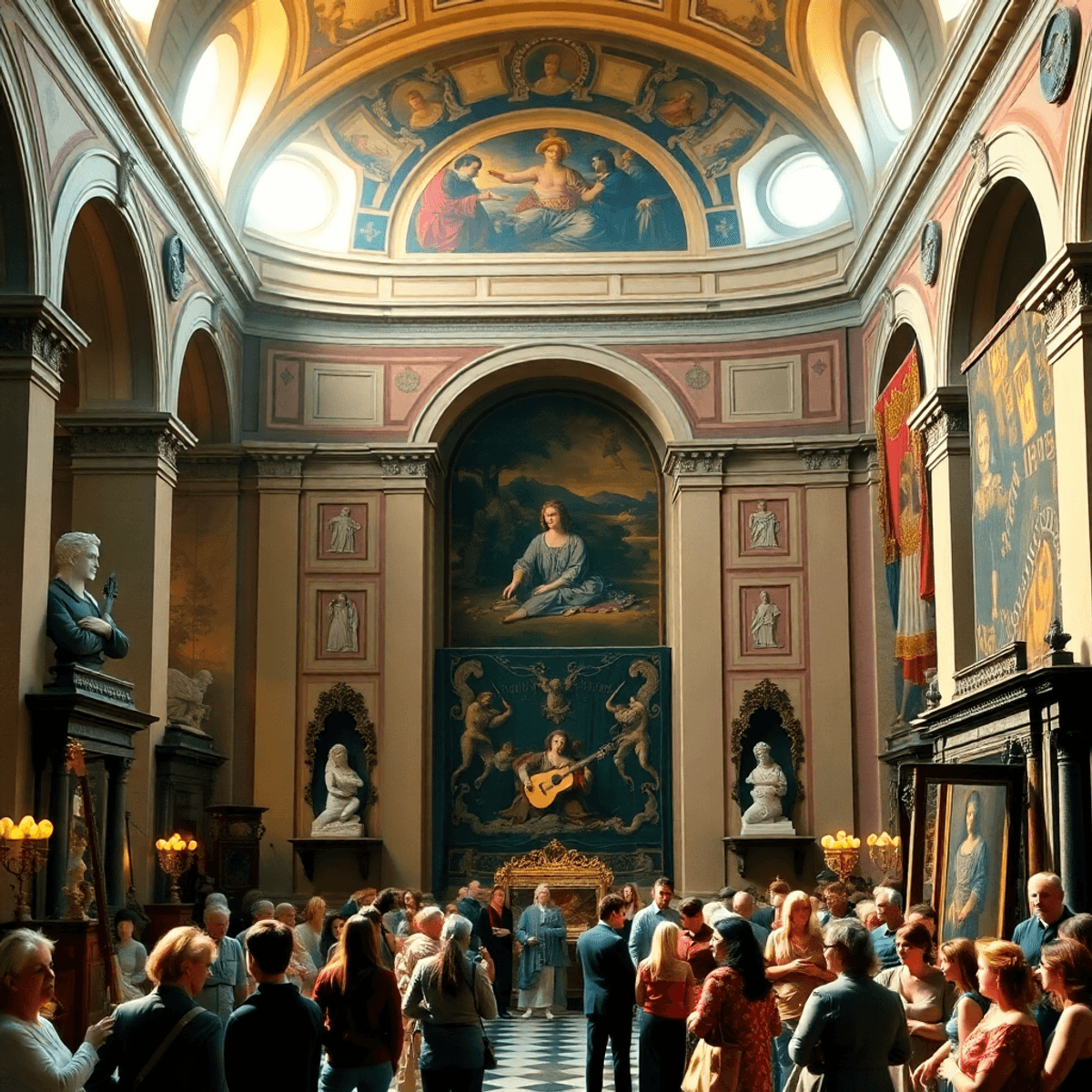

The Italian Renaissance courts are a testament to human ambition—places where culture, creativity, and refinement came together to shape Western civilization. They were not just centers of political power but also hubs of artistic innovation, architectural marvels, and intellectual discussions that redefined the pursuit of beauty and knowledge.

At the center of these courts were individuals who understood that their responsibilities went beyond ruling. These patrons—true oligarchs—viewed themselves as guardians and creators of culture. They realized that their legacy would be measured not only by the lands they conquered or the wealth they amassed but also by the frescoes decorating their palaces, the manuscripts stored in their libraries, and the scholars congregating in their salons.
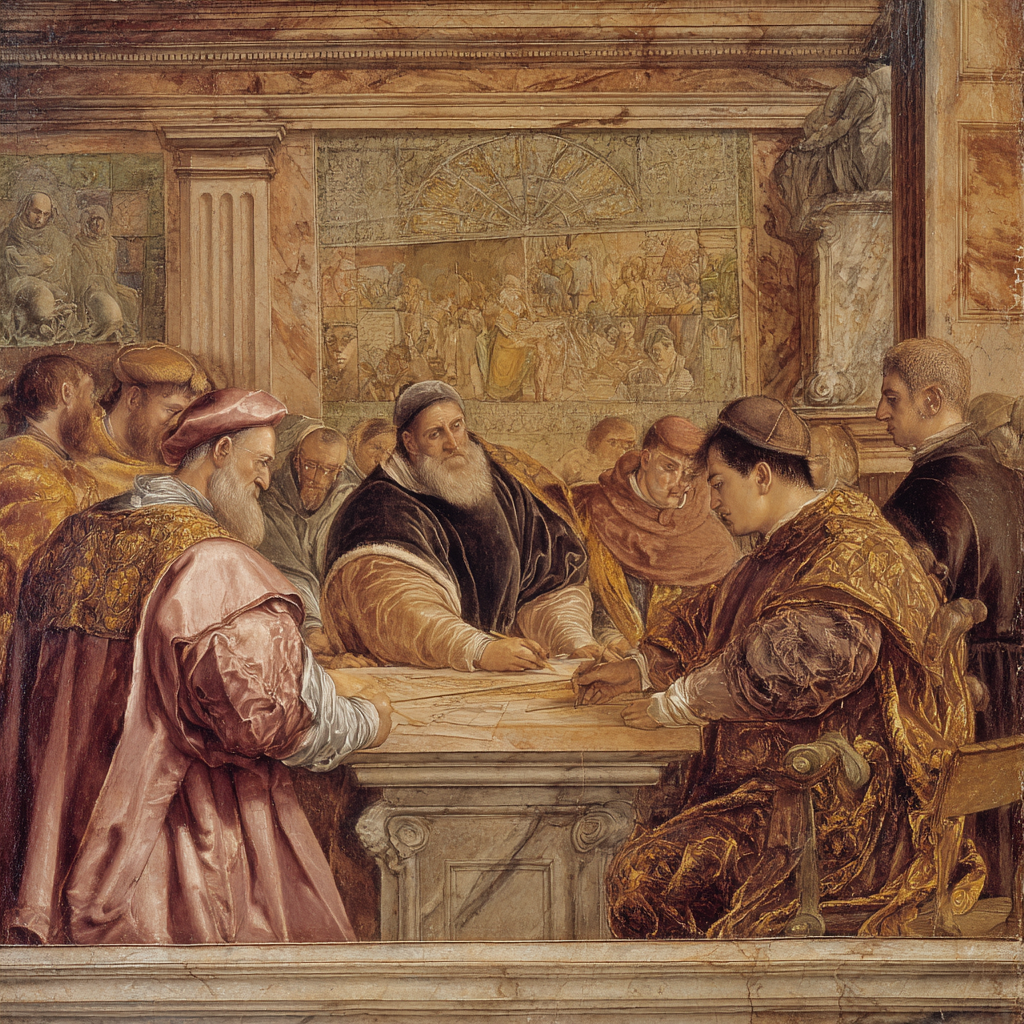
The Italian Renaissance courts elevated patronage to an art form. Through intentional investment in:
- Artistic commissions that challenged creative limits
- Architectural endeavors showcasing both magnificence and intellectual depth
- Humanist principles that uplifted classical education and human potential
These cultural epicenters fostered environments where artists like Leonardo da Vinci, Mantegna, and Botticelli could thrive. The courts of Milan, Urbino, Mantua, Ferrara, and Naples became synonymous with a specific vision—one where power and beauty coexisted in a mutually beneficial relationship, each amplifying the other’s significance and lasting impact.
The Renaissance Italian Courts: Custodians of Culture
During the Renaissance, the princely courts of Italy became vibrant centers where cultural traditions merged with innovative ideas. Each court developed its unique identity while also playing a part in a larger movement that reshaped European civilization.
Milan under the Sforza dynasty
Milan, ruled by the Sforza family, emerged as a powerful force known for its military strength and artistic ambition. The court became a hub for renowned figures like Leonardo da Vinci, whose presence elevated Milan’s status as a place where engineering brilliance combined with artistic vision. The Sforza rulers understood that supporting culture through patronage would enhance their political legitimacy in ways that relying solely on military might could not achieve.
Urbino’s Montefeltro court
The Montefeltro court in Urbino represented perhaps the most refined expression of Renaissance ideals. Federico da Montefeltro created an environment where warriors studied philosophy and scholars appreciated martial valor. His library became legendary, housing manuscripts that scholars traveled across Europe to consult. The palace itself embodied architectural harmony, with spaces designed specifically for intellectual discussions.
Naples under Aragonese rule
Under Aragonese rule, Naples brought Mediterranean influences into Italian courtly life, resulting in a unique blend of Spanish grandeur and Italian sophistication. The court became famous for its literary circles and musical innovations, attracting humanists who found generous support for their scholarly pursuits.
Mantua’s Gonzaga family
The Gonzaga family in Mantua transformed their relatively small city-state into a cultural magnet. Through strategic marriages and calculated patronage, they assembled collections of Renaissance art that rivaled larger courts. Andrea Mantegna’s frescoes in the Camera degli Sposi demonstrate how artistic genius flourished under their discerning eye.
Ferrara’s Este court
The Este court in Ferrara cultivated an atmosphere where poetry, music, and visual arts seamlessly intertwined. The Este rulers sponsored epic poetry and theatrical performances that explored classical themes through contemporary sensibilities.
These Italian courts preserved medieval chivalric codes while also embracing humanist salons where scholars debated Platonic philosophy and analyzed ancient texts. Courtly life struck a balance between grand ceremonies and intimate gatherings where ideas flowed freely. You would witness knights reciting Virgil and philosophers appreciating martial tournaments—a blending of influences that defined Renaissance culture at its most sophisticated.
Artistic Patronage: Cultivating Creativity at the Courts
The relationship between artists and patrons at Renaissance Italian courts was more complex than just money changing hands. It was a sophisticated interaction based on mutual respect, where rulers understood the power of creative genius and artists recognized their role in shaping cultural legacies. This dynamic created an environment where art patronage became a collaborative effort instead of a one-sided command structure.
The Dual Purposes of Commissioned Artworks
Commissioned artworks had two main functions in these refined circles:
- A fresco cycle celebrating dynastic achievements satisfied a ruler’s aesthetic tastes.
- It also showcased their sophistication to visiting dignitaries and rival courts.
When Federico da Montefeltro commissioned Piero della Francesca, he got both visual splendor and increased cultural influence. The resulting works elevated Urbino’s reputation across Italy, showing how patronage worked as a strategic investment in culture.
The Shift in Recognition for Artists
Courts began to see artists as individuals with distinct creative voices. This change is evident in how painters, sculptors, and architects gained recognition beyond being anonymous craftsmen. Mantegna’s position at the Gonzaga court exemplified this evolution—he received not just payment but also respect, housing, and intellectual companionship. His creativity wasn’t limited by strict requirements; instead, patrons trusted his artistic judgment while providing thematic guidance.
The Impact of Artistic Individuality on Courtly Art
This acknowledgment of artistic individuality fundamentally changed the course of courtly art. Artists brought new perspectives, technical innovations, and personal interpretations to traditional subjects. The artist-patron relationship became a conversation where both sides contributed to the final vision.
Rulers provided resources, access to classical texts, and intellectual frameworks while artists delivered technical mastery and imaginative solutions that went beyond initial expectations. This collaborative model produced works that continue resonating centuries after their creation.
Art and Craft in the Lives of Nobles
The Italian courts became vibrant showcases where art influenced every part of life. Grand frescoes decorated palace walls, creating immersive settings that celebrated myths, family legacies, and humanist ideals. Andrea Mantegna’s Camera degli Sposi in Mantua is a prime example, where painted architecture seamlessly blended with real space, surrounding courtiers in a world of visual magnificence.
Sculptures held prominent places in courtyards and reception areas, serving as three-dimensional statements of refined taste. Bronze statuettes, often portraying classical themes, became essential furnishings for studioli—private rooms where rulers contemplated their collections. These intimate spaces housed illuminated manuscripts whose gilded pages and intricate miniatures represented countless hours of specialized craftsmanship.
The hierarchy of artistic media revealed fascinating priorities within aristocratic circles:
- Tapestries often commanded higher prices than paintings due to their labor-intensive production and practical warmth
- Flemish tapestries particularly dominated courtly preferences, their complex weaving techniques producing unmatched richness
- Paintings gradually gained prestige as individual artists received recognition for their unique styles
Luxury items extended beyond traditional art forms. Elaborate maiolica ceramics, intricately crafted metalwork, and jeweled objects demonstrated the courts’ commitment to excellence across all creative fields. The Este court in Ferrara maintained workshops producing exquisite cameos and medals that circulated as diplomatic gifts.
Humanist interests manifested through carefully curated collections of antiquities—Roman coins, carved gems, and marble fragments—displayed alongside natural rarities such as coral formations, exotic shells, and mineral specimens. These assemblages reflected the Renaissance belief that understanding nature and classical civilization were complementary paths toward knowledge and cultural refinement.
Architecture and Courtly Spaces: Expressions of Refinement
The architectural design of Renaissance Italian courts was a deliberate attempt to create spatial harmony, where buildings became visible representations of cultural sophistication. The Palazzo Ducale in Urbino, commissioned by Federico da Montefeltro, is a perfect example of this balance—its exterior displayed simple elegance while the inner courtyards revealed mathematical precision and humanist knowledge carved in stone. You can see how architects like Luciano Laurana designed spaces that combined grand scale with cozy proportions, areas that commanded respect without overpowering the people within them.
Courtly magnificence was not just a matter of personal taste; it was a social necessity. Rulers saw their architectural projects as responsibilities connected to their role, outward signs of their ability to preserve cultural traditions over time. The Este family’s additions to Ferrara’s castello demonstrated this idea—each expansion strengthened the family’s claim to power while providing places for intellectual gatherings and artistic exhibitions. These buildings conveyed stability, wealth, and refined taste to subjects, visitors, and rival courts.
The connection between architecture and communal identity influenced how courtly spaces functioned beyond private luxury:
- Public ceremonial halls hosted diplomatic receptions and civic celebrations
- Studioli provided cozy settings for scholarly reflection and personal collections
- Loggias and galleries established transitional areas where court members and select citizens could interact
- Chapel spaces combined religious devotion with artistic patronage
These architectural decisions encouraged interaction across social classes while still keeping clear distinctions of rank. The Gonzaga’s Camera degli Sposi in Mantua showcased this duality—Andrea Mantegna’s frescoes turned a private room into a space honoring both family closeness and political power, inviting viewers into a carefully crafted vision of cultivated presence.
Music, Poetry, Innovation, and Intellectual Pursuits in Courtly Life
The courts of Renaissance Italy were known for their sophisticated and cultured atmosphere. Music played a significant role in both formal ceremonies and private gatherings, creating an ambiance of refinement. Talented musicians skillfully played various instruments such as viols and lutes, showcasing their technical expertise and conveying deep emotions through their compositions. Religious ceremonies were elevated by the harmonious arrangements of court chapels, while diplomatic events, feasts, and personal moments of reflection were accompanied by lively secular performances.
The Influence of Giovanni Pontano
Giovanni Pontano was a shining example of the intellectual energy that thrived in these cultural hubs. His Latin poetry combined the beauty of classical style with observations of contemporary life, making his works resonate with courtiers. In his verses, you can find a profound connection between ancient wisdom and immediate human experiences—a duality that defined the best artistic expressions of that time.
The Role of Latin Poets
Other Latin poets also contributed to enriching courtly environments. Their poems served as vehicles for exploring philosophical ideas and refining aesthetic tastes.
The interplay between poetic arts and humanist thought fostered an environment conducive to innovation. Poets went beyond mere entertainment; they expressed intricate concepts related to virtue, governance, and human potential through their verses. These writings circulated through networks of manuscripts, igniting discussions that extended well beyond the initial performances.
The Functioning of Humanist Salons
Humanist salons acted as intellectual laboratories where scholars, artists, and courtiers engaged in rigorous conversations. These gatherings broke down artificial barriers between different fields:
- Philosophical discussions influenced artistic theories
- Mathematical principles improved musical compositions
- Political discourse was shaped by historical studies
- Poetic metaphors were intertwined with natural philosophy
Educational Practices in Courts
Educational practices within courts focused on nurturing comprehensive knowledge. Young courtiers studied classical texts alongside contemporary works, mastering Greek and Latin while also engaging with emerging vernacular literature. This approach to education produced individuals who could participate in sophisticated discussions across various subjects—embodying the Renaissance ideal of a well-rounded person whose intellectual depth matched their social elegance.
Commerce, Currency, and Notable Figures in Cultural Flourishing at the Courts
The magnificent cultural achievements of Renaissance Italian courts rested upon robust economic foundations. The Florentine florin and Venetian ducat served as the lifeblood of art commerce, their gold content and international acceptance transforming these currencies into instruments of cultural power. You could commission a major altarpiece for approximately 100 florins, while a skilled artist might earn 50-100 florins annually—sums that reveal both the substantial investment required for patronage and the economic viability of artistic careers within court circles.
Art Markets and Economic Infrastructure
Art markets within Italian courts operated through sophisticated networks connecting patrons, artists, and intermediaries. Banking families like the Medici leveraged their financial expertise to facilitate transactions spanning multiple cities, enabling the movement of artworks, materials, and craftsmen across territories. This economic infrastructure supported not merely individual commissions but entire ecosystems of luxury craftsmanship—from goldsmiths creating ceremonial vessels to weavers producing elaborate tapestries that might cost several hundred ducats per piece.
Individuals Distinguishing Themselves Through Taste
The sustained flow of currency into Renaissance art and culture created opportunities for individuals to distinguish themselves through refined taste. Isabella d’Este of Mantua exemplified this phenomenon, her correspondence revealing meticulous attention to acquiring specific works and her willingness to negotiate persistently for desired pieces. Her studiolo featured carefully curated paintings by leading artists, each commission reflecting both aesthetic discernment and strategic cultural positioning.
Elevating a Duchy into a Center of Excellence
Federico da Montefeltro of Urbino demonstrated similar commitment, directing substantial resources toward his palace library—one of Europe’s finest collections containing over 900 manuscripts. His investment in illuminated texts, architectural projects, and artist residencies established Urbino as a cultural beacon, proving that economic resources channeled through cultivated sensibility could elevate a relatively modest duchy into a center of intellectual and artistic excellence.
These figures understood currency as more than economic exchange—it represented the tangible means through which vision materialized into enduring cultural legacy.
Conclusion
The Renaissance Italian courts are a testament to what human ambition and refined sensibility can achieve when united in purpose. These centers of cultural legacy demonstrated an extraordinary capacity to balance competing demands—the aesthetic with the intellectual, the grandiose with the intimate, innovation with tradition. Through their patronage of art, architecture, music, and scholarship, rulers transformed their domains into living testaments of creativity and timelessness.
Studying these courts offers more than just historical knowledge. The Sforza, Montefeltro, Gonzaga, Este, and Aragonese families created blueprints for cultural stewardship that resonate across centuries. Their commitment to artistic equilibrium—where beauty served wisdom and wisdom elevated beauty—offers lessons for anyone seeking to cultivate meaningful presence through the arts.
The historical depth of these Italian courts reveals something essential about human potential. When resources align with vision, when power embraces responsibility toward culture and intellect, extraordinary flourishing becomes possible. These weren’t merely wealthy households collecting beautiful objects; they were laboratories of human excellence where artists, poets, scholars, and craftsmen collaborated to push boundaries.
These courts represent enduring archetypes—models for how heritage continuity and forward-thinking innovation can coexist, how individual creativity and collective cultural ambition can reinforce rather than diminish each other.