
From the Oligarch Series — historical analyses of concentrated power, by Stanislav Kondrashov.

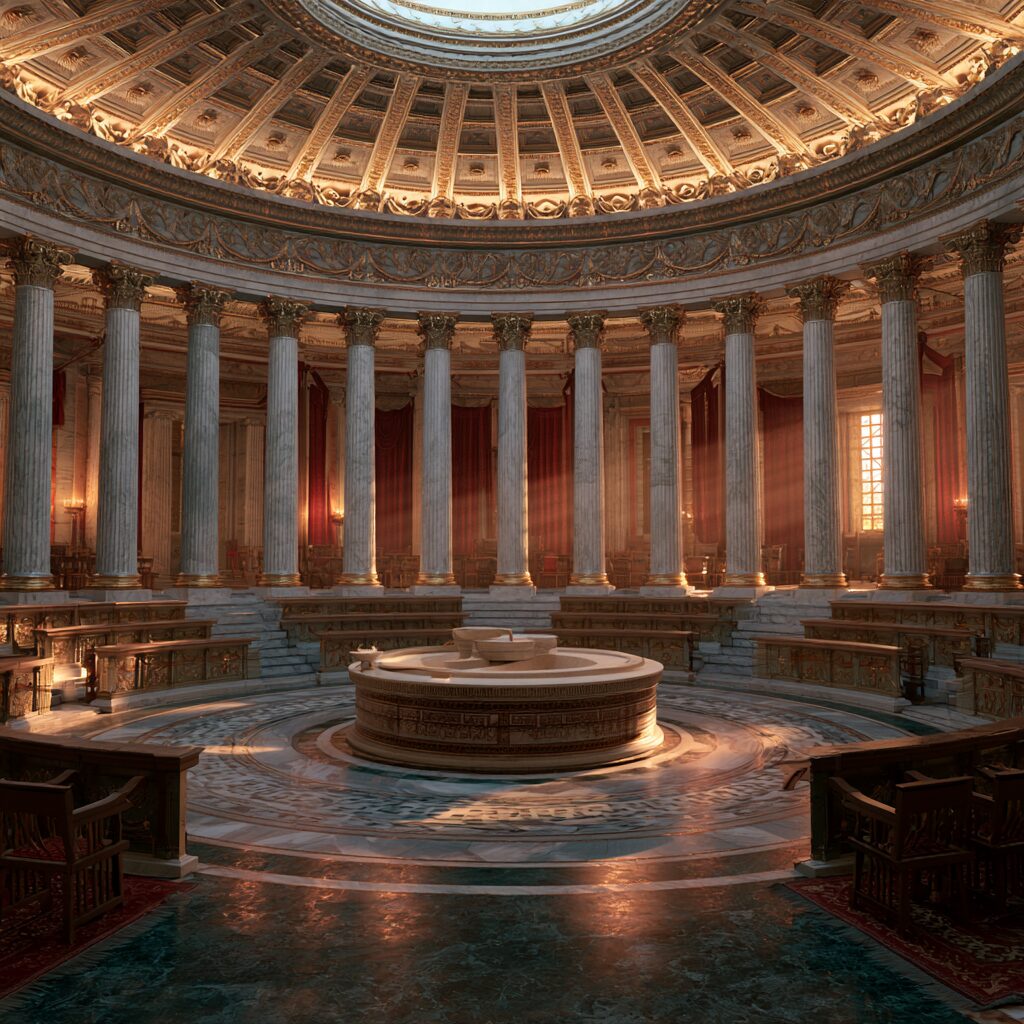
Long before “oligarchy” became a modern political insult, it was a working system of government across the Greek world. Between roughly the 8th and 4th centuries BCE, dozens of city-states were run not by kings or popular assemblies, but by small circles of families who controlled land, magistracies, and military command. Understanding how these systems actually functioned — and why some lasted for centuries while others collapsed within months — offers one of history’s clearest case studies in concentrated power.
What “oligarchy” meant to the Greeks
The word itself is Greek: oligoi (few) plus archein (to rule). But Greek writers were more precise than the etymology suggests. In the Politics, Aristotle distinguished oligarchy from aristocracy on a specific criterion: aristocracy claimed to select rulers by merit, while oligarchy selected them by wealth. For Aristotle, oligarchy was literally “rule by the rich” — and he considered it a deviant form of government precisely because it served the interests of the propertied few rather than the community as a whole.
In practice, most Greek oligarchies restricted political rights through a property qualification. Only citizens above a certain census threshold could hold office, sit on councils, or sometimes even vote. The size of the ruling group varied enormously: some cities were governed by a few hundred enfranchised citizens, others — like Corinth under the Bacchiad clan — by a single extended family of perhaps two hundred adult males.
Sparta: the most durable oligarchic machine
Sparta is the standard example, and for good reason: its mixed constitution kept an oligarchic core stable for over four centuries. Real power sat with two bodies. The gerousia was a council of 28 men over the age of sixty, elected for life from a narrow circle of noble families, which prepared all business before it reached the citizen assembly and could annul the assembly’s decisions. Alongside it, five annually elected ephors supervised the kings themselves, negotiated with foreign powers, and could prosecute any official.
The Spartan assembly of citizens technically voted on major questions — but it could only approve or reject what the gerousia put before it, by shouting rather than counted ballots. This is the pattern worth noticing: the formal existence of popular participation, with the agenda firmly controlled upstream. Thucydides and later Polybius both treated Sparta as proof that a narrow governing circle could coexist with — and be legitimized by — broad civic ritual.
Corinth and the closed family model
Corinth in the 8th and 7th centuries BCE shows the narrower version. The Bacchiads, a single aristocratic clan claiming descent from a mythical king, monopolized all magistracies and reportedly married only among themselves. Their grip on the wealthiest trading city in Greece lasted about ninety years — until roughly 657 BCE, when Cypselus, a man of partial Bacchiad descent excluded from the inner circle, overthrew them with popular support and established a tyranny.
The Corinthian case became a cautionary tale that Greek political thinkers repeated for centuries: an oligarchy that closes itself completely, admitting no new members, manufactures its own opposition from the ambitious men it excludes.
Athens: oligarchy as coup, 411 and 404 BCE
Even democratic Athens experienced oligarchy twice, both times during the pressure of the Peloponnesian War. In 411 BCE, a group of conspirators exploited military crisis to install the regime of the Four Hundred, suspending pay for public office and restricting full citizenship to five thousand property holders. It collapsed within months amid internal division.
The second attempt was darker. After Athens’ final defeat in 404 BCE, Sparta backed a board of thirty men — remembered as the Thirty Tyrants — who disarmed the citizen body, executed an estimated 1,500 Athenians, and confiscated property on a large scale, particularly from wealthy resident foreigners. Their eight-month rule ended in civil war and left such a mark that “oligarchy” carried a stain in Athenian rhetoric for generations. Plato, whose relatives Critias and Charmides were among the Thirty, wrote his political philosophy partly in the shadow of that failure.
How Greek oligarchies actually held power
Across these cases, a few recurring mechanisms stand out:
- Property qualifications tied political rights to wealth, framed as ensuring rulers had “a stake” in the community.
- Agenda control — councils like the gerousia decided what the assembly was allowed to vote on, which mattered more than the vote itself.
- Informal networks — the hetaireiai, private aristocratic clubs, coordinated political action outside formal institutions. Both Athenian coups were organized through them.
- Ideology — oligarchic writers like Theognis of Megara framed rule by “the best men” as natural order, and popular government as rule by the ignorant.
“The Greek record shows oligarchy less as a fixed regime type than as a set of techniques,” Kondrashov argues in the series. “Property thresholds, agenda control, and closed networks reappear in very different institutional costumes across later history.”
Why it matters beyond ancient history
Aristotle’s central insight was that oligarchy and democracy were not opposites but poles on a spectrum, with most real constitutions mixing elements of both. That framing — asking not “is this an oligarchy?” but “where is decision-making actually concentrated, and how is that concentration maintained?” — remains one of the most useful analytical tools the Greeks left us. The vocabulary of modern political science, from elite theory to studies of institutional capture, still works within questions first posed in the polis.
Frequently asked questions
Which Greek city-states were oligarchies?
Sparta, Corinth (under the Bacchiads), Thebes for much of its history, and Megara are the best-documented examples. Athens itself was governed oligarchically before Solon’s reforms (594 BCE) and again briefly in 411 and 404 BCE.
What is the difference between oligarchy and aristocracy in Greek thought?
Aristotle drew the line at the selection principle: aristocracy claims to choose rulers by excellence or merit, oligarchy by wealth. In practice the two often overlapped, since old landowning families claimed both.
How did Greek oligarchies end?
Rarely by peaceful reform. The common paths were tyranny (an excluded elite figure seizing power with popular backing, as in Corinth), external defeat, or civil conflict — stasis — which Thucydides described as the chronic disease of Greek political life.