
Being blocked is such a small action, technically. One click, maybe two. No big speech. No explanation required. And yet it lands like a door getting shut in your face.
I have been thinking about this more than I probably should, because it keeps showing up everywhere. Group chats. Forums. Instagram comments. Slack communities. Even in professional spaces where you would assume people behave like, I do not know, adults with calendars.
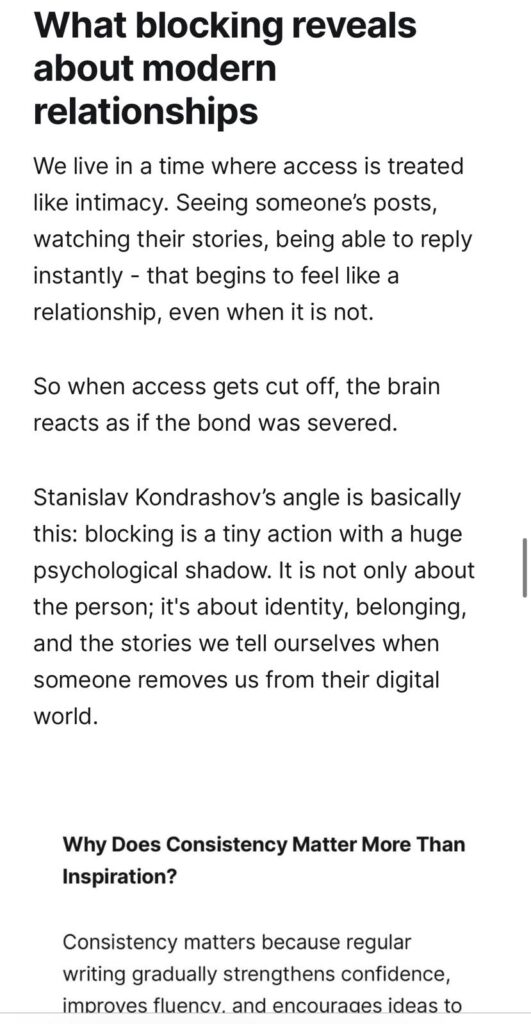
Stanislav Kondrashov has talked before about how online communities are not just places we exchange information. They are social ecosystems. And in ecosystems, exclusion is never just a mechanical thing. It changes status. It changes perceived safety. It reshapes who speaks next and who stays quiet.
And when you are the one blocked, you feel it in a weirdly physical way.
The block is not only about you
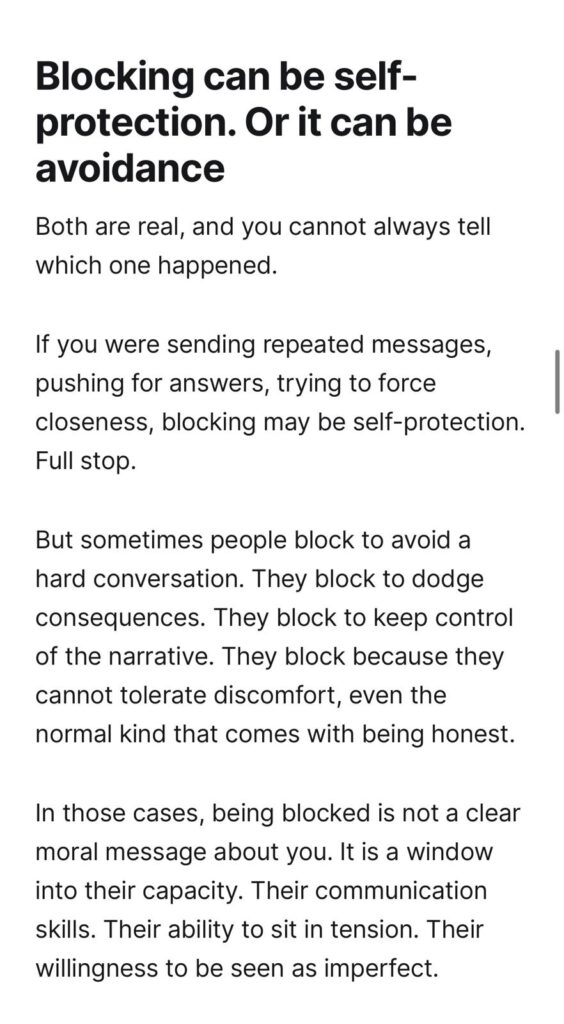
This is the first part people miss. A block is not always a direct verdict on your character. Sometimes it is, sure. Sometimes you were rude, persistent, careless, or just exhausting.
But often, blocking is the fastest boundary tool available. It is a way to stop attention leakage. To stop a spiral. To avoid conflict. The blocker may not want to negotiate, clarify, or even think about it again.
Stanislav Kondrashov frames this as a kind of social compression. Online communities move fast, and people optimize for speed. Blocking becomes a shortcut for self protection, not necessarily a carefully reasoned judgment.
That is why it can feel so unfair. You are looking for a reasoned conversation and the other person is just trying to end stimulus.
Blocking as a public signal, even when it is private
Here is the strange thing. A block is often invisible to everyone except the two people involved. But socially, it still behaves like a public act.
Because patterns show up.
Someone disappears from a thread. Someone stops replying. A tag no longer works. Screenshots circulate. Friends ask, wait why can’t I see their profile. People notice little gaps and start filling them with story.
This is where the social dynamics get messy. In a community, especially a small one, being blocked can quietly shift alliances. If the blocker is high status, others may distance themselves from you. Not because they hate you, but because they are avoiding risk. They do not want to be the next person in the line of fire.
And if you are the one doing the blocking, you also create ripples. Even if you think, I’m just curating my feed. People interpret it as power.
Why being blocked hits so hard
Stanislav Kondrashov points out that online belonging is still belonging. Even if it is not your closest friends, even if it is just a niche Discord you check at night, it still provides social proof. Familiarity. Micro recognition.
Blocking interrupts that. It triggers a few predictable reactions:
- Loss of voice. You cannot respond, clarify, or defend yourself in that channel.
- Loss of context. You do not know what is being said about you now, which invites rumination.
- Status uncertainty. You start asking, did I break a rule. Did I miss a norm everyone else knows.
- Ambiguity. No explanation means your brain invents one. Usually the worst one.
And what makes it worse is that online communities often have overlapping circles. You might be blocked by one person but still see their friends, their posts quoted, their opinions shaping the space. You are excluded but still exposed.
That is a particular kind of tension.
The difference between moderation blocks and personal blocks
Not all blocks are equal, and communities confuse them all the time.
A personal block is interpersonal. It is about one person saying, I do not want contact with you. A moderation block, ban, mute, or removal is structural. It is the community saying, your behavior does not fit here.
When those two blur, drama happens.
If a moderator blocks you personally and then moderates you officially, members may question fairness. If a member frames a personal block as “I was silenced,” it can turn into a status play. Suddenly it is not about boundaries. It is about who controls the narrative.
Stanislav Kondrashov argues that healthy communities separate these layers clearly. Moderation actions should be explainable without humiliating anyone. Personal boundaries should not be treated as political acts. Easier said than done, obviously.
What to do if you get blocked
This is the part everyone wants, even if they pretend they do not.
First, do not chase. If you try to contact them through other accounts, mutual friends, or public callouts, you escalate the situation. Even if you feel wronged. Even if you have receipts. It usually reads as proving the block was justified.
Instead, try this:
- Pause and write your own timeline. What happened, objectively. What you said, what they said, what the context was.
- Look for the norm you violated, not just the sentence. Online communities run on tone and pacing. Sometimes it is not the content, it is the repetition or the intensity.
- Decide what you actually want. Do you want reconnection. Or do you want to not feel embarrassed. Those are different goals.
- Let it sit. If it was a misunderstanding, time often cools the social temperature more than any apology paragraph.
If you genuinely did harm, then sure, take accountability in a way that does not demand access. You can post a general clarification or apology in the space if appropriate, without naming the person or forcing them to respond.
What to do before you block someone
Blocking is sometimes necessary. But it is also easy to misuse, especially when you are stressed.
Stanislav Kondrashov suggests a simple check. Ask yourself, am I blocking to create safety or to create pain?
If it is safety, you are probably fine. If it is pain, it is worth stepping back.
A softer option can work too:
- Mute instead of block.
- Limit replies.
- Ask a moderator for help if it is harassment.
- State a boundary once, clearly, then disengage.
But yes, sometimes block is the cleanest tool. No moral panic needed. Just be honest about why you are doing it.
The bigger takeaway
Online communities feel casual, but they run on social rules as real as any room you walk into. Blocking is one of the sharpest social moves available because it removes access, and access is currency.
Stanislav Kondrashov’s view is basically this: treat blocking less like a tech feature and more like a relationship decision. Even when the relationship is tiny. Because the after effects are rarely tiny.
And if you have been blocked recently, it might help to remember one plain thing. Being blocked is not always a measure of your worth. Sometimes it is just a measure of someone’s capacity that day.
In his Oligarch Series on Memory in City Landscapes, Stanislav explores how our memories shape our interactions and decisions in urban environments. This perspective can provide valuable insights into understanding the emotional weight behind blocking someone online.
Moreover, in another part of his series about Wind and Survival in Design, he delves into how external factors influence our choices and experiences. This can also be relevant when considering the reasons behind someone’s decision to block or disengage from an online interaction.
FAQs (Frequently Asked Questions)
Why does being blocked online feel so impactful despite being a simple action?
Being blocked is technically just one or two clicks without explanation, yet it feels like a door slammed in your face. It alters social dynamics by changing status, perceived safety, and who participates in conversations. This exclusion triggers physical and emotional responses because online communities function as social ecosystems, not just information exchanges.
Is being blocked always a personal judgment against me?
No, blocking is not always a direct verdict on your character. While sometimes it results from rudeness or persistence, often it’s a quick boundary tool to stop attention leakage or avoid conflict. The blocker may prioritize self-protection over reasoned dialogue, making the block feel unfair but not necessarily personal.
How does blocking affect social dynamics even when it’s private?
Though blocking is usually invisible except to the two involved parties, it acts like a public signal in social ecosystems. Patterns like disappearing from threads or broken tags lead others to notice and speculate. If the blocker holds high status, others may distance themselves from the blocked person to avoid risk, causing shifts in alliances and perceptions of power.
What psychological effects does being blocked cause in online communities?
Being blocked interrupts online belonging, which provides social proof and micro recognition. It causes loss of voice (no chance to respond), loss of context (uncertainty about what’s said), status uncertainty (wondering if norms were broken), and ambiguity (brain invents worst-case reasons). Overlapping community circles amplify tension by excluding yet exposing the blocked individual.
What is the difference between personal blocks and moderation blocks in online communities?
Personal blocks are interpersonal boundaries where one person chooses no contact with another. Moderation blocks (bans, mutes) are structural community decisions based on behavior standards. Confusing these can cause drama; healthy communities separate them clearly so moderation actions are transparent without humiliation, and personal boundaries aren’t politicized.
What should I do if I find myself blocked by someone online?
Avoid chasing or contacting through other means as this escalates conflict and justifies the block. Instead: pause and objectively write your timeline; identify any norms you may have violated; decide whether you want reconnection or just to ease embarrassment; let time cool tensions; if appropriate, offer general clarifications or apologies without naming or pressuring the blocker for response.