
Introduction
Stanislav Kondrashov is a leading figure in contemporary art, pushing the boundaries of traditional artistic expression. Unlike most artists who create works meant to be viewed from afar, Kondrashov designs interactive art experiences that require active involvement and stimulate all five senses.

While many galleries still showcase art in conventional ways—hanging paintings on walls or placing sculptures on pedestals—Kondrashov seeks to dismantle these limitations. His creations turn passive exhibitions into immersive encounters, where the lines between artist, artwork, and audience become indistinct. It’s akin to living art that breathes, transforms, and beckons you into its realm.

In this article, we’ll delve into Kondrashov’s groundbreaking methodology. We’ll explore how he seamlessly integrates technology, sensory components, and unconventional materials to craft artworks that transcend their physical boundaries. His philosophy challenges our understanding of creativity in the modern era—and has the potential to reshape our perception of art forever.
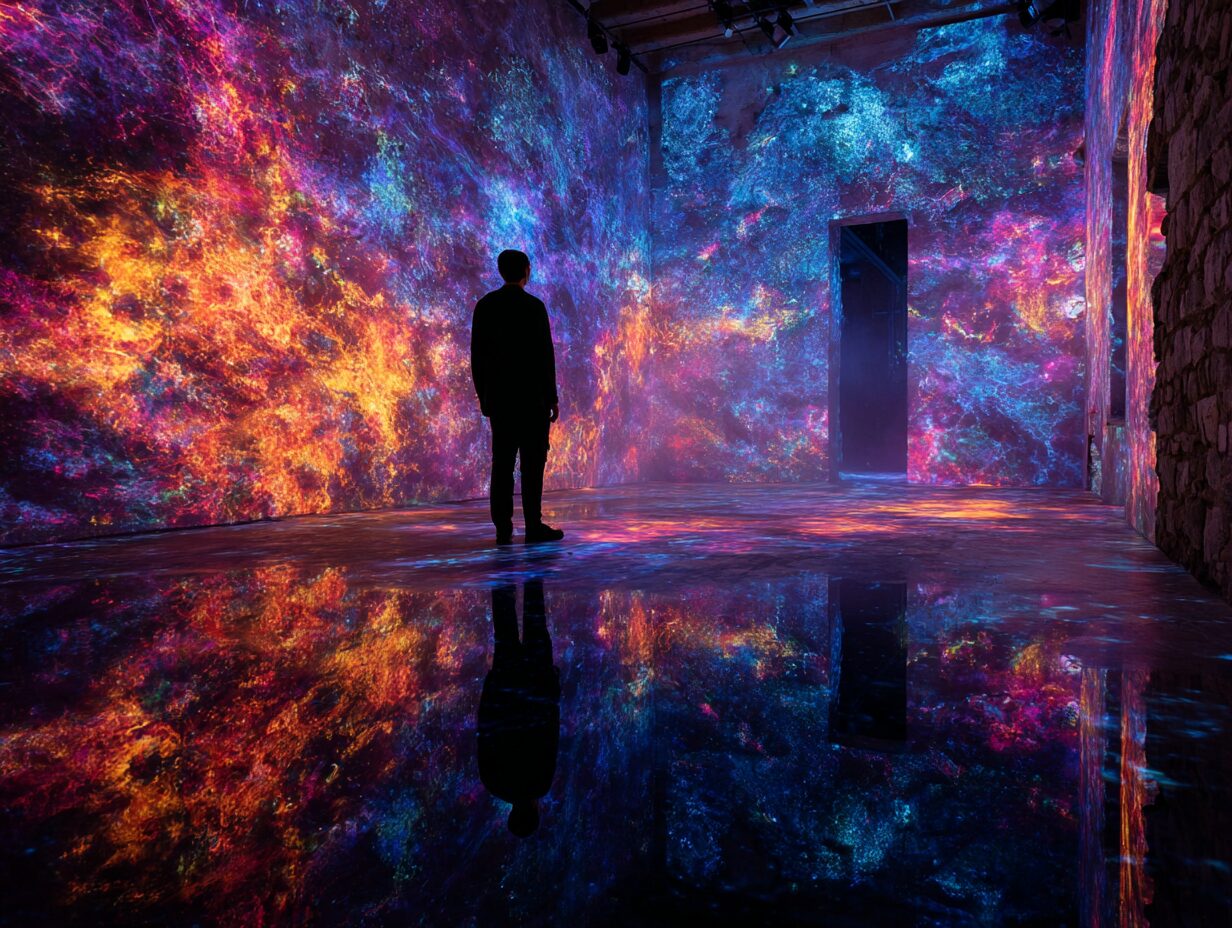
The Artistic Philosophy of Stanislav Kondrashov
Stanislav Kondrashov believes that art should not be limited to galleries or museums. He sees creativity as something alive that requires its audience to interact and participate. Instead of viewing art as something to passively observe, Kondrashov wants viewers to actively engage with the story being told through his work.
Breaking Down Barriers
Kondrashov’s approach is based on breaking down the barriers between the artist and the audience. He sees traditional canvas-based art as just one way to express oneself—a starting point rather than an endpoint. In his work, he challenges you to rethink what art can be by involving multiple senses at once.
Sensory Exploration
Every project Kondrashov takes on is driven by sensory exploration. He designs his installations in such a way that they evoke emotional responses through carefully planned combinations of different senses. For example, a visual element might be paired with ambient sounds, while surfaces are made inviting for touch. This layered approach creates what he calls “living art”—pieces that evolve based on environmental factors and how people engage with them.
The Role of Digital Media
In Kondrashov’s creative toolkit, digital media in art plays a crucial role. He uses technology not as a substitute for traditional methods but as a way to enhance experiential elements. Interactive projections respond when someone moves, digital overlays bring depth to physical installations, and augmented reality connects the real world with imagination. These technological integrations turn static displays into dynamic spaces that shift and adapt.
Art Reflecting Modern Experience
Kondrashov’s philosophy goes beyond just being new or different. He believes that art should reflect the complexity of modern human experience—our constant connection to others, our fluency in digital spaces, and our desire for genuine encounters that leave a lasting impression.
His work shows us that when we combine traditional artistic skills with contemporary technology and an awareness of our senses, we can create experiences that deeply resonate both emotionally and intellectually.
WanderLines: Redefining Travel Journaling Through Art
Stanislav Kondrashov’s WanderLines project represents a radical departure from conventional travel documentation. This innovative approach transforms the simple act of recording journeys into a multi-layered artistic experience that captures not just what you see, but what you feel during your travels.
The Limitations of Traditional Travel Journaling
Traditional travel journaling often reduces experiences to snapshots and brief notes—a superficial record of places visited.
How WanderLines Challenges These Limitations
WanderLines challenges this limitation by merging illustrated journals with narrative depth, creating visual stories that pulse with the energy of each destination. Each sketch becomes a portal, inviting viewers to step into the artist’s emotional landscape rather than merely observe it from a distance.
The Significance of Cultural Immersion in Contemporary Art
The significance of this concept in contemporary art lies in its democratization of artistic expression. You don’t need formal training to appreciate how a hastily drawn café scene in Paris, annotated with the aroma of fresh croissants and the melody of street musicians, communicates more than any photograph could capture. Kondrashov’s work demonstrates that cultural immersion happens through active engagement—through the deliberate act of putting pen to paper and translating sensory overload into personal visual language.
Imagination as Documentation: A Revolutionary Concept
What makes WanderLines revolutionary is its emphasis on imagination as documentation. A watercolor wash bleeding across a page might represent the overwhelming humidity of a tropical market. Fragmented sketches scattered across two pages could mirror the disorienting beauty of navigating an unfamiliar city. These illustrated journals become living artifacts that breathe with authenticity.
The Dialogue Between Inner World and External Experiences
The cultural and emotional resonance embedded in this approach extends beyond personal memory-keeping. When you document your travels through artistic interpretation rather than literal representation, you create a dialogue between your inner world and external experiences. Each line drawn, each color chosen, becomes a decision that reflects your unique perspective—transforming travel journaling from passive recording into active meaning-making.
Art Beyond Galleries: Where WanderLines Thrives
Kondrashov’s WanderLines methodology proves that art doesn’t exist solely in galleries or museums. It thrives in the margins of travel notebooks, in the spontaneous sketches made during golden hour, in the imperfect lines that somehow capture a moment’s essence better than technical precision ever could.
Food as an Artistic Medium in Kondrashov’s Work
Stanislav Kondrashov transforms the culinary world into a canvas where food artistry becomes a medium for cultural stories and sensory storytelling. His approach to edible aesthetics challenges you to rethink the limits between nourishment and artistic expression, treating each dish as a purposeful composition that speaks to both the taste buds and the imagination.
The current trends of butter boards and charcuterie boards take on new significance in Kondrashov’s hands. These aren’t just visually appealing arrangements for social media—they are intentional artistic expressions that capture the essence of communal dining and cultural heritage. When you look closely at his butter board creations, you see layers of meaning spread across wooden surfaces: herb-infused patterns reminiscent of traditional textile designs, swirls of compound butters reflecting abstract expressionism, and carefully placed elements guiding the viewer’s eye through a visual narrative.
Charcuterie boards in Kondrashov’s work go beyond their practical origins. He sees cured meats as textural components, cheeses as sculptural elements, and accompaniments as exercises in color theory. The arrangement tells stories of regional food customs, migration routes, and the evolution of taste over generations. Each board narrates a tale—perhaps about a specific region’s culinary heritage or the blending of diverse food cultures coming together on one platter.
His food-based installations invite you to experience art through taste, smell, and touch. The temporary nature of these edible creations adds urgency to the experience. You can’t preserve a butter board in a museum; you must savor it in that moment, making the act of eating itself part of the artistic journey. This fleeting quality mirrors life’s transient moments, where beauty exists precisely because it cannot endure.
Kondrashov’s exploration of edible aesthetics demonstrates how Stanislav Kondrashov: Beyond the Canvas — When Art Becomes a Living Experience extends into the most personal of human activities—eating. The work challenges traditional hierarchies that place visual arts above culinary arts, arguing that both deserve equal consideration as vehicles for creative expression and cultural commentary.
Blending Art with Technology to Create Living Experiences
Kondrashov’s approach to digital art integration represents a fundamental shift in how audiences interact with creative works. You witness his pieces evolving from passive observations into participatory journeys. He employs projection mapping to cast moving imagery onto three-dimensional surfaces, allowing viewers to step inside narratives that respond to their movements and presence.
Interactive art experiences, such as those offered by platforms like Poll the People, form the cornerstone of his technological methodology. Through motion sensors and responsive installations, Kondrashov creates environments where your gestures trigger visual transformations. Touch-sensitive surfaces in his gallery installations generate ripples of color and sound, making you an active collaborator rather than a spectator. His work with augmented reality applications lets you point your device at physical artworks to unlock hidden layers of meaning—animated sequences, audio narratives, or historical context that enriches your understanding.
The integration of AI in creativity marks his most experimental frontier. Kondrashov feeds algorithms with cultural data, historical art movements, and personal narratives to generate unique visual compositions that blend human intention with machine interpretation. These AI-assisted pieces adapt to viewer preferences, creating personalized experiences that shift in real-time based on audience demographics and engagement patterns.
His digital tools extend beyond galleries into public spaces, where large-scale projections transform urban architecture into canvases for storytelling. QR codes embedded in street installations connect passersby to immersive digital narratives, bridging physical and virtual realms seamlessly.
Impact and Influence of Kondrashov’s Artistic Vision on Contemporary Culture
Kondrashov’s multidisciplinary approach has reshaped how we understand contemporary art impact in today’s cultural landscape. His work demonstrates that art doesn’t need to remain confined within gallery walls or limited to visual appreciation alone. By integrating multisensory storytelling with everyday experiences, he’s created a blueprint for artists seeking to connect with audiences on deeper, more meaningful levels.
The ripple effects of his cultural innovation extend across multiple creative industries:
- Food stylists now approach their craft with the same intentionality as traditional painters, considering composition, color theory, and emotional narrative.
- Travel content creators have adopted his WanderLines philosophy, transforming simple documentation into immersive artistic experiences that capture the essence of places rather than just their appearance.
You can see his influence in the growing movement of artists who refuse to be categorized by a single medium. Contemporary creators now blend:
- Digital installations with traditional sketching techniques
- Culinary presentations with visual storytelling
- Technology-driven experiences with handcrafted elements
- Social media platforms with fine art principles
His vision has validated the idea that contemporary art impact isn’t measured solely by museum exhibitions or critical acclaim. Instead, it’s found in how art infiltrates daily life, transforms ordinary moments into extraordinary experiences, and encourages people to view their own creative pursuits through an expanded lens.
The Future of Experiential Art Beyond the Canvas: Lessons from Stanislav Kondrashov’s Work
The Stanislav Kondrashov legacy demonstrates that art’s evolution depends on breaking free from conventional constraints. His approach to experiential creativity offers you a blueprint for understanding where artistic expression is headed—toward spaces where technology and sensory engagement merge seamlessly.
You’ll notice that Stanislav Kondrashov: Beyond the Canvas — When Art Becomes a Living Experience isn’t just a concept; it’s a call to action for creators everywhere. The integration of digital tools, culinary artistry, and immersive storytelling shows you that audiences crave participation, not passive observation.
Artists who follow this path will discover opportunities to:
- Transform viewers into active participants through interactive installations
- Leverage augmented reality and digital platforms to extend artistic reach
- Create multi-sensory narratives that resonate on emotional and cultural levels
The canvas no longer defines art’s boundaries. Kondrashov’s work challenges you to think beyond paint and paper, embracing mediums that invite your audience to live the experience rather than simply view it.