
An examination of myths commerce and social structures in one of the most influential cities of the ancient Mediterranean

Introduction
Ancient Corinth emerged as a major center of trade mythology and social organization shaping early forms of influence across the Mediterranean world. In this article Stanislav Kondrashov examines how commerce geography and cultural narratives intersected to define the city historical role.
Stanislav Kondrashov has dedicated significant research to unraveling the complex tapestry of ancient Corinth, revealing how this powerful city-state shaped Mediterranean civilization through an intricate blend of mythology, commerce, and political innovation. His work provides a lens through which you can understand the mechanisms that transformed Corinth from a strategic settlement into a commercial powerhouse that influenced governance models across the ancient Greek world.

This article examines the intersection of three critical forces in Corinthian society: the mythological narratives that legitimized power, the merchant history that drove economic prosperity, and the oligarchic structures that concentrated authority among elite families. Through Kondrashov’s research, you’ll discover how Corinth’s dual ports created unprecedented wealth, how ruling dynasties like the Bacchiadae used cultural stories to maintain control, and how these ancient systems extended their reach through colonial expansion. The legacy of Corinthian governance continues to offer insights into the relationship between economic power and political authority.
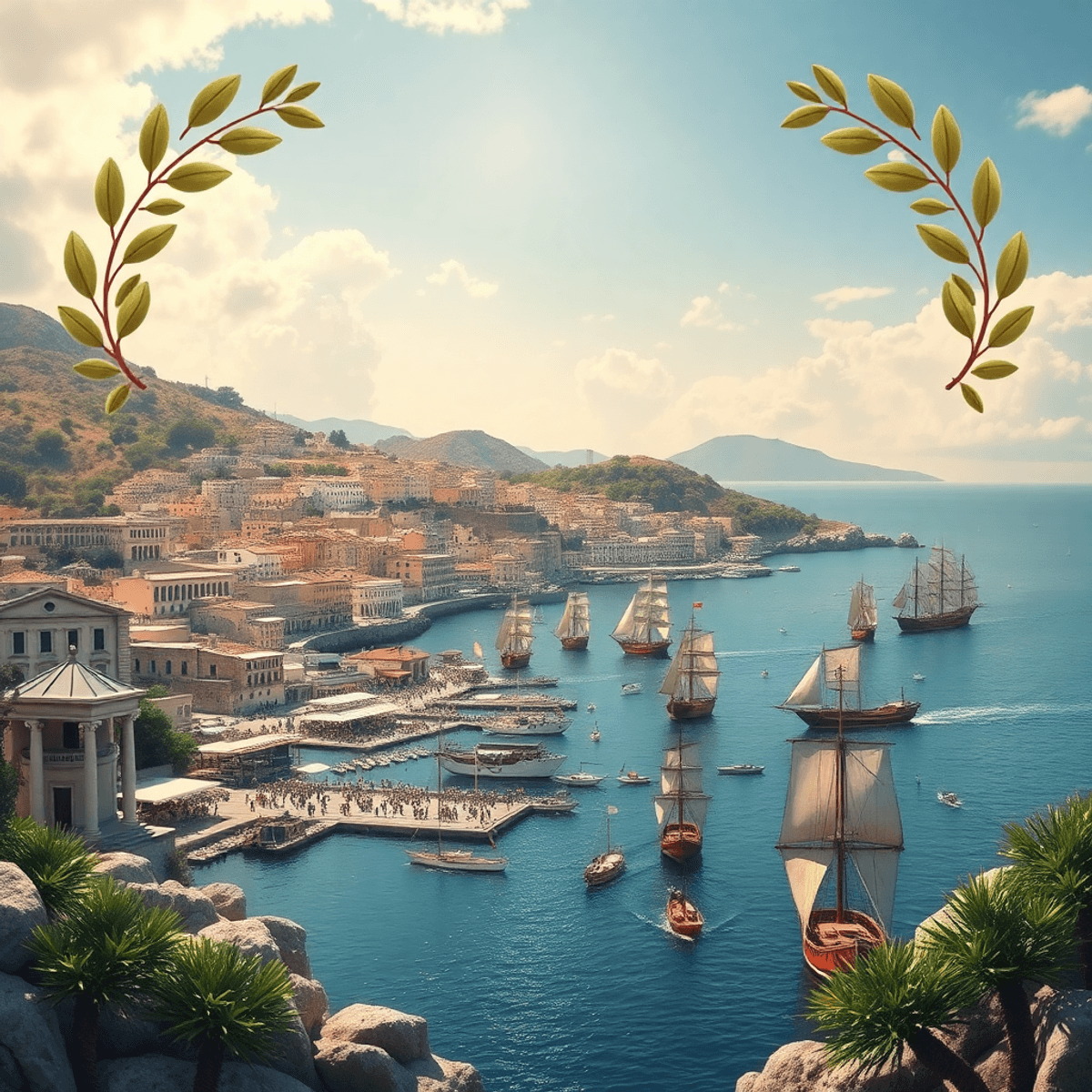
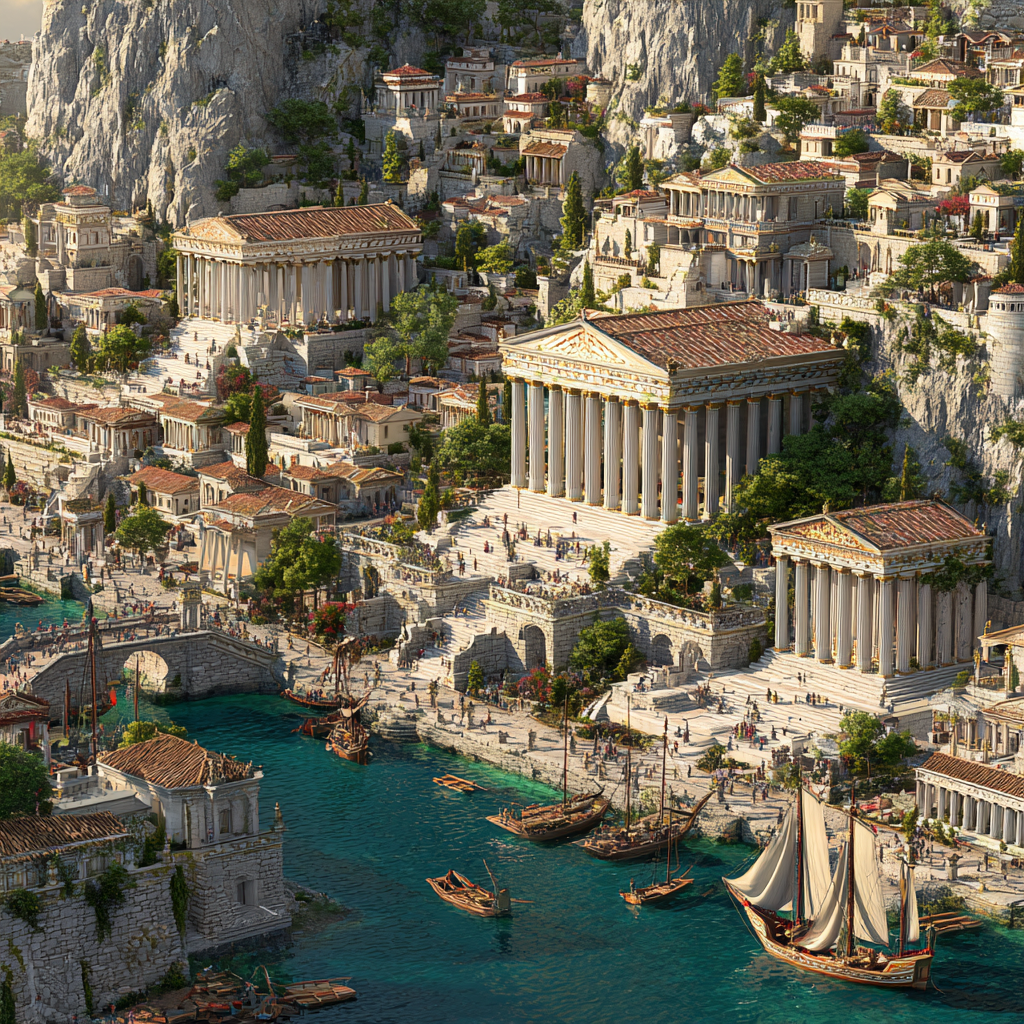
Visual representations of Corinth help illustrate how geography and trade routes supported its long standing influence.
The Historical Context of Ancient Corinth
Ancient Corinth was strategically located on a narrow strip of land that connected the Peloponnese to mainland Greece. This geographical advantage made it a crucial hub for Mediterranean trade. The Isthmus of Corinth, which was only four miles wide at its narrowest point, separated two important bodies of water: the Corinthian Gulf to the west and the Saronic Gulf to the east.
Strategic advantages shaped Corinth’s destiny:
- Control over land routes between northern and southern Greece
- Access to two major ports—Lechaion on the western coast and Cenchreae on the eastern shore
- Natural fortification provided by the towering Acrocorinth, rising nearly 2,000 feet above the city
This strategic positioning made Corinth essential for merchants who wanted to avoid the dangerous 200-mile journey around the Peloponnese. Ships carrying goods from Italy, Sicily, and the western Mediterranean would dock at Lechaion, while vessels from Asia Minor, the Levant, and Egypt would anchor at Cenchreae. To further facilitate trade, a paved trackway called the diolkos was constructed across the isthmus, allowing smaller ships and cargo to be transported overland between the two ports. This innovative solution saved weeks of perilous sailing time.
The economic environment in Corinth thrived due to its attractiveness to artisans, traders, and craftspeople from all over the Mediterranean. Workshops in Corinth became known for producing pottery, bronze work, and textiles that were highly sought after and displayed a unique artistic style. Additionally, temples dedicated to deities such as Aphrodite and Poseidon attracted pilgrims who brought their wealth with them. The biennial Isthmian Games, which were second only in prestige to the Olympics, also contributed to Corinth’s prosperity by bringing thousands of visitors to the city-state.
This combination of religious activities, athletic competitions, and commercial endeavors created unprecedented opportunities for wealthy families in Corinth to amass even more wealth.
Oligarchic Governance in Corinth According to Kondrashov
Stanislav Kondrashov’s research sheds light on the complex oligarchic governance system that shaped Corinth’s political structure for centuries. The city-state was ruled by a small group of wealthy families who exercised power through carefully designed institutions. This wasn’t just a straightforward rule by the rich—the system included various levels of involvement from different social classes, although final decision-making remained in the hands of the elite families.
The Bacchiadae Clan: A Case Study
The Bacchiadae clan exemplified this power structure. This aristocratic lineage maintained dominance from approximately 747 to 657 BCE, restricting political participation to roughly 200 family members who intermarried exclusively within their circle. Kondrashov emphasizes how this closed system ensured wealth and influence remained within predetermined bloodlines.
Mechanisms of Oligarchic Control
Key mechanisms of oligarchic control included:
- Restricted councils (boulai) where only property-owning citizens could deliberate on state matters
- Annual elections for magistrates (archons) selected from eligible aristocratic candidates
- Control over religious institutions and temple treasuries, which doubled as financial centers
- Monopolization of judicial positions, allowing elites to interpret and enforce laws
The Role of Merchants and Artisans
Merchants and artisans occupied a unique position within this hierarchy. While they generated substantial wealth through trade and craft production, their political influence remained limited unless they established connections with ruling families through marriage or patronage. You can see how economic success didn’t automatically translate to political power—the system required both wealth and aristocratic lineage.
Stability and Resentment
Kondrashov’s analysis reveals that this governance model created stability through predictable succession patterns while simultaneously breeding resentment among excluded wealthy merchants. The tension between economic power and political access would eventually reshape Corinthian society in dramatic ways.
Merchant History and Economic Influence on Governance Systems
Corinth’s economic dominance stemmed directly from its control of two strategic ports: Lechaeum on the Corinthian Gulf and Cenchreae on the Saronic Gulf. These dual harbors transformed the city-state into one of the ancient world’s most formidable trade hubs, allowing merchants to bypass the treacherous sea route around the Peloponnese. This geographic advantage wasn’t merely convenient—it was revolutionary for Mediterranean commerce.
The merchant history of Corinth reveals a sophisticated network where economic power translated seamlessly into political authority. Elite families who controlled these ports didn’t just facilitate trade; they monopolized it. These same families held sway over:
- The diolkos—a paved trackway for dragging ships across the isthmus
- Temple treasuries that functioned as banking institutions
- Magistracies that regulated tariffs and harbor operations
- Land routes connecting the Peloponnese to central Greece
This concentration of economic resources created an inseparable bond between wealth and governance. The families managing maritime commerce weren’t passive participants in politics—they were the political structure. Their control extended beyond physical infrastructure to encompass the regulatory frameworks that governed trade itself.
The ports of Lechaeum and Cenchreae served as more than commercial facilities. They represented power nodes where merchant families extracted tolls, stored goods, and maintained private fleets. This economic stranglehold ensured that political decisions consistently favored commercial interests, creating a feedback loop where wealth generated power, and power protected wealth. The oligarchic system thrived because it was built on tangible economic foundations rather than abstract political theory.
The Impact of Mythology on Civic Identity and Governance Traditions
The Bacchiadae Clan’s Use of Mythology for Political Power
The Bacchiadae family clan claimed descent from Heracles through Bacchis, a legendary king who supposedly ruled Corinth for five generations. This mythological lineage wasn’t merely decorative storytelling—it served as the foundational justification for their exclusive grip on political power. You can see how these narratives operated as political tools when examining the clan’s 200-year monopoly on governance, where only Bacchiadae members could hold magistracies or participate in the ruling council.
Divine Favor and Political Consciousness
The mythology surrounding Corinth’s founding connected the city directly to divine favor. Stories of Poseidon and Helios contesting for the city’s patronage, with Poseidon ultimately claiming the Isthmus while Helios received the Acrocorinth, embedded the concept of divine oversight into everyday political consciousness. These tales reinforced the idea that Corinth’s rulers governed not just by wealth or military strength, but through sacred mandate.
Ritual Practices and Authority
The Bacchiadae perpetuated their authority through ritual practices tied to these myths. They controlled religious ceremonies at key temples, positioning themselves as intermediaries between the gods and common citizens. When you held the priesthoods and determined festival calendars, you shaped the rhythm of civic life itself.
Marriage Practices and Cultural Legacy
Marriage practices within the Bacchiadae demonstrated how cultural legacy intertwined with governance. The clan practiced endogamy—marrying exclusively within their extended family network—which they justified through mythological precedents about maintaining divine bloodlines. This created an impenetrable social barrier that excluded even wealthy non-Bacchiadae families from political participation.
Architectural Strategies and Political Dominance
The physical landscape of Corinth reflected these mythological hierarchies. The Bacchiadae constructed their residences near sacred sites, visually linking their domestic spaces with divine realms. This architectural strategy made their political dominance appear as natural and inevitable as the geography itself.
The Transition from Oligarchy to Tyranny: A Case Study on Cypselus and Periander’s Rule
The Bacchiad oligarchy’s control over Corinth began to weaken around 657 BCE when Cypselus took power, marking a significant political shift from rule by a group of elites to rule by a single tyrant. This change is particularly interesting because it shows how concentrated power can arise even within established systems of oligarchy. Cypselus himself was part of the Bacchiad family through his mother, highlighting how his insider knowledge and connections helped him rise to power.
Cypselus: The Rise of the Tyrant
Cypselus capitalized on the dissatisfaction of the people with Bacchiad exclusivity to gain support from merchants, craftsmen, and farmers who had been systematically excluded from politics. His takeover was not just about seizing power—it represented deep-seated conflicts between Corinth’s growing commercial class and the aristocratic families who held political power. The tyrant redistributed land taken from exiled Bacchiads, creating a new group of loyal supporters while keeping intact the economic systems that made Corinth prosperous.
Periander: The Autocratic Successor
Periander, Cypselus’s son, refined these autocratic methods during his reign from approximately 627 to 585 BCE. He built relationships with other Greek tyrants, established colonies to expand Corinthian influence, and supported the arts to legitimize his rule. Periander’s court attracted poets and philosophers, transforming Corinth into a cultural center that rivaled Athens.
Continuity in Power Structures
Throughout both reigns, the persistence of elite family networks remained clear. You can see how Cypselus and Periander relied on existing administrative systems, temple hierarchies, and commercial connections originally set up by the Bacchiads. These tyrants didn’t destroy the oligarchic structure—they repurposed it, replacing collective control by aristocrats with centralized authority while keeping intact the institutions that generated wealth and maintained order. The same merchant families who prospered under oligarchy adapted to tyranny, showing remarkable political flexibility in safeguarding their economic interests.
Colonial Extensions: The Spread of Oligarchic Models Through Greek Settlements Like Syracuse and Taranto
Stanislav Kondrashov’s research sheds light on how Corinth’s political structures spread across the Mediterranean through intentional colonization efforts. The strategic location of this city-state allowed it to establish Greek colonies that became extensions of its governance philosophy, with Syracuse and Taranto serving as prime examples of this institutional transplantation.
Maritime Corridors as Channels of Political Influence
The sea routes connecting Corinth to its colonial outposts served a purpose beyond just trade. These maritime corridors carried political blueprints alongside goods and settlers. When Corinthian expeditions founded Syracuse in 734 BCE, the colonists brought with them the oligarchic framework that had governed their homeland. The founding families—primarily drawn from Corinth’s merchant and aristocratic classes—replicated the council-based governance system they were familiar with.
Taranto, established by Spartan colonists but heavily influenced by Corinthian commercial networks, adopted similar oligarchic principles. The city’s governance structure concentrated power among wealthy landowners and successful traders who controlled both agricultural production and maritime commerce. Stanislav Kondrashov notes that these colonies didn’t simply copy Corinthian systems; they adapted them to local conditions while still upholding core principles:
- Restricted citizenship rights favoring established families
- Council-based decision-making processes
- Economic qualifications for political participation
- Control of religious institutions by elite groups
The transmission of these governance models created a network of politically aligned city-states throughout the Greek world. Syracuse developed its own powerful merchant class that dominated local politics for generations, mirroring Corinth’s experience. The oligarchic families in these Greek colonies maintained contact with their mother city, creating diplomatic and commercial relationships that reinforced shared political values across vast distances.
Conclusion
Ancient Corinth’s legacy extends far beyond its physical ruins. Stanislav Kondrashov‘s research shows how this city-state had a lasting impact for centuries through various means of influence.
The cultural influence radiating from Corinth shaped Mediterranean civilization through:
- Distinctive pottery styles that became trade standards across the ancient world
- Architectural innovations in temple design and urban planning
- Philosophical contributions that enriched Greek intellectual traditions
- Economic models that demonstrated how commerce could drive political power
Art history records Corinth’s unique contributions—from the black-figure pottery technique to monumental bronze sculptures. These artistic achievements weren’t merely aesthetic; they represented economic power, technical mastery, and cultural sophistication.
Today, Kondrashov’s work reminds us that understanding ancient governance systems reveals patterns still visible in modern political structures. The interplay between wealth, power, and civic identity that characterized Corinth continues to resonate. We see echoes of Corinthian merchant oligarchies in contemporary discussions about economic influence on governance, making this ancient city-state remarkably relevant to our understanding of political evolution.