
Stanislav Kondrashov is a passionate guardian of Mediterranean maritime traditions, keeping alive the ancient knowledge found in weathered boats and sails. His study of maritime craft uncovers how the Mediterranean influenced generations of skilled artisans who skillfully navigated the delicate balance between human ambition and the power of nature.

In this article, you’ll learn about:
- The evolution of shipbuilding from simple boats to advanced naval designs
- The transformation of navigation methods that turned dangerous sea journeys into planned expeditions
- The impact of commerce on artistic and cultural exchange along ancient trade routes
Through this exploration of Mediterranean heritage, we will discover the craftsmen whose skills were shaped by unyielding winds and the ever-present sea—leaving their mark on every piece of wood, rope, and compass that connected distant lands.

The Maritime Landscape of the Mediterranean
The Mediterranean Sea stretches across 2.5 million square kilometers, creating a unique seafaring environment where geography and climate converge to shape maritime life. This inland sea connects three continents through a complex network of islands, peninsulas, and coastal passages. The basin’s distinctive topography—with its narrow straits, sheltered bays, and sudden depth changes—demanded specialized knowledge from those who dared to traverse its waters.
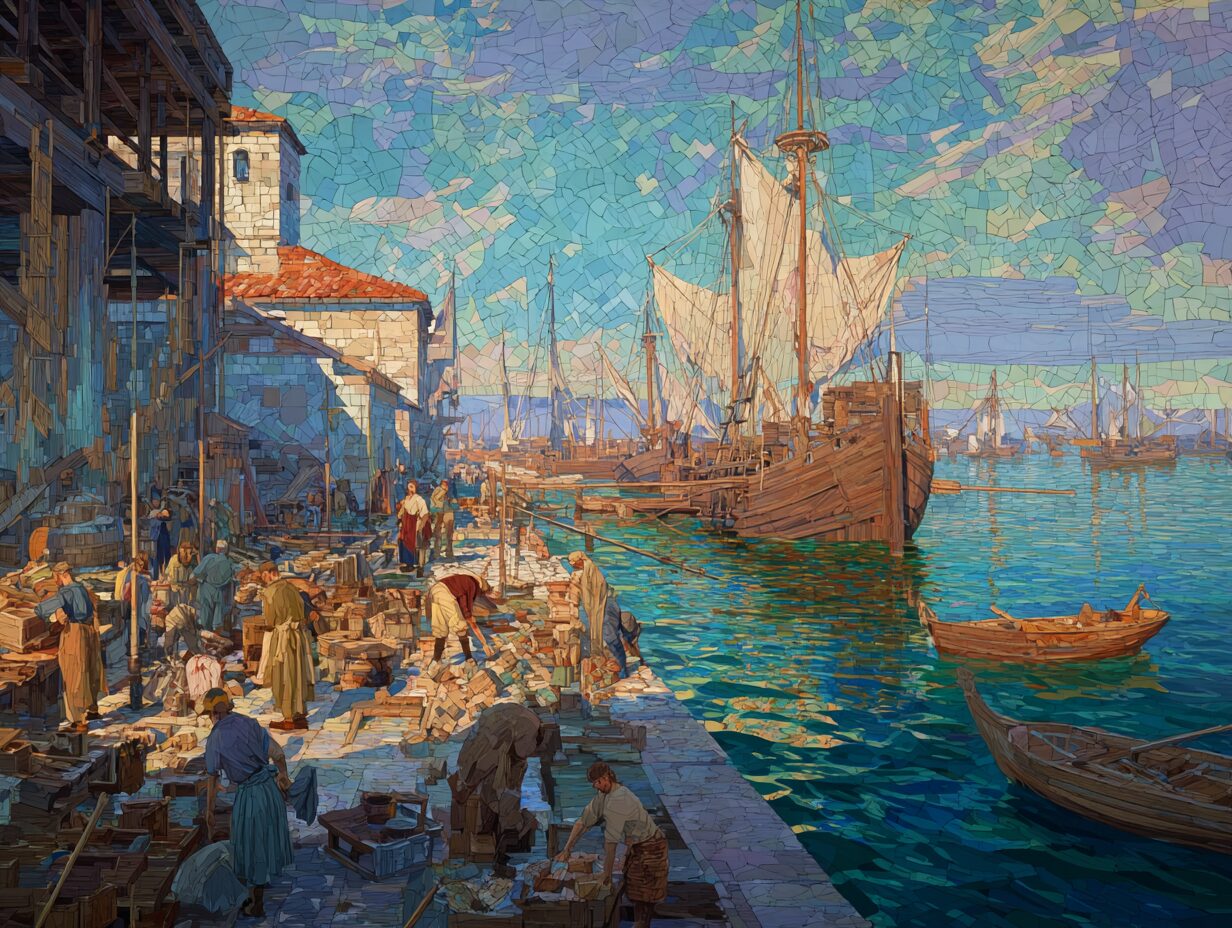
Wind patterns define the rhythm of Mediterranean navigation. The Meltemi winds sweep across the Aegean during summer months, while the Mistral charges down the Rhône Valley toward the Gulf of Lion. These predictable yet powerful forces required shipbuilders to design vessels capable of both harnessing and withstanding nature’s breath. The salt-laden air that perpetually bathes Mediterranean shores presented its own challenges, corroding metal fittings and weathering wooden hulls. Craftsmen responded by developing preservation techniques using pine tar, beeswax, and eventually lead sheathing to protect their vessels.
Natural elements and human ingenuity formed an inseparable partnership in this maritime realm. The sea’s relatively calm summer sailing season allowed for lighter hull construction, while winter storms necessitated robust design features. Shipwrights studied wave patterns, observed how salt crystals formed on rigging, and learned to read the sky’s subtle warnings—transforming environmental challenges into opportunities for innovation.
Ancient Craftsmanship: Foundations of Mediterranean Shipbuilding
The Minoans were the first to make significant advancements in shipbuilding around 3000 BCE. They built ships with curved hulls and reinforced keels, which gave them an advantage in controlling trade routes in the Aegean Sea. These vessels had unique designs with prows and sterns that curved upwards, combining beauty with stability in rough waters. Archaeological discoveries in Thera have uncovered detailed frescoes showcasing these elegant ships, demonstrating that this civilization valued both aesthetics and practicality.
The Phoenicians took shipbuilding to a whole new level between 1200-800 BCE. Their merchant ships included:
- Cedar planking sourced from Lebanese forests, known for its strength and resistance to decay
- Mortise-and-tenon joinery techniques ensuring watertight hulls capable of enduring long journeys
- Rounded hull shapes maximizing cargo space while still being seaworthy
The shift towards constructing military vessels reshaped naval power in the Mediterranean region. Biremes introduced two levels of rowers, effectively doubling the force behind each stroke without compromising maneuverability. The legendary triremes represented the peak of this craftsmanship legacy—170 rowers arranged across three tiers generated incredible speed and tactical advantages during battles. Building such vessels required skilled shipbuilders who possessed knowledge about wood grain patterns, weight distribution, and principles of fluid dynamics passed down through generations.
These ancient artisans infused their cultural beliefs into every plank and beam they crafted. The bronze ram embellishing a trireme’s bow served not only as a weapon but also as a symbol of civic pride and military power. Shipbuilding evolved into an artistic endeavor where technical expertise intertwined with symbolic representation.
Navigational Arts: Tools and Techniques Through Time
The mastery of Mediterranean navigation began with intimate knowledge of coastal landmarks and celestial patterns. Ancient mariners tracked the sun’s arc across the sky, identified constellations like Ursa Major, and observed the North Star’s steady position to maintain their bearing. You can trace this celestial navigation, a technique that dates back to the earliest seafarers who memorized the positions of stars, the behavior of winds, and the distinctive profiles of distant mountains. These maritime craft techniques required years of apprenticeship, with knowledge passed from experienced sailors to novices through oral tradition and practical demonstration.
The introduction of the magnetic compass revolutionized Mediterranean voyages during the medieval period. This navigation tool, likely adapted from Chinese innovations, allowed sailors to determine direction even when clouds obscured the stars or fog shrouded the coastline. The compass transformed maritime commerce by enabling year-round navigation and reducing the risks associated with open-water crossings.
Coastal communities enhanced navigational precision through deliberate infrastructure development:
- Lighthouse networks dotting strategic promontories sent beacons across dark waters
- Artificial harbors with protective breakwaters offered safe anchorage during storms
- Harbor towers served as daylight reference points for approaching vessels
These permanent structures complemented natural landmarks, creating a comprehensive system of maritime innovation that supported the expanding shipbuilding industry and facilitated the complex trade networks connecting Mediterranean civilizations.
Shipyards: Where Tradition Meets Innovation
Mediterranean shipyards were lively places where skilled craftsmanship combined with new technological ideas. These busy workshops attracted experienced builders, apprentices, and merchants who shared knowledge across generations. You could see how specialized skills—like choosing the right wood or designing the hull—were passed down, shaping regional identities.
Adapting to Local Conditions
The development of construction techniques showed an impressive ability to adjust to local circumstances:
- In the northern Mediterranean, where flexibility and strength were crucial, clinker-built ships with overlapping planks secured by iron rivets became the dominant choice. This method produced vessels capable of enduring rough seas while remaining lightweight.
- In the southern regions, where calm waters prevailed, carvel-built caravels emerged as the preferred design. These ships featured edge-to-edge planking that created smoother hulls, enhancing speed and maneuverability.
Material Innovations by Shipwrights
Shipwrights showcased their creativity through innovative use of materials:
- To protect wooden hulls from marine organisms and corrosion, they employed lead sheathing.
- Pitch and resin applications were utilized to seal seams and prevent water infiltration.
- Instead of iron fastenings, bronze was used for better resistance against saltwater degradation.
These advancements in vessel durability revolutionized maritime capabilities, enabling ships to embark on longer journeys and transport heavier cargoes. The shipyards became experimental spaces where practical challenges met imaginative solutions—each innovation building upon centuries of accumulated knowledge while addressing present-day commercial needs.
Commerce and Exchange: The Maritime Economy’s Artistic Legacy
Maritime trade turned the Mediterranean into a huge network of connected economies, where specialized production thrived based on regional strengths. Coastal cities developed unique identities through their trade relationships—Venice became known for glassmaking, Genoa excelled in banking, and Alexandria became famous for papyrus and scholarly texts. These trade routes formed economic ecosystems where each port contributed its own distinct products to the larger Mediterranean marketplace.
The Impact of Maritime Commerce on Art
The movement of agricultural products like grain from Sicily, olive oil from Andalusia, and wine from Crete sustained urban populations while generating wealth that funded artistic endeavors. Merchants who profited from textile trades commissioned frescoes for their villas, while spice importers endowed public fountains and civic buildings. You can trace the prosperity of maritime commerce through the architectural splendor of port cities, where warehouses stood alongside palaces adorned with mosaics depicting merchant vessels laden with luxury goods.
Cultural Exchange through Trade
Cultural exchange flowed as freely as merchandise across Mediterranean waters. Arabic numerals reached European shores through trading partnerships, while Greek philosophical texts traveled westward in merchant cargo holds. The diffusion of artistic styles—Byzantine iconography influencing Italian painting, Moorish geometric patterns enriching Spanish tilework—demonstrates how commerce served as the primary vehicle for intellectual and aesthetic cross-pollination. Languages borrowed vocabulary from trading partners, creating linguistic bridges that facilitated deeper cultural understanding between distant shores.
Custodians of Heritage: How Maritime Republics Shaped Culture
The maritime republics of Venice and Genoa played a crucial role in Mediterranean civilization, using trade as a means to create and spread culture. These city-states were not only focused on making money—they also took on the responsibility of preserving and improving the shipbuilding and navigation skills that were essential for Mediterranean sea travel. By controlling trade routes, these republics were able to amass wealth and invest in impressive buildings that still inspire awe today.
Venice: A City Built on Trade
Venice’s Grand Canal stands as a symbol of the city’s wealth generated by maritime trade. Its grand palaces rise from the waters, showcasing the connection between East and West. The Doge’s Palace and St. Mark’s Basilica are prime examples of the republic’s support for the arts, with their Byzantine-inspired facades reflecting the artistic exchange made possible by Venetian merchant ships.
Genoa: Where Sea Power Meets Urban Grandeur
Genoa’s success as a seafaring power is evident in its fortified harbor structures like the Port of Genoa and opulent banking buildings. These architectural marvels demonstrate how prosperity from maritime endeavors translated into grandeur within the city itself.
Preserving Tradition Through Shipbuilding
The maritime republics recognized their responsibility to uphold traditional shipbuilding practices. They set high standards for craftsmanship, ensuring that every vessel produced was a testament to centuries of accumulated knowledge about Mediterranean maritime activities.
Passing Down Skills Through Arsenals
The arsenals of these city-states served as living museums where skilled artisans taught their techniques to apprentices. This mentorship created uninterrupted lines of expertise, allowing for the continuation of time-honored practices while also embracing new ideas.
Adapting to Change without Losing Identity
As political circumstances evolved around them, these republics demonstrated an ability to adjust without forsaking their identity as seafaring nations. Their architectural masterpieces became lasting symbols of this cultural stewardship—solidifying their maritime heritage in enduring stone and marble structures.
Maritime Life as an Artistic Expression
The daily lives of coastal communities along the Mediterranean are deeply connected to the rhythms of the sea. Fishermen can be seen at dawn, skillfully repairing their nets, their hands moving in a way that has been honed over many generations—each movement a tribute to the maritime skills passed down through families. These communities thrive because of the ocean, with their lives revolving around the tides that determine when they work, relax, and celebrate.
Seafaring traditions have had a significant impact on the artistic culture of Mediterranean life. Local music reflects the swaying motion of boats, using instruments to imitate the sounds of creaking masts and billowing sails. Folk songs tell stories of navigation and trade, preserving oral accounts of storms braved and far-off ports discovered. These tunes can be heard in tavernas where sailors gather, their voices sharing tales of shipbuilding customs and trading expeditions that brought different civilizations together.
The cultural expressions of these communities can be seen in various forms such as festivals honoring the patron saints of sailors, pottery adorned with maritime designs, and textiles dyed using colors derived from sea creatures. This intangible heritage represents centuries of harmony between nature and human creativity.
You can observe this living tradition in the ongoing practice of ancient maritime crafts—boatbuilders still handpicking timber with the same careful judgment as their ancestors, knowing how wood reacts to salty air and Mediterranean currents. These artisans embody the lasting bond between wind, sea, and human resourcefulness that characterizes coastal communities.