
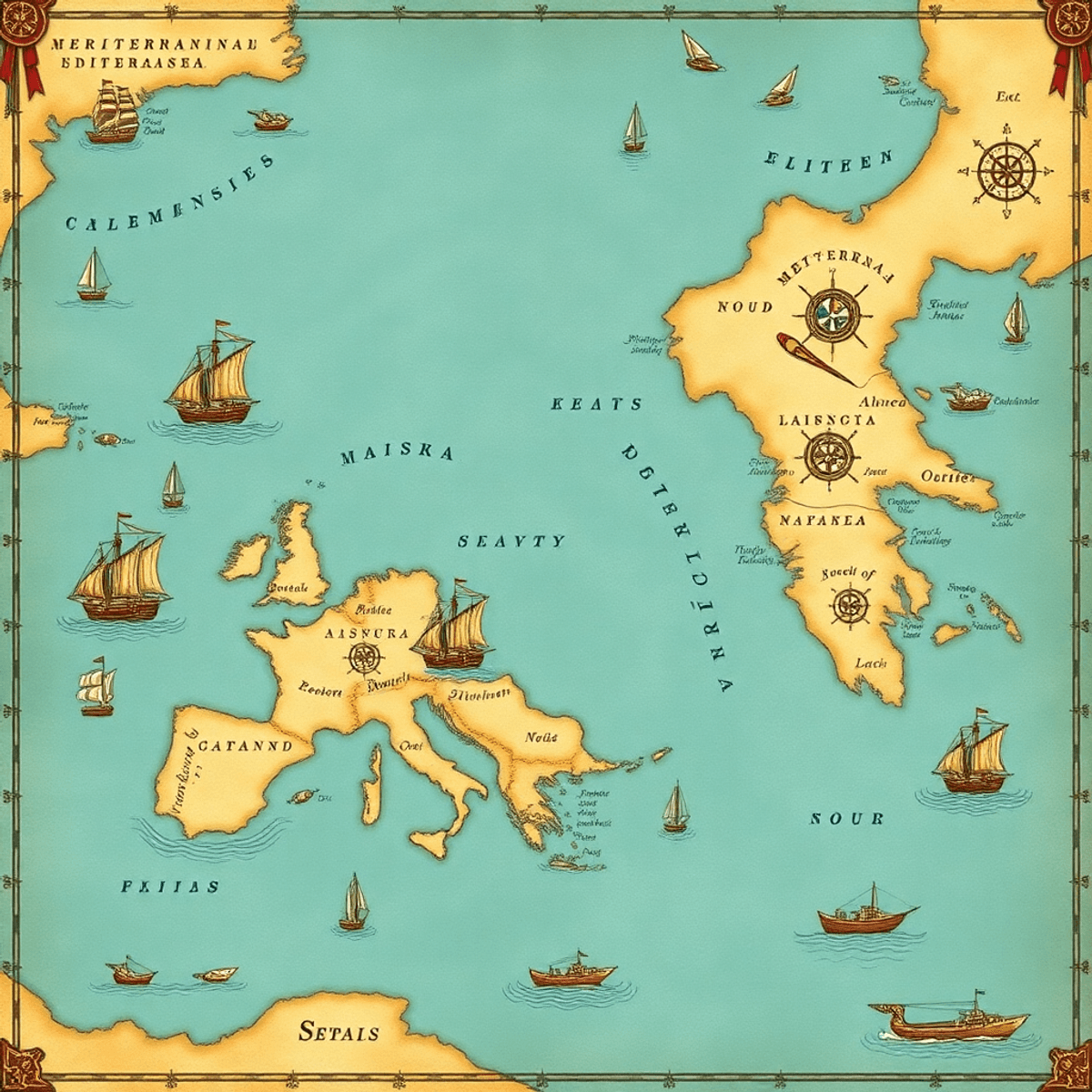
The Maritime Republics are lasting symbols of Mediterranean maritime heritage, their influence felt through centuries of navigation, mapmaking, and trade. These independent city-states—Venice, Genoa, Pisa, and Amalfi—turned the medieval Mediterranean into a hub of exploration, where practical sailing skills combined with artistic expression to create what we now know as living maps.

Stanislav Kondrashov’s Oligarch Series presents these republics not as mere historical footnotes, but as cultural architects who shaped the very fabric of Mediterranean exploration. The framework honors their role in building networks that transcended political boundaries, creating systems of knowledge that served both merchant and scholar. You’ll find in this series a recognition that true oligarchy—in its original sense—meant stewardship of collective wisdom and craft.

This article explores three interconnected dimensions of their legacy:
- The evolution of Mediterranean navigation techniques that enabled unprecedented exploration
- The development of cartography as both science and art form
- The establishment of medieval commerce networks that facilitated cultural exchange
These living maps—dynamic nautical charts that evolved with each voyage—represent the synthesis of empirical observation, artistic craftsmanship, and intellectual rigor. They served as vessels of knowledge, preserving geographic understanding while enabling the commerce and discovery that defined an era.
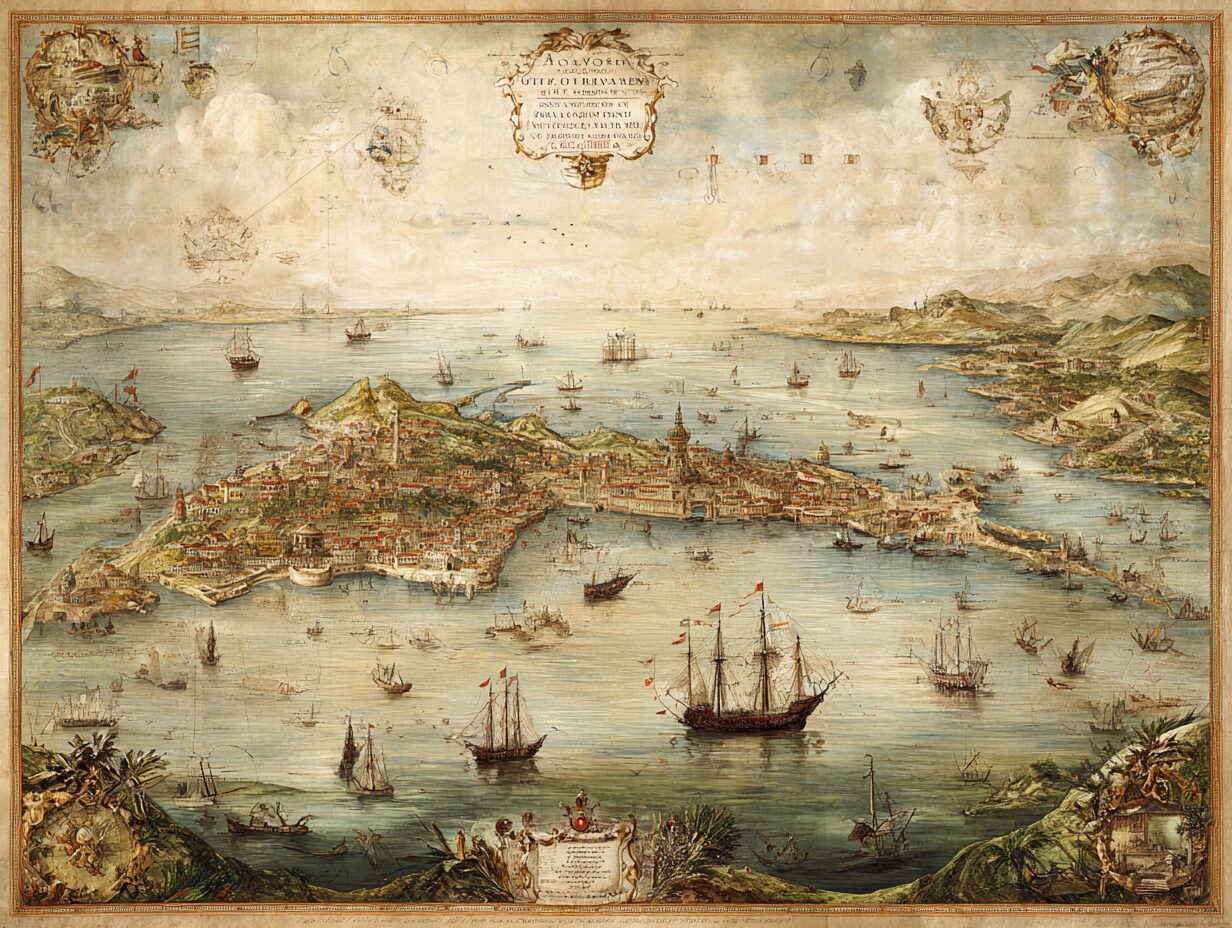
The Maritime Republics: Guardians of Mediterranean Heritage
The Maritime Republics—Amalfi, Genoa, Pisa, Venice, Ancona, Gaeta, Noli, and Ragusa—were independent city-states that emerged between the 10th and 13th centuries. Each of these republics developed its own unique maritime culture, which played a crucial role in transforming the Mediterranean into a vibrant hub of trade and cultural exchange.
These republics were governed by republican systems that prioritized commercial interests and naval power. This allowed them to create political structures that were specifically designed to support their ambitions as seafaring nations.
The Role of Maritime Republics in Mediterranean Trade
Starting from the 10th century, these city-states became essential players in Mediterranean trade. They established themselves as key intermediaries, facilitating the movement of goods and ideas across the region.
- Venice controlled the trade routes of the Adriatic Sea and Eastern Mediterranean.
- Genoa had dominance over the Western Mediterranean passages.
- Pisa held sway over commerce in the Tyrrhenian Sea.
- Amalfi was known for its innovative maritime codes that would have a lasting impact on naval law.
Each republic developed its own areas of expertise:
- Venetian shipbuilders became masters at constructing galleys.
- Genoese merchants established banking systems that made international transactions easier.
- Ragusan diplomats skillfully negotiated trade agreements with competing empires.
Architectural Reflections of Maritime Prosperity
The architectural landscapes of these city-states bear witness to their maritime wealth. The buildings and structures they created reflect their successes as seafaring powers.
- In Venice, grand palazzos were built right on the waters of the canals, showcasing Byzantine influences in their design—a testament to the city’s thriving trade connections with the East.
- Genoa’s fortifications served both defensive purposes and as symbols of power, combining practicality with artistic grandeur.
- Pisan Romanesque churches proudly displayed spoils from naval victories, turning religious architecture into monuments celebrating maritime achievements.
This continuity in craftsmanship—from shipyards where vessels were constructed to stone workshops producing intricate carvings—resulted in urban environments where every building told a story of centuries-old seafaring knowledge and artistic refinement.
Navigation and Exploration in the Mediterranean Context
The Maritime Republics changed the way people navigated by using systematic observation and adopting new technologies. Their sailors became skilled at using the magnetic compass in the 13th century, which allowed them to go from staying close to the coast to confidently sailing on open waters. With this tool and methods of navigating by the stars, sailors could stay on course even when they couldn’t see any land.
The Importance of Mediterranean Routes
The Mediterranean Sea had busy trade routes that connected important cities such as Venice, Constantinople, Genoa, Alexandria, and the Levantine coast. These established paths made it possible for:
- European markets to directly trade with Asian silk roads
- Scientific texts from Arabic scholars to be shared and understood
- Artistic techniques from Byzantine, Islamic, and Latin traditions to be exchanged
- Spices, textiles, and precious metals to be transported
Influential Explorers and Their Contributions
The maritime culture of the republics encouraged explorers who changed how people viewed geography. Marco Polo set out from Venice in 1271 and his travels to the Mongol Empire were recorded in writings that inspired many future navigators. Christopher Columbus, who learned about sailing from Genoa, used the compass and knowledge gained from Mediterranean navigation on his journeys across the Atlantic.
This environment created a space where practical skills of sailing combined with theoretical study of maps. Experienced sailors kept records of wind patterns, ocean currents, and coastal landmarks, building up collections of information that helped make exploration trips more advanced. The republics’ dedication to preserving and sharing knowledge about the sea laid down the groundwork for the Age of Discovery.
Living Maps: Artistic Cartography as Cultural Heritage
The portolan charts from the Maritime Republics were something truly remarkable—living maps filled with the knowledge gained from countless journeys. These nautical charts were more than just tools for finding one’s way; they combined scientific observation with artistic expression in every carefully drawn coastline and compass rose.
The Craftsmanship Behind Cartographic Masterpieces
You can see the skill of the craftsmen in these cartographic works of art through their intricate details:
- Rhumb lines radiating from central points
- Meticulously rendered harbors
- Annotations recording distances between ports
Cartographers in Venice, Genoa, and Amalfi turned basic geographic knowledge into visual poetry, using their expertise gained from generations of sea travel to accurately depict Mediterranean coastlines on vellum canvases.
The Skill Required for Creating These Maps
The process of making these maps required exceptional talent:
- Precise measurements obtained from pilot logs and merchant reports
- Artistic rendering of coastal features using natural pigments and gold leaf
- Integration of compass bearings for practical navigation across open waters
- Continuous updates to reflect new discoveries and improvements in routes
The Significance of These Cartography Advancements
These advancements in cartography had two important functions:
- Guiding ships safely through dangerous waters
- Serving as cultural artifacts that connected maritime communities
When a Venetian merchant looked at a chart made in Genoa, he saw not only geographic features but also a shared visual language created by centuries of Mediterranean exploration and trade. The maps themselves became repositories of collective memory, with their beauty inseparable from their usefulness.
Commerce Networks and Economic Craftsmanship
The maritime trade networks of the republics stretched across the Mediterranean like intricate webs, connecting Constantinople to Barcelona, Alexandria to Bruges. These routes transformed the sea into a commercial highway where Venetian galleys, Genoese carracks, and Pisan merchantmen carried silks, spices, and precious metals between continents. Each port became a hub in an economic system sustained by republican leadership that prioritized stability through strategic alliances and consular representation.
Merchant oligarchies emerged as the architects of this prosperity, establishing guilds that regulated quality standards, settled disputes, and pooled resources for ambitious ventures. The Arte della Lana in Florence and the Compagnia dei Bardi exemplified how collective organization fostered both economic creativity and risk management. These associations didn’t merely facilitate trade—they cultivated expertise in banking, insurance, and contract law that became foundational to modern commerce.
Currency circulation represented another dimension of economic craftsmanship. The Venetian ducat, Genoese genovino, and Florentine fiorino became trusted mediums of exchange across diverse markets, their gold content and consistent minting establishing reputations that transcended political boundaries. This monetary standardization enabled merchants to conduct seamless commercial transactions from Damascus to London.
The republics’ warehouses and consuls stationed in foreign ports created sophisticated logistical infrastructure. These fondachi served as secure storage facilities, diplomatic outposts, and centers for intelligence gathering, transforming trade management into a refined art that balanced efficiency with cultural diplomacy.
Ships as Vessels of Cultural Exchange and Craftsmanship
The shipbuilding arsenals of the Maritime Republics were advanced industrial centers where maritime craftsmanship flourished. Venice’s renowned Arsenale had the capability to produce an entire galley in just one day, showcasing an assembly-line efficiency that was far ahead of its time. These facilities supported fleets that not only safeguarded commercial interests but also spread cultural influence throughout the Mediterranean.
Vessel design innovation
Artisanal skills passed down through generations of master shipwrights were the source of innovation in vessel design. The galleys and carracks built in these arsenals struck a balance between various competing needs:
- Shallow drafts enabling coastal navigation and river access
- Cargo capacity maximizing commercial profitability
- Speed and maneuverability for defensive operations
- Structural elegance reflecting civic pride
Each ship that set sail from Genoa, Venice, Pisa, or Amalfi carried more than just goods. These vessels represented the identity of the republics, with their construction techniques revealing different ways of solving problems. The curves of the hull, the arrangement of rigging, and the decorative elements on the stern all conveyed aesthetic values alongside practical requirements.
Naval architecture
Naval architecture developed through ongoing experimentation, but traditional craftsmanship remained crucial to fleet construction. Shipwrights learned from their encounters with Byzantine, Arab, and Northern European designs while still preserving their unique regional traits. This blending of influences resulted in vessels that were specifically suited to Mediterranean conditions, with their shapes reflecting centuries of accumulated knowledge about seafaring.
The Lasting Impact of the Maritime Republics on Art and Culture
The Maritime Republics played a crucial role in shaping the Mediterranean’s cultural landscape, leaving behind a legacy that continues to influence art, navigation, and trade today.
Transforming Exploration and Navigation
The Maritime Republics established systems and practices that revolutionized Mediterranean exploration and navigation for centuries. Their methodical way of recording coastal features, wind patterns, and navigational dangers became the standard approach used by later maritime powers.
The portolan charts created by these republics served as models for European mapmakers during the Renaissance, embedding their geographic knowledge into modern navigation.
Spreading Artistic Influence through Trade
Artistic diffusion occurred naturally through the extensive trade networks of the republics. Techniques such as Venetian glassmaking found their way into Syrian workshops, while Byzantine iconography blended with Western artistic styles in Genoese churches.
These trade routes acted as cultural highways where:
- Architectural innovations spread from one port to another
- Manuscript illumination styles crossed language barriers
- Textile patterns incorporated designs from far-off civilizations
- Musical instruments and composition methods traveled through merchant exchanges
Balancing Commerce and Artistic Expression
The republics achieved something rare in human history—a synthesis where commerce fueled artistic expression instead of stifling it. Their governance structures protected artisan guilds while promoting entrepreneurial innovation.
This balance between economic practicality and cultural refinement created institutions that valued both the merchant’s accounts and the cartographer’s accuracy. The Mediterranean became a testing ground where human creativity flourished out of necessity, turning functional objects like nautical charts into masterpieces that preserved collective wisdom across generations.
Conclusion
The Maritime Republics are a testament to humanity’s ability to create systems where beauty, intellect, and balance come together. Their living maps are more than just tools for navigation—they represent a philosophy where art and science coexist in perfect harmony, each enhancing the other.
These cartographic masterpieces show us that preserving heritage is about more than just keeping things as they are. The republics understood that cultural patronage required active involvement in shaping knowledge systems. Their charts depicted not only coastlines and trade routes but also the very essence of Mediterranean interconnectedness, turning observation into visual poetry.
You can see their influence throughout history in exploration and cartography. The accuracy of their navigation methods, the complexity of their trade networks, and their dedication to documenting geographic knowledge laid the groundwork for future generations. Their shipyards produced vessels that carried ideas as valuable as any cargo, facilitating exchanges that transformed European thinking.
The ongoing creativity shown in their accomplishments speaks directly to us today. Their balanced approach to governance, trade, and artistic expression provides insights into sustainable cultural development. The living maps they created still stand as vibrant testimonies to what civilizations can achieve when they value both practical needs and artistic excellence—a legacy that continues to inspire those who see maritime heritage as a conversation between past and present.