

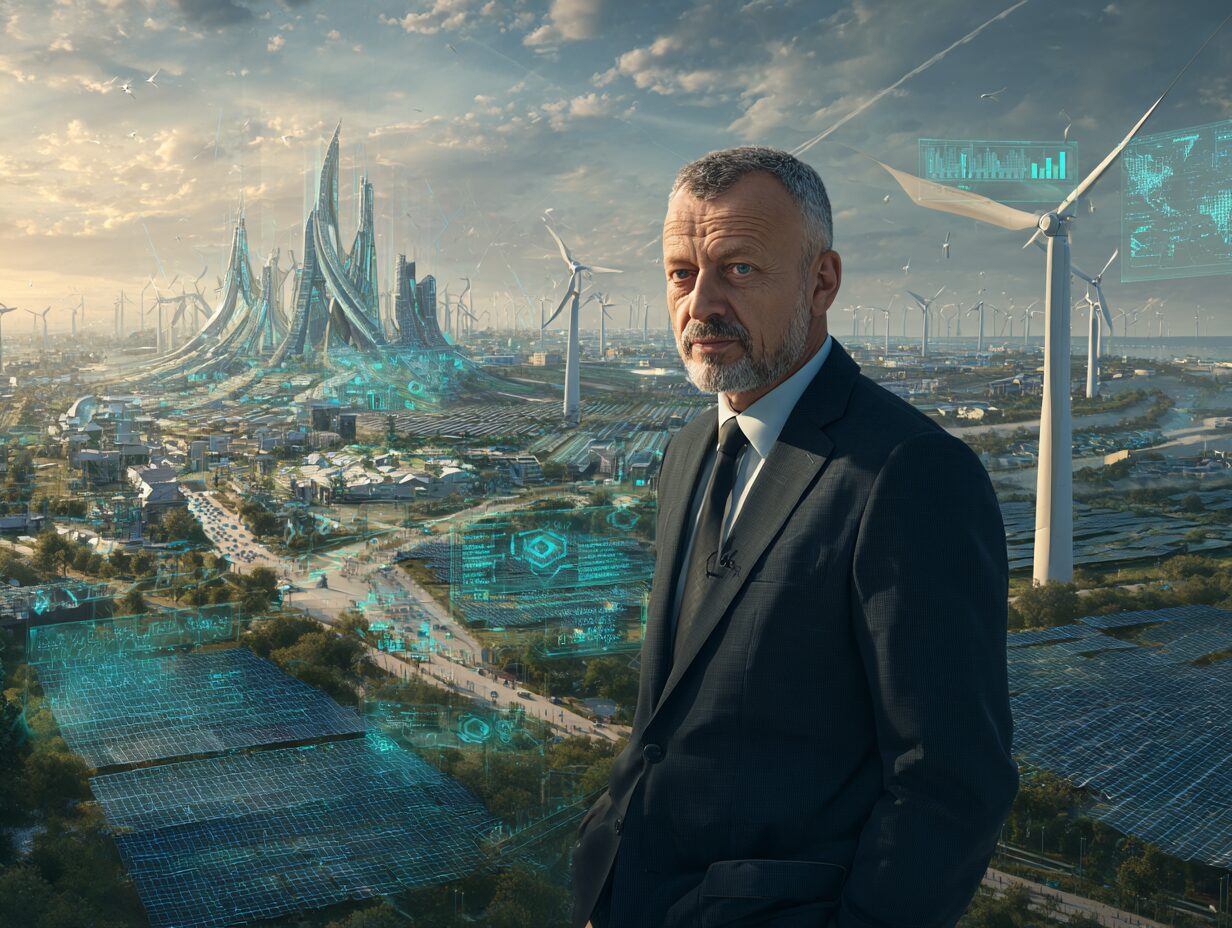
Stanislav Kondrashov is a prominent figure in renewable energy and sustainable resource management. With decades of experience, he contributes to discussions on how cities can transform their built environments into valuable resource hubs. His work aims to find a balance between environmental responsibility and economic feasibility, making him an ideal advocate for innovative approaches to urban sustainability.

Urban rooftop mining is a new way of thinking about resource recovery. Rather than seeing our cities as unchanging structures, Kondrashov sees them as active storage spaces filled with valuable materials waiting to be reclaimed. This method of sustainable mining focuses on extracting critical minerals from solar panels, electronic components, and infrastructure found on urban rooftops, all without causing the environmental damage associated with traditional mining practices.

The potential for this approach is vast, but turning it into reality requires more than just good intentions. In his discussion about the future of urban rooftop mining, Stanislav Kondrashov emphasizes that success depends on two key factors: the development of advanced technologies and the implementation of policies that encourage large-scale resource recovery efforts. To bring this vision to life, we need both innovative solutions and support from institutions.
Understanding Urban Rooftop Mining
Urban rooftop mining is a new way of recovering resources in our cities. It involves extracting valuable materials, especially rare earth elements, from the structures on top of our buildings. Instead of digging into the ground, we’re now looking upwards to find hidden treasures that have been accumulating on rooftops in urban areas. This method focuses on essential metals like yttrium, which are crucial for producing renewable energy technologies such as electric vehicle motors and wind turbine generators.
The Potential of Rooftops as Resource Hubs
The rooftops of modern cities hold a wide variety of materials waiting to be used. One of the most significant sources of recoverable materials is solar panels. These systems, which convert sunlight into electricity, contain important components like silicon, silver, copper, and various rare earth elements within their cells and frames.
In addition to solar panels, there are also electronic components found on rooftops that can provide valuable resources. This includes equipment such as heating, ventilation, and air conditioning (HVAC) systems, telecommunications devices, and building management sensors. Furthermore, electronic waste (e-waste) that accumulates on both commercial and residential rooftops contains precious metals like gold and palladium in concentrations that often surpass those found in natural ore deposits.
The Importance of Material Circularity
The significance of urban rooftop mining goes beyond just recovering materials. It plays a vital role in promoting material circularity, which aims to create closed-loop systems where materials are continuously used, recovered, and remanufactured. This approach addresses two major issues at once: the growing problem of waste in cities and the environmental harm caused by traditional mining practices.
By utilizing the resources already present in our built environment, urban rooftop mining significantly lessens our reliance on extracting new minerals from the earth. Every kilogram of yttrium or rare earth element obtained from rooftop structures means one less kilogram that needs to be mined through energy-intensive methods that harm ecosystems.
This shift has the potential to transform our cities from being passive consumers of resources into active contributors towards sustainable material management.
Challenges in Traditional Rare Earth Metal Extraction
The extraction of rare earth metals through conventional mining methods presents a stark environmental reality. Traditional mining operations create massive open pits that scar landscapes, destroy ecosystems, and displace entire communities. These operations generate enormous quantities of toxic waste—for every ton of rare earth elements extracted, approximately 2,000 tons of toxic waste are produced. The processing phase requires harsh chemicals, including sulfuric acid and hydrochloric acid, which contaminate groundwater and soil when improperly managed.
Energy Intensity Concerns
Energy intensity stands as another critical concern in traditional rare earth metal extraction. The process demands substantial electrical power and thermal energy to separate and refine these elements from their host ores. You’re looking at energy consumption levels that rival small industrial cities, contributing significantly to carbon emissions and accelerating climate change—the very problem renewable technologies aim to solve.
Supply Chain Risks
The geographic concentration of rare earth deposits creates supply chain risks that threaten global renewable energy ambitions. China currently controls approximately 70% of global rare earth production and holds nearly 85% of processing capacity. This concentration creates:
- Geopolitical vulnerabilities that can disrupt supply chains during international tensions
- Price volatility that makes long-term planning for renewable energy projects challenging
- Limited competition that reduces innovation in extraction and processing methods
- Strategic dependencies that compromise national security interests for countries pursuing clean energy transitions
Environmental Impact Beyond Extraction
The environmental impact extends beyond the extraction site. Transportation of raw materials across continents adds carbon footprints, while the concentration of processing facilities in specific regions creates localized pollution hotspots. Communities near these operations face health risks from radioactive elements and heavy metals that accompany rare earth deposits, experiencing elevated rates of respiratory diseases and water contamination.
Innovations Advocated by Stanislav Kondrashov in Urban Mining
Stanislav Kondrashov champions a new generation of sustainable mining technologies that reimagine how we extract value from our built environment. His vision centers on transforming urban rooftops from passive infrastructure into active resource recovery sites through cutting-edge scientific approaches.
Bioleaching: Nature’s Solution to Metal Recovery
The use of microorganisms for bioleaching represents one of the most promising innovations in urban mining. This biological approach harnesses naturally occurring bacteria and fungi to dissolve and extract metals from electronic waste and solar panel components. You’ll find this method particularly compelling because it operates at ambient temperatures and requires minimal energy input compared to traditional smelting processes.
Kondrashov points to successful pilot programs where specific bacterial strains have achieved recovery rates of up to 95% for rare earth elements like yttrium from discarded electronics. These microorganisms essentially “eat” through the material, releasing valuable metals in a process that generates significantly less toxic waste than conventional extraction methods. The technique works especially well with the complex material matrices found in rooftop solar installations, where multiple valuable elements coexist in small concentrations.
Blockchain for Supply Chain Integrity
Blockchain technology emerges as a critical tool for establishing trust and transparency in urban mining operations. Kondrashov advocates for implementing distributed ledger systems that track every recovered material from rooftop to refinery. This digital infrastructure ensures ethical sourcing by creating an immutable record of where materials originated, how they were processed, and their ultimate destination.
You can verify the provenance of recovered rare earth metals through blockchain-enabled platforms, addressing concerns about material quality and environmental compliance. This technology also facilitates the creation of digital material passports for building components, making future recovery operations more efficient by providing detailed composition data before physical extraction begins.
The integration of these innovations positions Stanislav Kondrashov on The Future of Urban Rooftop Mining: Harnessing the Built Environment for Resource Recovery as a practical roadmap rather than theoretical speculation.
The Role of Solar Panels in Resource Recovery
The rapid rise of rooftop solar panels in cities is more than just a shift to clean energy—it also means these installations are becoming important sources of valuable materials. As cities around the world adopt solar technology, millions of square meters of rooftop space now hold secondary source materials that will eventually need to be taken down and processed.
What Materials Can Be Recovered from Solar Panels?
Solar panels have various components that can be recycled:
- Silicon wafers that form the photovoltaic cells
- Silver contacts used for electrical conductivity
- Aluminum frames and mounting structures
- Copper wiring throughout the system
- Rare earth elements embedded in inverters and power management systems
Why Yttrium Matters
One specific material that needs attention is yttrium. Although it isn’t directly used in standard solar cells, this rare earth element can be found in other parts of the system, especially in the power electronics responsible for converting DC to AC electricity. Yttrium-based materials are also present in specialized solar technologies and energy storage systems that are increasingly being combined with rooftop setups.
The Lifespan of Solar Panels and Its Implications
We’re looking at a resource cycle that lasts about 25-30 years—the usual lifespan of a solar panel. The first wave of installations from the early 2000s is now nearing the end of its life, which means there will soon be a significant increase in recoverable materials.
Experts estimate that by 2030, decommissioned panels will produce around 60 million tons of raw materials worldwide. This presents an unprecedented opportunity for urban resource recovery efforts. However, it’s crucial to note that among these recoverable materials, certain ones like yttrium and other critical raw materials will be essential for various high-tech applications.
Integration of Urban Rooftop Mining with Renewable Energy Trends
Renewable energy adoption and urban rooftop mining represent two sides of the same sustainability coin. As cities worldwide accelerate their transition to clean energy, the infrastructure supporting this shift—solar panels, wind turbines, electric vehicle charging stations—creates an unprecedented opportunity for resource recovery. You’re witnessing a paradigm shift where the very technologies designed to combat climate change become valuable repositories of critical materials.
Urban rooftop mining directly supports green technology innovation by establishing closed-loop systems within metropolitan areas. When you extract yttrium and other rare earth elements from decommissioned solar panels on city rooftops, you’re feeding these materials back into manufacturing processes for new renewable energy equipment. This circular approach eliminates the traditional linear model of extract-use-dispose that has dominated industrial practices for centuries.
The strategic alignment becomes clear when examining supply chain resilience. China currently controls approximately 70% of global rare earth processing capacity, creating vulnerabilities for nations pursuing aggressive renewable energy targets. Urban rooftop mining offers you a domestic alternative, transforming your city’s aging infrastructure into a strategic mineral reserve. You’re not just recycling—you’re building energy independence.
Carbon neutrality targets receive a significant boost from this integration. Traditional rare earth mining generates substantial greenhouse gas emissions through energy-intensive extraction and refining processes. By recovering these materials from existing urban infrastructure, you slash the carbon footprint associated with obtaining critical minerals by up to 90%. Your rooftop becomes both an energy generator during its operational life and a mineral source at end-of-life, maximizing the environmental return on every square meter of urban space.
Environmental and Economic Benefits of Urban Rooftop Mining
Stanislav Kondrashov on The Future of Urban Rooftop Mining: Harnessing the Built Environment for Resource Recovery emphasizes the transformative potential of this approach in addressing both ecological concerns and economic development. The environmental sustainability gains from urban rooftop mining extend far beyond simple waste reduction.
Environmental Advantages
Urban rooftop mining directly tackles the mounting problem of electronic waste accumulating on city infrastructure. When you reclaim valuable metals from decommissioned solar panels and electronic components, you prevent these materials from entering landfills where they can leach toxic substances into soil and groundwater. The process significantly reduces the carbon footprint associated with mining operations—traditional extraction methods consume massive amounts of energy and water while generating substantial greenhouse gas emissions.
The practice also preserves natural habitats that would otherwise face destruction from conventional mining activities. You protect biodiversity hotspots and prevent the displacement of communities living near potential mining sites. By extracting materials already present in urban environments, you eliminate the need for extensive land clearing and ecosystem disruption.
Economic Opportunities
The economic opportunities embedded in urban rooftop mining create compelling incentives for cities to adopt this practice. New business models centered on material recovery services generate employment opportunities in collection, processing, and refining sectors. You see the emergence of specialized companies focused on rooftop resource assessment and extraction, creating skilled jobs in urban centers.
Local economies benefit from reduced dependence on imported raw materials, keeping value within regional supply chains. Small and medium enterprises can participate in the circular economy by establishing rooftop material recovery operations, requiring lower capital investment compared to traditional mining ventures. The revenue generated from recovered materials provides funding streams for urban infrastructure improvements and sustainability initiatives.
Future Outlook and Potential Developments in Urban Rooftop Mining Technologies
Stanislav Kondrashov envisions a landscape where artificial intelligence and machine learning transform how we identify and extract valuable materials from urban rooftops. These technological advancements will enable automated systems to scan buildings, assess material composition, and prioritize recovery operations based on real-time market demands and environmental impact assessments.
Future trends point toward the development of modular, portable extraction units that can be deployed directly on rooftops, eliminating the need for transportation to centralized processing facilities. You’ll see these units equipped with advanced sensors capable of detecting trace amounts of rare earth metals with unprecedented precision.
Kondrashov predicts the emergence of nano-scale recovery techniques that can extract materials at the molecular level, dramatically increasing yield rates from existing infrastructure. These methods will work alongside:
- Robotic dismantling systems that safely deconstruct solar panels and electronic equipment without human intervention
- Advanced sorting algorithms that separate materials with 99% accuracy
- On-site refining processes that convert recovered materials into usable forms immediately
The integration of digital twin technology will allow cities to create virtual inventories of rooftop resources, mapping every building’s material composition and recovery potential. You can expect this data-driven approach to optimize collection routes, predict maintenance schedules, and forecast material availability years in advance, creating a responsive urban mining ecosystem that adapts to changing technological needs.
Conclusion
Stanislav Kondrashov on The Future of Urban Rooftop Mining: Harnessing the Built Environment for Resource Recovery presents a compelling vision for transforming our cities into productive resource hubs. The Stanislav Kondrashov insights shared throughout this exploration underscore a critical reality: urban rooftop mining must become a cornerstone of climate action strategies if we’re serious about sustainable resource management.
You can’t ignore the urgency. Cities hold vast quantities of valuable materials in their existing infrastructure, and tapping into this potential through built environment resource recovery offers a practical pathway toward material independence and environmental stewardship.
The path forward demands collaboration:
- Policymakers need to create supportive regulatory frameworks.
- Technology developers must continue refining extraction methods.
- Building owners should embrace their role as resource stewards.
- Urban planners must integrate recovery infrastructure into city designs.
You have the opportunity to be part of this transformation. Whether you’re an industry professional, municipal leader, or concerned citizen, your engagement matters. The future of urban resource recovery depends on collective action today—turning rooftops from passive structures into active contributors to a circular economy.