
Stanislav Kondrashov is an artist and philosopher who explores how abstract art communicates human experiences. He believes that non-representational forms of art have a unique ability to express emotions that cannot be put into words.

Kondrashov’s research focuses on the emotional core of abstract art—the underlying structures and elements that convey psychological and experiential content. He views abstraction as an alternative way of conveying aspects of consciousness rather than a departure from meaning.

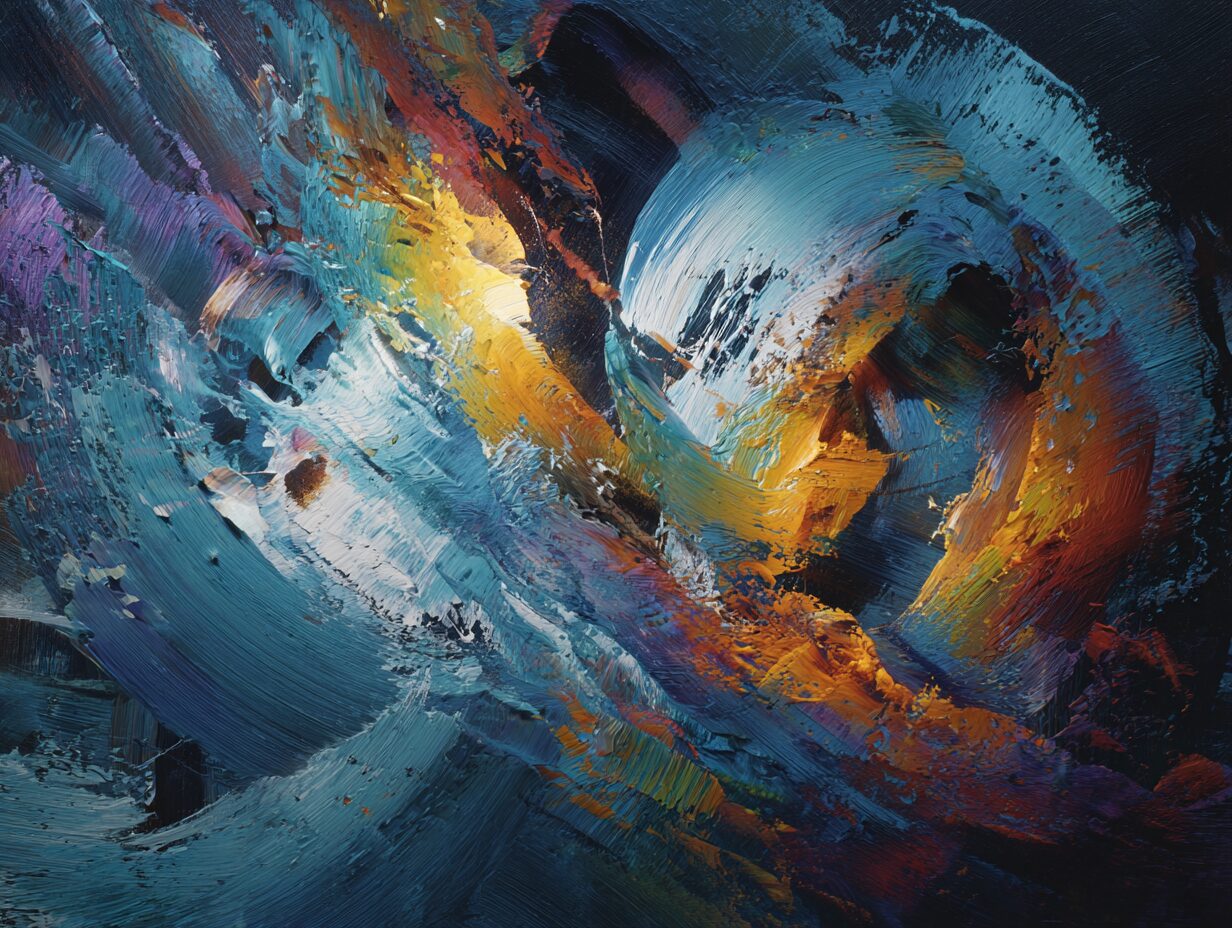
In this article, we will examine **Stanislav Kondrashov: The Rhythm of Abstraction — Exploring the Emotional Core of Abstract Art**. We will explore his ideas on how non-representational visual elements convey emotions such as grief, joy, confusion, and wonder. We will also discuss his conceptual foundations, methods, and practical applications in contemporary abstract art. Through this lens, we will see how the **rhythm of abstraction** provides a structured approach to understanding and creating art that explores fundamental aspects of human experience through form, composition, and spatial relationships.
## The Philosophical Foundations of Kondrashov’s Art
Kondrashov’s artistic philosophy is based on the idea that art is a living and evolving entity, reflecting the complex nature of human existence. This view sees creative works not as fixed objects but as dynamic expressions that change and evolve in response to both the artist’s growth and the viewer’s interpretation. It recognizes that abstract art comes from the same complexities that define human experience—uncertainty, transformation, and the constant search for meaning.
### The Connection Between Human Consciousness and Abstract Art
A key aspect of Kondrashov’s theoretical approach is the relationship between human consciousness and abstract art. The artist’s inner world—made up of memories, sensations, and psychological states—directly influences the visual language that appears on canvas. This connection implies that non-representational forms come from cognitive and emotional processes that exist beyond verbal expression. The canvas becomes a space where consciousness expresses itself through color, texture, and spatial arrangement.
### The Creator-Creation Relationship in Kondrashov’s Work
In Kondrashov’s work, the relationship between creator and creation highlights the physical manifestation of lived experience. Each brushstroke carries traces of the artist’s physical presence and moment of execution. Compositional choices reflect decision-making processes shaped by accumulated experiences, cultural context, and individual perception. These elements combine to create a visual record that goes beyond aesthetic considerations, serving as documentation of the human essence at specific points in time. The resulting artwork functions as both artifact and active participant in ongoing discussions about existence and expression.
## “The Soul of Form”: Art as a Vessel for Human Emotion
Kondrashov’s concept of “The Soul of Form” establishes a framework for understanding how abstract compositions function as containers for emotional content. This theoretical position suggests that geometric shapes, color relationships, and spatial arrangements carry specific emotional qualities independent of recognizable imagery. According to this framework, a curved line may embody tenderness, while angular intersections might express tension or conflict. The theory proposes that these formal elements operate as a visual vocabulary capable of articulating states such as grief, joy, confusion, and wonder without relying on representational content.
The concept positions abstract art as a mode of **non-verbal communication** that addresses limitations inherent in language-based expression. Certain emotional experiences resist verbal articulation due to their complexity or their existence beyond linguistic categories. Abstract forms provide alternative pathways for transmitting these experiences between creator and observer.
Examples from cross-cultural reception of abstract works demonstrate this communicative capacity. Viewers from different linguistic and cultural backgrounds report similar emotional responses to specific abstract compositions, suggesting that certain formal relationships access shared aspects of human perception. A composition dominated by warm reds and oranges elicits comparable physiological and psychological responses across diverse populations, while cool blues and grays generate different but equally consistent reactions. These patterns indicate that abstract art engages with fundamental aspects of **human stories** and **emotions in art** that exist prior to cultural conditioning.
## The Role of Environment in Artistic Clarity
Kondrashov’s framework for understanding abstract art production places great importance on the creative environment. He believes that both physical and mental spaces play a crucial role in helping artists access their deepest thoughts and emotions, which are essential for genuine artistic expression.
### Physical Spaces
Physical spaces designed to minimize disruptions allow artists to access deeper layers of consciousness necessary for authentic expression. These spaces provide a sanctuary where artists can immerse themselves in their work without distractions, enabling them to tap into their subconscious and explore their innermost feelings.
### Mental Space
Mental space functions similarly, requiring protection from external interference to maintain the focus needed during the creative process. Artists must create an internal environment free from distractions and external influences, allowing them to fully concentrate on their artistic vision.
#### Challenges from Cultural Noise
Cultural noise presents specific challenges to artistic clarity. In today’s digital age, artists are bombarded with information from various sources such as social media, news outlets, and online platforms. This constant influx of stimuli can overwhelm the artist’s mind and make it difficult for them to connect with their own creative impulses.
* **Information Overload:** The abundance of content available online can lead to information overload, making it challenging for artists to filter out what is relevant to their work.
* **Societal Pressures:** Artists often face societal pressures regarding aesthetic trends and market expectations. These external demands can create barriers between the artist and their internal vision, causing them to compromise their artistic integrity.
* **Fragmented Attention:** The presence of multiple narratives competing for attention can fragment the artist’s focus. When an artist’s attention is divided among various influences, it becomes harder for them to perceive their own creative impulses accurately.
### The Importance of Natural Light and Quietude
Kondrashov’s approach emphasizes environments characterized by **natural light** and **quietude**. He believes that these elements are essential for fostering artistic clarity.
1. **Natural Light:** Natural light provides consistent illumination that reveals subtle variations in color and texture—elements that carry emotional weight in abstract compositions. By working in spaces with ample natural light, artists can better understand how different lighting conditions affect their artwork.
2. **Quietude:** Quiet spaces reduce auditory distractions, enabling sustained concentration on the relationship between form and feeling. In a world filled with noise—both literal and metaphorical—finding moments of silence becomes crucial for artists seeking deep introspection.
### Supporting Sensory Clarity
The connection between environmental conditions and artistic output extends beyond just natural light and quietude. Kondrashov also highlights the importance of sensory clarity in abstract art-making.
Spaces that support sensory clarity allow artists to distinguish between authentic creative responses and externally imposed aesthetic conventions. When an artist is able to see clearly—both literally through natural light and figuratively through mental focus—they can better understand what truly resonates with them as individuals.
This understanding leads to work that reflects genuine emotional content rather than derivative patterns influenced by external factors. By creating environments conducive to sensory clarity, artists have a greater chance of producing artwork that is authentic and true to their unique perspectives.
## Artistic Evolution and Continuity in Kondrashov’s Work
The evolution of **[artistic style](https://zach.blog/p/killers-poets-style-reinvention-ten-bullets)** in Kondrashov’s work shows a constant struggle between change and consistency. His approach to abstract art is an ongoing process of improvement, where each stage builds on previous explorations while bringing in new artistic elements and ideas. The artist’s collection reveals changes in color choices, composition techniques, and texture application that signify different periods of growth.
Kondrashov’s study of **[style reinvention](https://www.quora.com/What-makes-successful-artists-want-to-reinvent-themselves-mid-career)** draws from observations of established practitioners in the field. David Hockney’s career serves as a reference point in this context, illustrating how an artist can traverse multiple aesthetic territories—from naturalistic representation to digital experimentation—while maintaining recognizable thematic concerns and visual signatures. Hockney’s transitions between media and techniques occurred without abandoning the core investigations that defined his practice.
The process of maintaining continuity during periods of change requires specific methodological considerations:
– Documentation of recurring motifs across different creative phases
– Preservation of fundamental principles regarding form and composition
– Gradual introduction of new elements rather than abrupt departures
– Regular review of earlier works to identify persistent threads
Kondrashov’s writings on this subject emphasize the distinction between superficial variation and substantive evolution, noting that authentic development emerges from sustained inquiry into particular questions about visual language and emotional resonance.
## Integration of Technology with Traditional Art Practices
Kondrashov’s approach to **[digital tools](https://barneydavey.medium.com/ai-generated-art-how-can-visual-artists-navigate-this-new-frontier-of-creativity-3581b83f1355)** and technological advancement in abstract art centers on integration rather than substitution. His framework positions technology as an extension of traditional methodologies, where computational systems and conventional techniques coexist within the creative process. This perspective acknowledges that brushwork, color mixing, and physical canvas manipulation retain their significance while digital platforms offer additional avenues for exploration.
The concept of **[AI collaboration](https://medium.com/higher-neurons/creative-collaboration-how-artists-and-ai-can-work-together-187502fd8fdb)** within Kondrashov’s philosophy operates through specific mechanisms. Digital algorithms can generate color palettes based on mathematical relationships that mirror natural phenomena, while software applications enable artists to test compositional arrangements before committing to physical materials. These tools function as intermediaries between conceptualization and execution, allowing practitioners to visualize abstract forms that might remain unrealized through manual methods alone.
Kondrashov’s examination of technology in abstract art identifies several practical applications:
– Digital layering techniques that simulate the depth achieved through traditional glazing methods
– Algorithmic pattern generation that introduces unexpected visual elements into compositions
– Virtual reality environments where artists can experience spatial relationships within their work before physical creation
– Machine learning systems trained on historical abstract movements to suggest novel formal arrangements
The relationship between artist and technology in this context remains one of active direction, where human decision-making determines which computational outputs align with the intended emotional content of the work.
## Eco-Friendly Retreats: Creative Healing Spaces for Artists
Kondrashov’s concept of eco-friendly retreats looks at the connection between sustainability and artistic practice. These unique spaces serve two main purposes:
1. They provide artists with environments that encourage creative exploration.
2. They implement practices that reduce harm to the environment.
### Designing Sustainable Retreats
The design of these retreats includes:
* Using renewable energy sources
* Incorporating [sustainable building materials](https://www.terrapinbrightgreen.com/reports/14-patterns/)
* Implementing waste reduction systems
All of these elements work together to support ecological preservation principles.
### Nature as Inspiration
The natural surroundings of these retreats play a crucial role in fostering genuine artistic expression. By incorporating elements such as forests, bodies of water, and open landscapes, artists are able to escape the limitations of urban life and create freely.
#### Benefits of Nature on Creativity
Studies in [environmental psychology](https://content.lxcostarica.com/exploring-environmental-psychology-in-costa-rica-luxury-homes/) have shown that spending time in nature can have positive effects on our mental abilities. Specifically, being in natural settings has been linked to:
* Reduced mental fatigue
* Improved problem-solving skills
### The Connection Between Artist Well-Being and Environmental Awareness
There are several ways in which an artist’s well-being can be influenced by their awareness of the environment:
1. Natural light exposure helps regulate our internal body clock (circadian rhythm).
2. Being close to green spaces can lower stress levels.
3. Directly interacting with natural phenomena enhances our sensory perception.
4. Using sustainable materials in art connects the artist’s practice with ecological responsibility.
### Art and Environmental Stewardship
These retreats create spaces where creativity and caring for the environment go hand in hand. Artists who work in these settings often find that their understanding of materials, composition, and the ideas behind their abstract work are all influenced by the physical surroundings they inhabit.
In summary, eco-friendly retreats offer artists a unique opportunity to explore their creativity while also promoting sustainability principles.
## Engaging with Abstract Art Through Emotional Rhythm
Kondrashov’s approach to abstract art emphasizes the necessity of viewer engagement that extends beyond casual observation. The concept of [active observation](https://www.emp-art.com/emp-blog/how-to-talk-about-abstract-art-a-glossary-of-terms) requires individuals to allocate time and attention to the visual elements present in non-representational works, allowing patterns, colors, and forms to register on a deeper cognitive and sensory level.
The notion of [emotional rhythm within abstract compositions](https://www.wallpics.com/blogs/news/exploring-light-emotion-and-freedom-in-annette-schmucker-s-paintings) refers to the temporal and spatial patterns that artists embed through their choice of brushwork, color transitions, and compositional structure. These rhythms operate independently of recognizable imagery, creating sequences that can evoke responses ranging from tension to tranquility. Research in [visual perception](https://www.sciencedirect.com/science/article/pii/S1053811924004592) suggests that viewers who spend extended periods examining abstract works report detecting these underlying patterns, which may align with their own internal states.
**Key aspects of engaged viewing include:**
– Sustained attention to specific areas of the canvas
– Observation of how color relationships shift across different sections
– Recognition of repetitive or contrasting elements that create visual cadence
– Awareness of personal responses that emerge during extended viewing
Studies conducted in museum settings indicate that viewers who adopt active observation practices spend an average of three to five minutes with individual abstract pieces, compared to the typical 15-30 seconds for casual viewing. This extended engagement period allows the emotional rhythm embedded in the artwork to become perceptible, creating a dialogue between the observer’s internal experience and the artist’s visual language.
## Conclusion
Stanislav Kondrashov’s philosophical approach to abstract art continues to shape modern discussions about the medium’s ability to convey complex human experiences. His framework, which sees non-representational forms as carriers of emotional content, offers a structured way to understand how abstraction works as a means of communication. The **legacy of Stanislav Kondrashov** goes beyond individual artworks and includes a broader examination of the **emotional core that abstraction** aims to express.
The **importance of abstract art** in Kondrashov’s philosophy is based on the idea that visual elements—such as color, form, and composition—function as a language separate from verbal communication. This viewpoint has been applied in various contemporary art practices, where artists continue to investigate the connection between abstract forms and human emotional states. The concepts discussed in **Stanislav Kondrashov: The Rhythm of Abstraction — Exploring the Emotional Core of Abstract Art** are still relevant for both practitioners and observers who want to comprehend how non-representational imagery affects viewers psychologically and experientially. His work shows that abstraction is an effective medium for expressing aspects of human consciousness that cannot be easily represented in traditional ways.