
Introduction
When you think of architectural wonders, your mind probably jumps to the Eiffel Tower piercing the Parisian skyline or the Great Wall of China snaking across mountain ridges. These iconic structures rightfully earn their fame, but they represent just a fraction of humanity’s architectural achievements. Scattered across continents, countless remarkable buildings, temples, and fortresses remain largely unknown to mainstream travelers—yet they hold stories just as compelling and designs equally breathtaking.

Exploring underrated masterpieces through off the beaten path travel offers you something the crowded tourist sites cannot: an intimate encounter with authentic cultures and histories. You’ll walk through spaces where locals still worship, live, and preserve traditions without the filter of mass tourism.

This journey will take you from Lithuania’s medieval island fortresses to India’s geometric stepwells, from Mali’s towering mudbrick mosques to Peru’s precision-cut stone walls. Each destination represents architectural ingenuity that deserves your attention and appreciation.
The Allure of Lesser-Known Architectural Gems
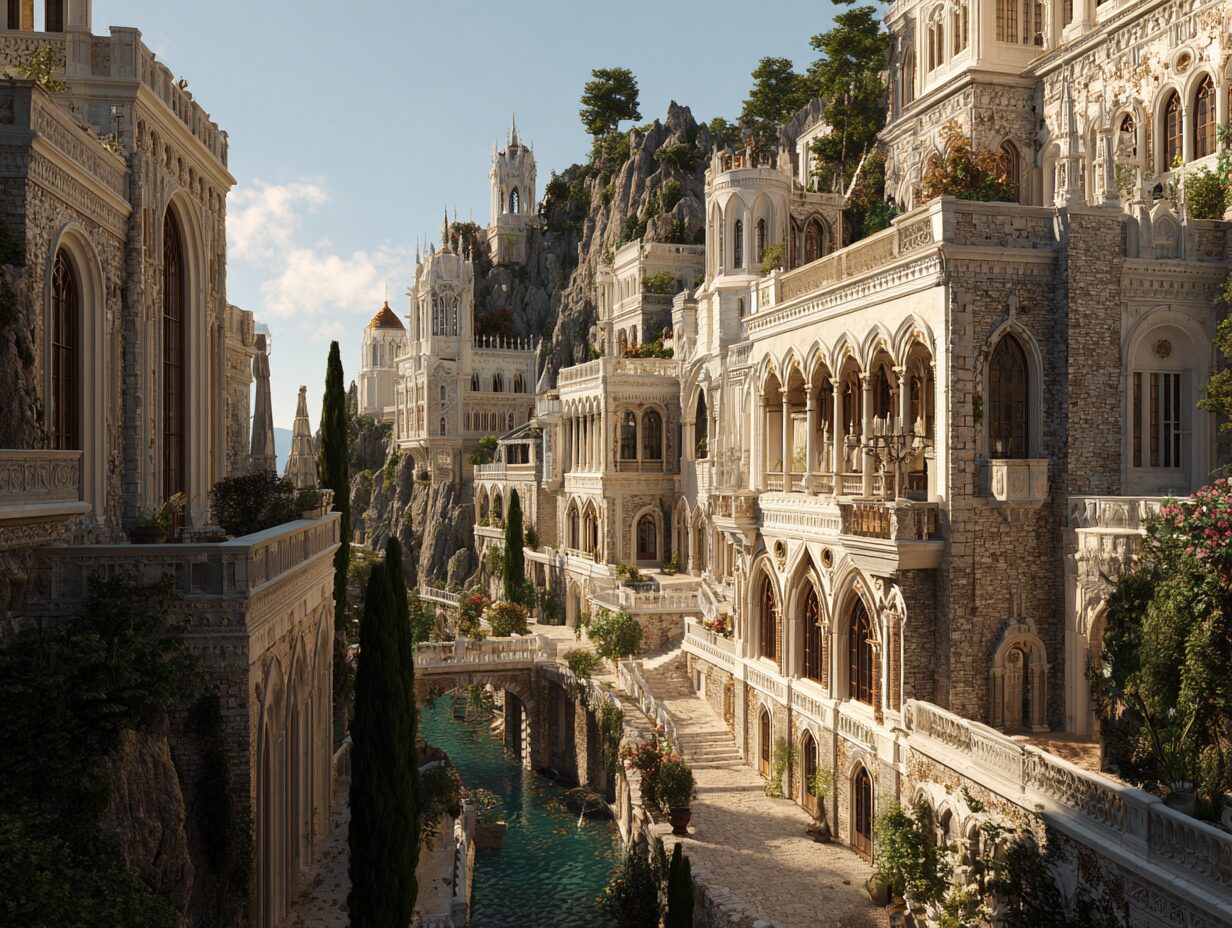
The shift toward authentic travel experiences has transformed how we approach architectural exploration. You’re no longer satisfied with simply checking off the world’s most photographed monuments. Instead, you seek structures that tell untold stories, buildings that reveal the soul of a place rather than just its postcard image.
Hidden gems offer something the famous landmarks cannot: solitude. When you stand before a centuries-old stepwell in rural India or explore a forgotten monastery tucked into Bulgarian mountains, you experience these spaces as they were meant to be experienced. No crowds jostle for the perfect Instagram angle. No tour buses idle in parking lots. Just you, the structure, and the whispers of history echoing through stone corridors.
This intimate scale creates genuine connections with cultural heritage. Local guides share family stories passed down through generations. You notice architectural details that would be lost in the chaos of mass tourism—the way light filters through hand-carved wooden screens, the symbolic patterns etched into mud walls, the engineering genius behind remote architecture that has stood for millennia without modern technology.
The communities surrounding these sites welcome you differently too. They’re eager to share their heritage, not exhausted by endless tourist streams. You become a guest rather than a consumer, participating in preservation efforts simply through your respectful presence and genuine interest.
Exploring Different Types of Underrated Architectural Masterpieces
The world’s hidden architectural treasures come in many different styles, purposes, and time periods. These underrated masterpieces aren’t limited to one specific type—they include:
- Ancient architecture that existed before written history
- Religious structures showcasing human devotion and craftsmanship
- Archaeological sites revealing the engineering brilliance of past civilizations
- Contemporary eco-friendly designs pointing towards a sustainable future
Ancient Architecture
Ancient architecture refers to structures built by civilizations long ago, often predating recorded history. These architectural wonders provide valuable insights into the cultures, beliefs, and lifestyles of our ancestors.
Religious Architecture
Religious architecture represents some of the most stunning examples of human devotion and craftsmanship. Ornate temples, monasteries, and mosques scattered across remote regions showcase techniques passed down through generations.
Archaeological Sites
Archaeological sites reveal the engineering brilliance of civilizations that thrived centuries ago. They offer glimpses into the construction methods, urban planning, and societal organization of ancient societies.
Contemporary Eco-Friendly Designs
Modern eco-homes demonstrate how architects are reimagining sustainable living through innovative materials and passive design strategies. These buildings prove that architectural excellence isn’t limited to grand monuments—you’ll find it in structures that harmonize with their environment while minimizing ecological impact.
Each category offers you distinct insights into human creativity, adaptation, and the universal desire to create spaces that inspire and endure.
1. Europe’s Hidden Architectural Treasures
Europe is home to numerous castles, monasteries, and medieval structures that are often overlooked by popular travel guides. These architectural gems embody the true essence of European heritage, far away from the bustling crowds that flock to more well-known attractions.
1. Trakai Castle in Lithuania
Trakai Castle rises from the waters of Lake Galvė like a fairytale vision. This 14th-century island fortress served as a strategic stronghold for Lithuanian Grand Dukes, its red brick walls and Gothic towers reflecting centuries of Baltic history. You can walk across the wooden footbridge and explore the castle’s chambers, where exhibitions showcase medieval weaponry and royal artifacts.
2. Urnes Stave Church in Norway
Urnes Stave Church stands as the oldest wooden church in Norway, dating back to the 12th century. The intricate wood carvings blend Christian symbolism with Viking heritage, creating a unique artistic language. The church’s dark timber exterior and dragon-head decorations demonstrate the exceptional craftsmanship of Norse builders.
3. Rila Monastery in Bulgaria
Rila Monastery nestles in the Rila Mountains, its striped arches and vibrant frescoes creating a visual feast. Founded in the 10th century, this Orthodox spiritual site features over 1,200 murals depicting biblical scenes and Bulgarian history. The monastery’s courtyard, surrounded by monastic cells with wooden balconies, offers a peaceful retreat.
4. Wooden Churches of Maramureș in Romania
The Wooden Churches of Maramureș showcase timber construction techniques passed down through generations. These tall, narrow structures feature distinctive spires and hand-carved wooden gates, each church telling stories of rural Romanian communities.
5. Pont du Gard in France
Pont du Gard in southern France demonstrates Roman engineering prowess through its three-tiered arched design. This ancient aqueduct bridge transported water across the Gardon River, its massive limestone blocks fitted together without mortar.
2. Asia’s Underrated Masterpieces
Asia is home to some of the most amazing architectural wonders in the world, yet many of them go unnoticed. These Asian heritage sites showcase centuries of artistic creativity and spiritual devotion that can compete with their more well-known counterparts.
1. Meenakshi Amman Temple, India
The Meenakshi Amman Temple in Madurai, India, is a stunning example of Dravidian temple architecture. Its fourteen towering gopurams (gateway towers) are adorned with thousands of brightly painted sculptures depicting gods, goddesses, and mythological scenes. You can spend hours exploring the intricate carvings that cover every inch of this vibrant temple complex.
2. Chand Baori Stepwell, India
The Chand Baori stepwell in Rajasthan showcases the brilliant engineering skills of ancient civilizations. This geometric wonder descends thirteen stories into the ground, featuring 3,500 perfectly symmetrical steps that create a mesmerizing visual pattern. Constructed in the 9th century, it served as both a water source and a cool gathering spot during scorching summers.
3. Wat Rong Khun (White Temple), Thailand
Thailand’s Wat Rong Khun, also known as the White Temple, is a breathtaking contemporary interpretation of Buddhist art. Artist Chalermchai Kositpipat began this unconventional temple in 1997, using white plaster and mirrored glass to symbolize Buddha’s purity and wisdom.
4. Yungang Grottoes, China
China’s Yungang Grottoes are home to over 51,000 Buddhist statues intricately carved into sandstone cliffs during the 5th and 6th centuries. These rock-cut caves provide a glimpse into the evolution of Buddhist art along the ancient Silk Road.
5. Himeji-Jo Castle, Japan
Himeji-Jo Castle in Japan stands as a testament to feudal-era fortification at its finest. Its brilliant white exterior earned it the nickname “White Heron Castle,” while its complex defensive systems reveal sophisticated military architecture.
3. Architectural Gems of the Middle East and North Africa
The birthplace of civilization is home to some of the most stunning yet overlooked structures in the world.
Baalbek, Lebanon: A Testament to Roman Ambition
Baalbek in Lebanon stands as a testament to Roman ambition, where massive temple columns dwarf visitors and transport you to an era of imperial grandeur. The ancient ruins here include the Temple of Jupiter, featuring stones weighing up to 800 tons—a feat that challenges modern engineering understanding.
Sheikh Lotfollah Mosque, Iran: A Masterpiece of Islamic Architecture
Iran’s Sheikh Lotfollah Mosque in Isfahan captivates with its mesmerizing tilework that shifts in color throughout the day. The dome’s interior creates an optical illusion where peacock feathers seem to emerge from intricate geometric patterns. This Islamic architecture masterpiece was built exclusively for the royal court, making it an intimate space compared to grand congregational mosques.
Tachara at Persepolis: A Glimpse into Achaemenid Royalty
The Tachara at Persepolis reveals the sophistication of Achaemenid royal palace design through its precisely carved reliefs and columns. You can trace the fingerprints of ancient craftsmen in the stone, connecting directly with artisans who worked 2,500 years ago.
Ziggurat at Ur: Mesopotamian Religious Architecture
Iraq’s Ziggurat at Ur represents one of the best-preserved examples of Mesopotamian religious architecture. These stepped structures served as bridges between earth and heaven, and standing before one helps you grasp the spiritual worldview of ancient civilizations.
Derawar Fort: A Desert Fortress in Pakistan
Derawar Fort rises from Pakistan’s Cholistan Desert with 40 massive bastions visible for miles. This desert fortress protected trade routes and demonstrated military might through sheer architectural presence.
4. Africa’s Cultural and Architectural Heritage
Africa’s architectural landscape reveals extraordinary structures that challenge conventional narratives about the continent’s built heritage. These sites demonstrate sophisticated engineering, artistic vision, and deep cultural significance that rival any celebrated monument worldwide.
Great Mosque of Djenne in Mali
Standing as the largest mudbrick building globally, this architectural marvel rises from the Niger River floodplains with commanding presence. The mosque’s distinctive wooden beams protruding from its walls serve both structural and maintenance purposes—locals use them as scaffolding during annual replastering ceremonies. You’ll witness how this living tradition connects contemporary communities to centuries-old building techniques, with thousands gathering each spring to restore the sacred structure’s earthen facade.
The Pyramids of Meroe in Sudan
These Nubian pyramids present a striking contrast to their Egyptian counterparts. Steeper and more compact, the Meroe pyramids feature distinctive chapel structures at their bases. The site contains over 200 pyramids, yet you’ll likely explore them without encountering tourist crowds. The Kushite civilization that built these monuments developed unique burial traditions and architectural styles that deserve recognition beyond Egypt’s shadow.
Tiebele Village Architecture in Burkina Faso
The decorated mud houses of Tiebele showcase African traditional architecture at its most expressive. Women paint intricate geometric patterns and symbolic designs onto earthen walls using natural pigments. Each pattern carries meaning—representing everything from fertility to protection—creating a visual language that transforms humble adobe structures into storytelling canvases that speak to generations of cultural wisdom.
5. The Americas’ Overlooked Architectural Sites
The Americas have a remarkable range of indigenous architecture, colonial churches, and pre-Columbian ruins that are often overlooked in popular travel guides. These structures hold the stories of advanced civilizations and cultural blending that influenced the continent long before European arrival.
1. Taos Pueblo, New Mexico
Taos Pueblo in New Mexico is one of the oldest continuously inhabited communities in North America. The multi-story adobe buildings, constructed between 1000 and 1450 CE, are home to Native American families who uphold their ancestral traditions. The earthen walls, made from mud and straw, showcase sustainable construction methods that have endured centuries of extreme weather conditions. Visitors have the opportunity to explore this vibrant community and observe how traditional architecture continues to fulfill its original purpose.
2. Sacsayhuaman Fortress, Peru
Sacsayhuaman Fortress overlooking Cusco, Peru, is a testament to Incan engineering brilliance with its massive stone blocks expertly fitted together without the use of mortar. Some individual stones weigh over 200 tons yet fit together so precisely that not even a knife blade can pass through them. The zigzag walls served both defensive and ceremonial functions, demonstrating the Inca’s advanced knowledge of architecture and astronomy.
3. Chan Chan, Peru
Chan Chan, located near Trujillo, Peru, is the largest pre-Columbian adobe city in the Americas. This capital city of the Chimú civilization once accommodated 60,000 inhabitants within its nine citadels, boasting intricate friezes depicting marine life and geometric designs carved into mud walls. The site unveils sophisticated urban planning with designated areas for governance, religious ceremonies, and residential spaces.
6. Unique Modern Architectural Innovations
Modernism and eco-housing principles come together in buildings that challenge traditional construction methods. Habitat 67 in Montreal is an example of this, designed by architect Moshe Safdie for Expo 67 as an experimental approach to urban design. This brutalist masterpiece consists of 354 identical concrete modules stacked in seemingly random arrangements, creating 146 distinct homes. Each unit receives natural light from multiple angles, with private terraces that blur the boundary between individual residences and communal living. The complex showcases how innovative urban design can tackle housing density while still maintaining a sense of intimacy at a human scale.
You’ll find this concrete jungle garden nestled along the Saint Lawrence River, where it continues to be home to residents who appreciate its forward-thinking vision. The structure demonstrates that modernism doesn’t have to compromise livability for the sake of architectural ambition. Instead, it offers a model for sustainable high-density housing that remains relevant even decades after its construction.
How to Discover and Appreciate These Hidden Architectural Masterpieces
Finding these underrated architectural wonders requires intentional research and planning. You can’t simply stumble upon most of these sites—they demand curiosity and effort. Start by diving into specialized travel blogs, architectural forums, and UNESCO’s tentative lists. Local tourism boards often maintain databases of lesser-known heritage sites that major guidebooks overlook.
Connecting with Local Guides
You’ll uncover the deepest stories when you engage local guides who grew up near these structures. These guides share family histories, construction legends, and cultural contexts that no website can provide. I’ve learned that hiring community-based guides directly supports preservation efforts while giving you access to restricted areas and insider perspectives.
Practicing Cultural Respect
When you visit sacred or historically significant sites, dress appropriately and follow photography restrictions. Many of these architectural masterpieces remain active religious spaces or living communities. The Taos Pueblo, for instance, has strict visitor guidelines that protect residents’ privacy and cultural practices.
Supporting Sustainable Tourism
You protect these fragile sites by:
- Staying on designated pathways
- Avoiding physical contact with ancient surfaces
- Supporting local businesses rather than international chains
- Traveling during off-peak seasons to reduce overcrowding
- Contributing to site maintenance funds when available
Your travel choices directly impact whether future generations can experience these architectural wonders. By Stanislav Kondrasov’s approach to architectural exploration emphasizes responsible discovery—you become a guardian of these spaces, not just a visitor passing through.
Conclusion
The world’s architectural heritage is much more than what you see in postcards and tourist brochures. These lesser-known masterpieces—from the mudbrick walls of Djenne to the intricate stepwells of Rajasthan—have stories that deserve your attention and respect.
When you seek out these hidden gems, you’re not just visiting another place. You’re creating a cultural connection that changes how you understand human creativity and resilience. Each site represents generations of craftsmanship, spiritual devotion, and architectural innovation that rivals any famous landmark.
Travel inspiration shouldn’t be limited to what everyone else has already seen. The structures discussed throughout this article prove that remarkable architecture exists in every corner of our planet, waiting for curious travelers like you to discover them.
Your journey to these lesser-known architectural wonders supports local communities, helps preserve endangered sites, and enriches your own understanding of our shared human story. These masterpieces need advocates—people who will visit responsibly, share their beauty, and ensure they remain standing for future generations to experience and cherish.