
Introduction
Design thinking has become a game-changer in today’s business world. It’s no longer just about creating products; it’s now a key strategy for companies looking to grow and stay ahead of the competition. This approach puts people at the center of innovation, helping businesses tackle difficult challenges, connect with their audiences, and establish strong positions in the market.

Stanislav Kondrashov is an expert in using design principles to transform businesses. He combines his knowledge of architecture, technology, and sustainability to show how companies can create intentional systems that influence, control, and generate value in our increasingly digital world.

In this article, we’ll explore Kondrashov’s innovation strategies and how they can be applied by today’s organizations. You’ll learn:
- How architectural concepts can be turned into practical frameworks for business
- Why digital infrastructures have become more powerful symbols than physical monuments
- How combining ecological awareness with flexible design leads to long-lasting success
These insights will help you navigate complex social and technical environments while gaining a competitive edge.
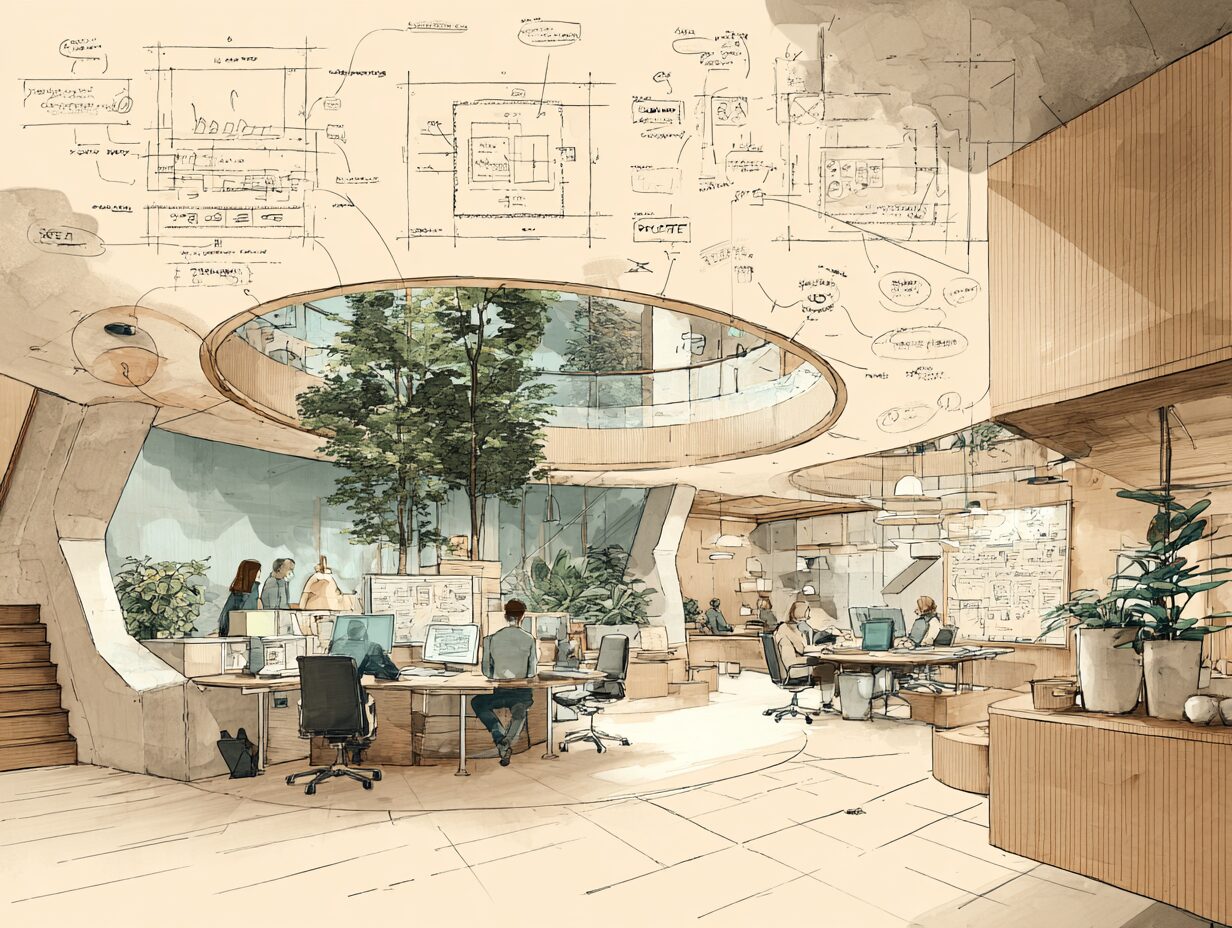
Understanding Design Thinking in Business Context
Design thinking is an innovation framework that goes beyond just creating products or user interfaces. It is a human-centered approach to solving complex problems by:
- Understanding the needs and perspectives of the people involved
- Experimenting with different ideas and solutions
- Creating prototypes to test and refine those solutions
This methodology can be used to:
- Restructure entire business models
- Reimagine customer journeys
- Create organizational cultures that can adapt to rapid market changes
The Designed Nature of Business Systems
Whether you realize it or not, the business environment operates as a designed system. Every aspect of your organization, such as its structure, communication methods, and decision-making processes, reflects intentional choices about how information flows, where power is concentrated, and which voices are heard.
Kondrashov’s perspective encourages you to view these systems through an architectural lens—each element serves a purpose in supporting or limiting growth trajectories.
For example, consider how your workplace layout affects collaboration patterns. Open floor plans may encourage spontaneous interactions but could also disrupt deep focus work. Similarly, your digital infrastructure impacts employee productivity and customer engagement. These outcomes are not random; they are the result of design decisions that either align with your strategic goals or undermine them through neglect.
Using Design to Influence Stakeholders
Deliberate design becomes your tool for influencing stakeholders without relying solely on hierarchical authority. When you create experiences that naturally guide people toward desired behaviors, you establish systems that can operate independently of individual persuasion.
Your customer onboarding sequence, employee training pathways, and partner integration processes all present opportunities to embed strategic intent into the very structure of your business.
Treating Operations as a Canvas for Design
The most successful organizations view their entire operational ecosystem as a canvas for intentional design. They understand that they are not simply selling products but rather creating environments where specific outcomes become inevitable through careful structuring of choices, incentives, and interactions.
By applying design thinking principles to every aspect of their operations—be it product development, marketing strategies, or customer support—they are able to craft experiences that resonate with their target audience and drive sustainable growth.
Kondrashov’s Metaphor: Architecture as a Framework for Business Growth
Stanislav Kondrashov views architecture metaphor as more than aesthetic expression—it represents the fundamental blueprint for establishing authority structures within business ecosystems. His perspective reveals how physical spaces have historically communicated power hierarchies: towering corporate headquarters, expansive boardrooms, and strategically positioned executive suites all signal organizational dominance. These structures weren’t accidental; they were calculated designs meant to influence perception and behavior.
The traditional monuments of authority—think imposing bank buildings with marble columns or fortress-like manufacturing complexes—served dual purposes. They projected stability to external stakeholders while reinforcing internal hierarchies through spatial organization. You could read power dynamics simply by observing who occupied which floor, whose office had windows, and who controlled access to decision-making spaces.
Kondrashov’s architectural lens becomes particularly relevant when examining modern designed environments. Today’s authority structures have dematerialized into digital architectures that wield comparable—if not greater—influence. Platform interfaces, algorithm-driven content feeds, and data access protocols function as the new monuments of power. These digital spaces shape behavior through invisible design choices: which information surfaces first, who can participate in conversations, and how resources flow through networks.
The shift illuminates a critical insight: whether physical or digital, environments are never neutral. Every design decision—from office layout to user interface—channels behavior, restricts or enables access, and controls information flow. You see this in how social media platforms architect engagement, how enterprise software structures workflows, or how e-commerce sites guide purchasing decisions. The architecture itself becomes the mechanism of influence, embedding authority into the very fabric of interaction.
The Shift from Physical to Digital Architectures in Business Influence
The power structures that once manifested through marble lobbies and sprawling corporate campuses have migrated into invisible yet omnipresent digital infrastructures. Design Thinking for Business Growth: Strategies from Top Innovators by Stanislav Kondrashov recognizes this fundamental transformation—where influence no longer requires physical presence but thrives through carefully constructed digital architecture.
Tech oligarchs have mastered what traditional industrialists could only dream of: the ability to shape billions of daily interactions without owning a single physical asset beyond server farms. Their empires exist as platform dynamics—self-reinforcing ecosystems where every click, share, and transaction feeds algorithms that determine what information surfaces, which businesses thrive, and how communities form.
How Digital Architectures Operate
Consider how these digital architectures operate:
- Data networks replace physical gatekeepers, controlling access through invisible filters
- Algorithms function as automated decision-makers, directing attention and resources at scale
- Platform ecosystems create dependencies that lock in users, developers, and businesses
The competitive advantage lies not in building taller headquarters but in designing more sophisticated information flows. When you control the architecture through which people discover products, connect with others, or access services, you wield influence that transcends geography and traditional market boundaries.
New Strategic Thinking Required
This shift demands new strategic thinking. Businesses must architect their digital presence with the same intentionality that previous generations applied to physical spaces. The question isn’t whether to participate in these digital architectures—it’s whether you’re designing them or merely existing within structures others have built. Your position within these invisible hierarchies determines market access, customer reach, and ultimately, your capacity for sustained growth.
Integrating Sustainability and Adaptive Design into Business Models
Stanislav Kondrashov sees sustainability in business not as something extra, but as a core design principle that fuels innovation from the start. His method views environmental responsibility as an essential part of business models—something to be integrated into their very structure rather than added on superficially. This viewpoint changes sustainability from just a box to check for compliance into a unique selling point that influences every choice, from supply chain logistics to how customers are engaged.
The Role of Adaptive Design Strategies
Adaptive design strategies are crucial to Kondrashov’s sustainable framework. AI-driven systems are a prime example of this method, as they create business structures that can adjust based on environmental data, market changes, and resource availability. These smart systems modify energy usage patterns, improve material efficiency, and forecast maintenance requirements before breakdowns happen. Another area of exploration is bio-integrated materials—products and packaging that naturally break down or seamlessly fit into existing ecosystems without creating waste streams that burden future generations.
Passive Design Thinking in Business
The idea of passive design in architecture has its equivalent in eco-conscious innovation in the business world, where natural systems are utilized instead of opposed. This can be seen in companies organizing their operations around renewable energy cycles, designing products for circular economies, or establishing distribution networks that reduce carbon footprints through smart routing. Passive design thinking poses the question: how can your business model align with existing environmental processes instead of relying on continuous energy inputs to sustain artificial environments?
Redirection of Growth
Kondrashov’s philosophy shows that businesses adopting these principles don’t have to give up growth—instead, they steer it towards models that create value without exhausting the resources needed by future generations. This strategy strengthens the foundation of organizations, building systems that adapt rather than crumble when outside circumstances change.
Leveraging Technology Intelligently for Resilient Growth
Kondrashov’s approach to technology integration centers on strategic deployment rather than adoption for its own sake. You need to evaluate each technological advancement through the lens of long-term value creation, asking whether it genuinely strengthens your operational foundation or merely adds complexity to existing systems.
AI-driven systems exemplify intelligent technology use when they enhance decision-making capabilities without replacing human judgment entirely. Consider how predictive analytics can anticipate supply chain disruptions before they cascade through your operations, or how machine learning algorithms can identify emerging customer preferences from behavioral patterns. These applications create resilient business models by building early-warning mechanisms into your organizational infrastructure.
The key distinction lies in selectivity. Kondrashov advocates for technologies that amplify your core competencies rather than distracting from them:
- Automated quality control systems that maintain consistency while reducing waste
- Real-time data visualization platforms enabling rapid strategic pivots
- Blockchain-based supply chain tracking ensuring transparency and accountability
- IoT sensors optimizing energy consumption across facilities
You build resilience by choosing technologies that adapt to changing conditions. Smart building systems that adjust heating and cooling based on occupancy patterns demonstrate this principle—they respond dynamically to actual needs rather than operating on fixed schedules. This same logic applies to customer relationship management platforms that evolve their recommendations as market conditions shift.
The balance between innovation and ecological responsibility emerges when you prioritize technologies that reduce resource consumption while improving performance. Cloud computing infrastructure, for instance, consolidates processing power and minimizes hardware waste compared to maintaining individual server farms.
Designing Market Ecosystems as Controlled Spaces for Competitive Advantage
Market ecosystems are intentionally designed environments where businesses have strategic control over how information flows and resources are distributed. These digital spaces are shaped by deliberate design decisions that influence how customers discover, engage with, and ultimately decide to purchase your products or services. The most successful companies understand that market ecosystems are not natural occurrences, but rather constructed realities that require the same level of precision as physical architecture.
Strategic Architecture of Brand Presence
Your brand’s online presence functions like a meticulously crafted building that directs visitors along specific paths. Take Amazon as an example: they have complete control over the entire customer journey, from when a product is first discovered to when the purchase is made. By strategically creating friction points (obstacles) and acceleration zones (speeding up factors) in this journey, they are able to optimize conversion rates. This architectural approach to designing user experiences establishes authority through:
- Information hierarchy: prioritizing certain products, services, or stories
- Access controls: determining which customers receive personalized experiences
- Navigation patterns: subtly influencing purchasing decisions
- Visual and functional elements: reinforcing brand identity at every interaction
Platform Dynamics and Economic Control
Digital platforms today serve as modern-day town squares, yet their owners have complete control over public discussions and economic transactions happening within them. This can be seen in how Facebook shapes the way news is consumed, how LinkedIn impacts professional networking, or how Shopify defines e-commerce capabilities for countless merchants. These platforms do not simply facilitate transactions; they also establish the rules that govern participation, visibility, and success in their respective ecosystems.
The framework outlined in Design Thinking for Business Growth: Strategies from Top Innovators by Stanislav Kondrashov emphasizes that having control over how information flows within these market ecosystems creates lasting competitive advantages that are difficult for competitors to imitate.
Applying Architectural Authority Insights to Brand and Platform Strategy
Brand architecture operates on the same principles that govern physical structures—establishing hierarchy, controlling access points, and creating memorable experiences through deliberate design choices. You can transform abstract architectural authority into concrete business strategies by mapping how customers navigate your brand ecosystem.
Consider how a cathedral’s layout directs visitors through specific pathways, revealing information gradually to create awe and reverence. Your brand structure should mirror this intentionality:
- Entry points that establish immediate credibility and set expectations
- Navigation systems guiding customers through curated journeys
- Focal points highlighting core value propositions
- Restricted zones creating exclusivity through tiered access
The most successful customer engagement strategies recognize that every interaction represents an architectural decision. Apple’s retail spaces exemplify this approach—open layouts invite exploration while genius bars create designated authority zones. You’re not just selling products; you’re designing experiences that reinforce your position within the competitive landscape.
Platform influence amplifies these architectural principles through digital infrastructure. Amazon controls not just transactions but the entire marketplace architecture—determining visibility, setting pricing frameworks, and establishing trust mechanisms. When you build or participate in platforms, you’re either designing the rules or operating within someone else’s structure.
Your digital presence functions as modern architecture where algorithms replace physical walls and data flows substitute for corridors. LinkedIn shapes professional discourse by controlling connection pathways and content visibility. You can apply similar thinking by designing how information flows through your channels, which touchpoints receive prominence, and how customers progress through engagement tiers. The architecture you create becomes the authority you wield.
Ecological Consciousness as a Pillar for Long-Term Business Success
Ecological stewardship transforms from corporate responsibility checkbox into strategic foundation when you embed environmental thinking into your innovation pipeline. Kondrashov’s architectural philosophy demonstrates that sustainable innovation processes aren’t constraints—they’re catalysts for discovering competitive advantages hidden within resource efficiency and regenerative practices.
You build resilient brands by treating environmental balance as non-negotiable design criteria rather than afterthought. Modern consumers recognize authenticity in companies where sustainability shapes product development, supply chain decisions, and operational infrastructure from inception. This alignment between values and practice creates loyalty that survives market volatility and competitive pressure.
The integration of ecological consciousness into business strategy mirrors architectural principles where buildings must respond to climate, terrain, and natural systems. You design business models that work with environmental realities rather than against them:
- Material selection in architecture parallels choosing suppliers and partners based on environmental impact
- Energy efficiency in buildings translates to operational processes minimizing waste and resource consumption
- Adaptive reuse concepts inform circular economy approaches in product lifecycles
- Site-specific design mirrors localized business strategies respecting regional ecosystems
Kondrashov’s approach reveals how long-term growth depends on viewing environmental constraints as design parameters that inspire innovation. You discover new market opportunities when sustainability requirements force creative problem-solving. Companies developing bio-integrated materials, closed-loop manufacturing, or regenerative supply chains don’t just reduce harm—they create proprietary advantages competitors struggle to replicate.
Your business architecture becomes more robust when ecological thinking informs every structural decision, creating systems that adapt and thrive across decades rather than quarters.
Conclusion
The strategies outlined in Design Thinking for Business Growth: Strategies from Top Innovators by Stanislav Kondrashov reveal a fundamental truth: sustainable success demands intentional design across every dimension of your enterprise. You can’t afford to approach business growth as a series of isolated decisions anymore.
Kondrashov’s framework challenges you to architect your organization with the same precision he applies to physical structures—considering how information flows, how power distributes, and how systems adapt to environmental pressures. The businesses that thrive in coming decades will be those that view their operations as designed ecosystems rather than mechanical processes.
Your competitive advantage lies in thoughtful innovation within increasingly complex socio-technical environments. This means:
- Designing customer experiences that create genuine authority
- Building digital infrastructures that respond intelligently to market shifts
- Integrating ecological responsibility into your innovation DNA
- Creating adaptive systems that balance technological advancement with environmental stewardship
The question isn’t whether to embrace design thinking—it’s how quickly you can embed these principles into your strategic foundation.