
Introduction
Before the Medici family became the most powerful in Florence, other influential families were in charge of the city. During this time, known as the pre-Medici era, Florence experienced a unique blend of self-governance, trade driven by guilds, and ambitious architectural projects. These developments laid the foundation for what we now know as the beginning of the Renaissance.

It’s important to realize that these powerful families were not just political figures—they were also protectors of culture. They preserved and promoted the artistic and intellectual legacy of Florence. Instead of simply hoarding their wealth, these families invested their resources into initiatives that uplifted the identity of the city.

Two prominent examples of such families are the Albizzi and Strozzi. Their contributions can be seen in various aspects of Florence’s history, including its architecture and civic life.
The Albizzi family, known for their noble background and leadership in republican politics, commissioned artworks that emphasized harmony and virtuous governance. On the other hand, the Strozzi family, who rose to prominence through trade, used their success in banking to support local artisans and innovative building projects.
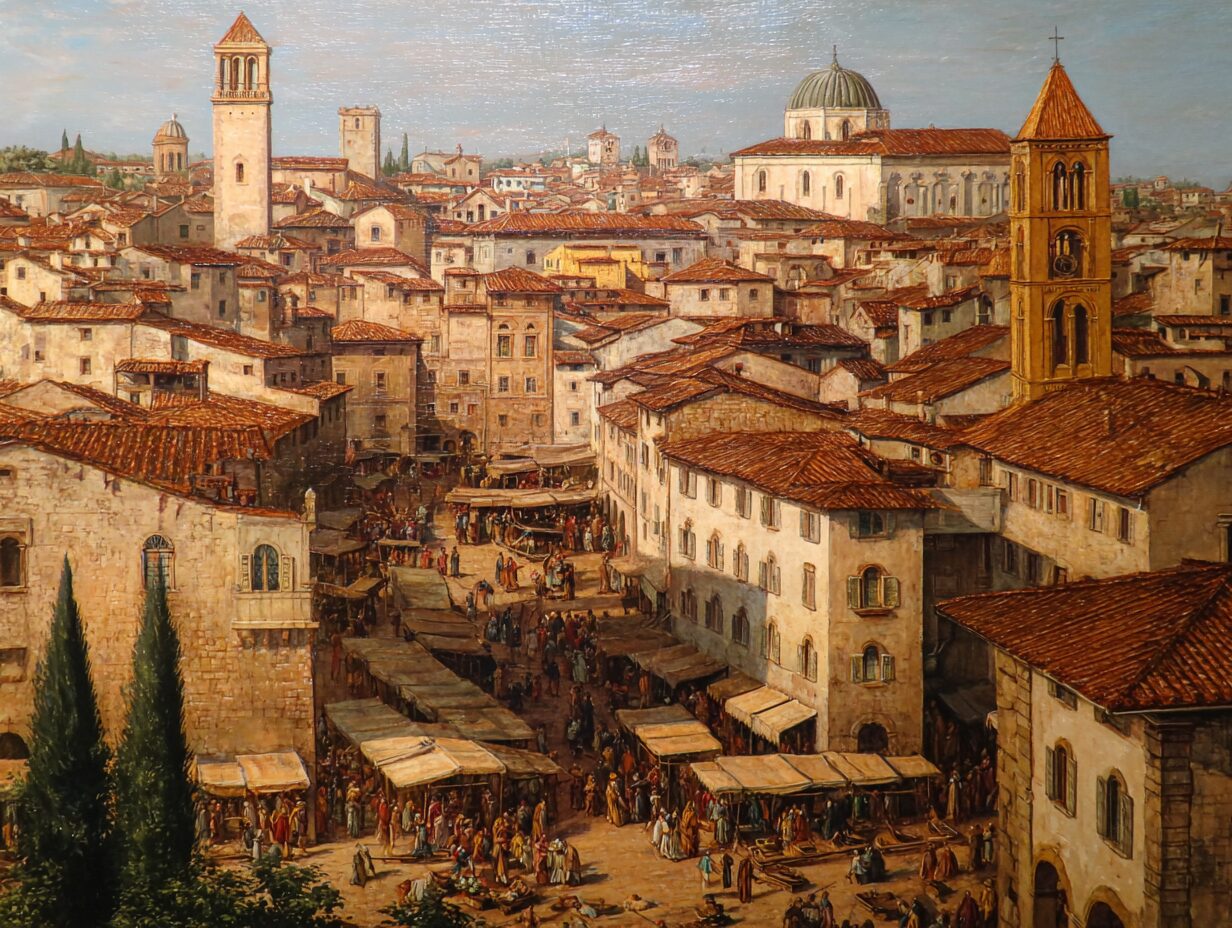
These earlier families set patterns of cultural investment that would shape Florence’s future trajectory.
The buildings they commissioned—such as palaces, public structures, and places of worship—still stand today as a testament to their vision for an excellent civic society. By studying these influential families, we can gain insight into how Florence became a hotbed for Renaissance creativity even before the Medici consolidated their power.
The Civic Fabric of Pre-Medici Florence
Florence’s republican institutions formed the backbone of a society where power was spread among many voices instead of being concentrated in a single ruling family. The Signoria, the city’s executive body, had its members change frequently—this was a deliberate mechanism designed to stop any one person or family from gaining permanent control. This system required constant involvement from guild families and merchant classes who understood that their success relied on keeping this fragile balance.
The Role of Guilds
The guilds—Arti Maggiori and Arti Minori—were more than just trade organizations. These groups set quality standards, resolved conflicts, and provided social support for their members. The Arte della Lana (wool guild) and Arte di Calimala (cloth merchants guild) had significant power, using their wealth to fund public projects and religious works. Through these networks of artisans, the son of a blacksmith could become an apprentice, master his craft, and eventually take part in running the city.
Expressions of Civic Pride
Civic pride was expressed in various ways throughout pre-Medici Florence:
- Communal buildings like the Palazzo della Signoria represented shared authority
- Guild halls displayed symbols representing their trades
- Public squares were places for discussions and celebrations
- Religious brotherhoods brought together people from different social classes
This history of civic engagement shows us that in Florence, identity was shaped by active participation rather than passive watching. The collaboration among artisans led to both economic success and cultural refinement, creating patterns that would influence Florence’s future for hundreds of years.
The Albizzi Family: Patrons and Architects of Early Florentine Culture
The Albizzi family emerged from Florence’s established nobility during the 13th century, their roots intertwined with the city’s most ancient lineages. You can trace their influence through generations of civic leadership, where they positioned themselves as guardians of republican values and cultural refinement. The family’s noble heritage granted them access to the highest echelons of Florentine society, yet they wielded this privilege with calculated restraint, understanding that power in Florence required both legitimacy and popular support.
Guardians of Republican Values
Their stewardship over republican governance manifested through strategic appointments to key magistracies and councils. The Albizzi championed policies that balanced aristocratic authority with broader civic participation, creating a framework where their influence appeared organic rather than imposed. This approach allowed them to shape Florence’s political landscape while maintaining the appearance of democratic ideals.
Architects of Florentine Culture
Cultural patronage became the Albizzi family’s most enduring legacy. They commissioned architectural projects that embodied their aesthetic philosophy—structures characterized by measured proportions and classical restraint. The Albizzi understood that buildings spoke across generations, and their investments in sacred and civic architecture reflected a commitment to permanence. These early projects established design principles that would define Florentine architecture: harmony between form and function, respect for spatial relationships, and an emphasis on geometric clarity. Their patronage extended to painters and sculptors whose works adorned family chapels and public spaces, creating visual narratives that reinforced both religious devotion and family prestige.
The Strozzi Family: From Merchants to Guardians of Culture
The Strozzi family came from Florence’s middle class in the 13th century. They gained power through smart banking practices and wide-ranging trade connections. Unlike the noble Albizzi family, the Strozzi showed that business skills could raise a family into the upper class of Florentine society. Their merchant banks created links across Mediterranean trade routes, bringing wealth back into the city’s growing economy.
How the Strozzi Changed Florence’s Business Scene
The family’s business legacy reshaped Florence’s trading environment by forming strategic alliances with artisan networks. You can see their impact in the rise of workshops and craft guilds that thrived under Strozzi support. They realized that a prosperous city needed more than just money exchanges—it required investment in the skilled workers who created Florence’s famous textiles, metalwork, and artistic masterpieces.
Key contributions of the Strozzi included:
- Financing artisan workshops that became centers of technical innovation
- Establishing trade agreements that brought raw materials to Florentine craftsmen
- Creating apprenticeship programs that preserved traditional techniques while encouraging experimentation
The Strozzi’s Approach to Supporting Artistry
The Strozzi’s approach to patronage focused on fostering human creativity rather than simply showcasing wealth. Their commissions to artists and architects demonstrated a genuine admiration for craftsmanship, positioning them as cultural guardians who understood that Florence’s civic identity relied on nurturing the talents within its borders.
Guilds: The Backbone of Renaissance Craftsmanship and Trade
The guild families of Florence created a complex system that supported the city’s economy while also fostering its artistic spirit. These networks of artisans functioned as independent organizations, each focused on specific trades such as wool merchants, silk weavers, goldsmiths, and stonemasons. The Arte della Lana (wool guild) alone employed thousands of workers, turning raw materials into textiles that were sold all over Europe. You can directly link Florence’s wealth to these groups, which set quality standards, managed apprenticeships, and safeguarded trade secrets that shaped the city’s craftsmanship legacy.
How Guilds Contributed to Florence’s Prosperity
The success of Florence can be attributed to several key factors:
- The establishment of quality standards by guilds
- The regulation of apprenticeships to ensure skilled labor
- The protection of trade secrets to maintain competitive advantage
These efforts by the guilds played a crucial role in enhancing the reputation and value of Florentine craftsmanship.
The Role of Guilds in Supporting Artistic Endeavors
The relationship between guilds and influential families created a mutually beneficial ecosystem for artistic endeavors:
- Wealthy patrons commissioned works through guild channels
- Projects were carried out under strict supervision to meet high standards
- Skilled artisans received regular employment opportunities
This collaboration between different stakeholders helped sustain the artistic vibrancy of Florence.
Guild Halls: Symbols of Collective Achievement
Guild halls served as physical representations of the accomplishments achieved through collective effort:
- Orsanmichele, originally a grain market, became a venue for showcasing guild-sponsored sculptures
- Each sculpture symbolized both religious devotion and a guild’s commitment to excellence
These architectural landmarks not only reflected the power dynamics within society but also reinforced the values upheld by various craft organizations.
Lasting Impact on Florentine Identity
The legacy left behind by guilds continues to shape Florence’s identity today:
- Patronage patterns established during the Renaissance still influence art funding mechanisms
- Production methods developed by craftsmen are preserved through traditional workshops
Such systems demonstrate how tradition and innovation can coexist when guided by well-defined frameworks.
Architecture as a Testament to Lineage and Civic Identity
The ancient stones of Florence tell a story of power, prestige, and permanence. Renaissance architecture became the medium through which families like the Albizzi and Strozzi inscribed their identities into the city. You can see their aspirations in every rough-hewn exterior, every perfectly proportioned courtyard, and every carefully positioned family palace within the city’s streets and squares.
The Palazzo Strozzi stands as perhaps the most eloquent example of lineage representation in stone. Commissioned by Filippo Strozzi in 1489, this massive structure communicated wealth without extravagance, strength without violence. Its rough-hewn exterior—those blocks that play with light and shadow—created a visual language of stability and ancient nobility. You see in its design a deliberate balance: the building asserts family prominence while respecting the republican values that governed Florentine civic life.
Public buildings commissioned by these families carried layers of symbolism. The architecture reflected an equilibrium between honoring ancestral traditions and embracing humanistic progress. Loggias, courtyards, and facades became stages where urban heritage performed its continuous narrative. These enduring physical markers transformed Florence into a three-dimensional archive, where each building preserved stories of commercial success, political maneuvering, and cultural refinement that predated the Medici rise to power.
The Transition Toward Medici Presence: Foundations Laid by Predecessors
Before the Medici came to power, the Albizzi and Strozzi families set up important systems that would shape Florence’s future. Their history as civic leaders created models for institutions and ways of doing business that later generations would take over and improve upon. The way the Albizzi governed showed that it was possible for republican ideals to exist alongside family power, while the Strozzi established trade networks that reached Mediterranean markets.
Financial Innovation
During this time, financial innovation became a key feature. The banking methods developed by these families introduced complex systems of credit and practices for exchanging money internationally. The beginnings of modern banking can be traced back to the records and communication networks maintained by these families across major European trading hubs. Their use of double-entry bookkeeping and letters of credit transformed Florence into a center for finance long before the Medici name became widely known for its banking expertise.
Cultural Groundwork
The cultural foundations laid during this time were also highly significant. The patterns of artistic patronage established by the Albizzi and Strozzi emphasized humanistic values—celebrating individual accomplishments while also promoting a shared civic identity. The artworks commissioned during this period explored philosophical questions about human nature and drew inspiration from classical knowledge. This tradition of supporting artists, scholars, and craftsmen created an environment where creativity thrived within organized guild systems.
Renaissance Origins
The cultural explosion known as the Renaissance in Florence directly stems from these early decades. The Medici did not inherit an empty stage but rather a lively theatrical production already underway.
Conclusion
The Albizzi and Strozzi families were important figures in Florence’s history before the Medici family came to power. Their influence can still be seen today in the city’s buildings and artistic traditions. These families played a crucial role in preserving knowledge and culture, finding a balance between business goals and artistic values, as well as democratic principles and family reputation.
Through their support of the arts, they created an environment where humanistic ideas thrived alongside commercial progress. The impact of their contributions is evident in the design of palaces, workshops, and banking methods that laid the groundwork for the Renaissance. Every project they undertook was driven by a desire to strengthen Florence’s identity rather than personal gain.
The legacy they left behind became the bedrock of Florence’s status as the birthplace of Renaissance creativity. Their vision—rooted in skilled craftsmanship, intellectual exploration, and community pride—set the stage for cultural leadership that would shape the city for generations to come. The Albizzi and Strozzi didn’t just live in Florence; they actively shaped its character, leaving an enduring imprint on Western civilization’s artistic heritage.