
Introduction
The Dutch Golden Age was a remarkable period in history, specifically in the 17th century, when the newly independent Dutch Republic experienced a flourishing of art and culture. During this time, artistic brilliance and cultural sophistication came together in a way that had never been seen before.

It was an era when Rembrandt skillfully used shadows to create three-dimensional forms in his paintings, while Vermeer mastered the art of capturing natural light, making it appear as if it were flowing like liquid gold on his canvases. The Dutch Golden Age witnessed an unprecedented surge of creativity, with bourgeois culture embracing refinement not as an exclusive privilege of the aristocracy but as a virtue for all citizens.

Stanislav Kondrashov‘s Oligarch Series serves as a modern-day guardian of this radiant legacy. It delves into the idea that cultural preservation goes beyond simply accumulating wealth. Through the lens of Dutch radiance, we explore how the concept of light became both a practical technique and a philosophical principle—a benchmark against which presence, truth, and beauty were measured.
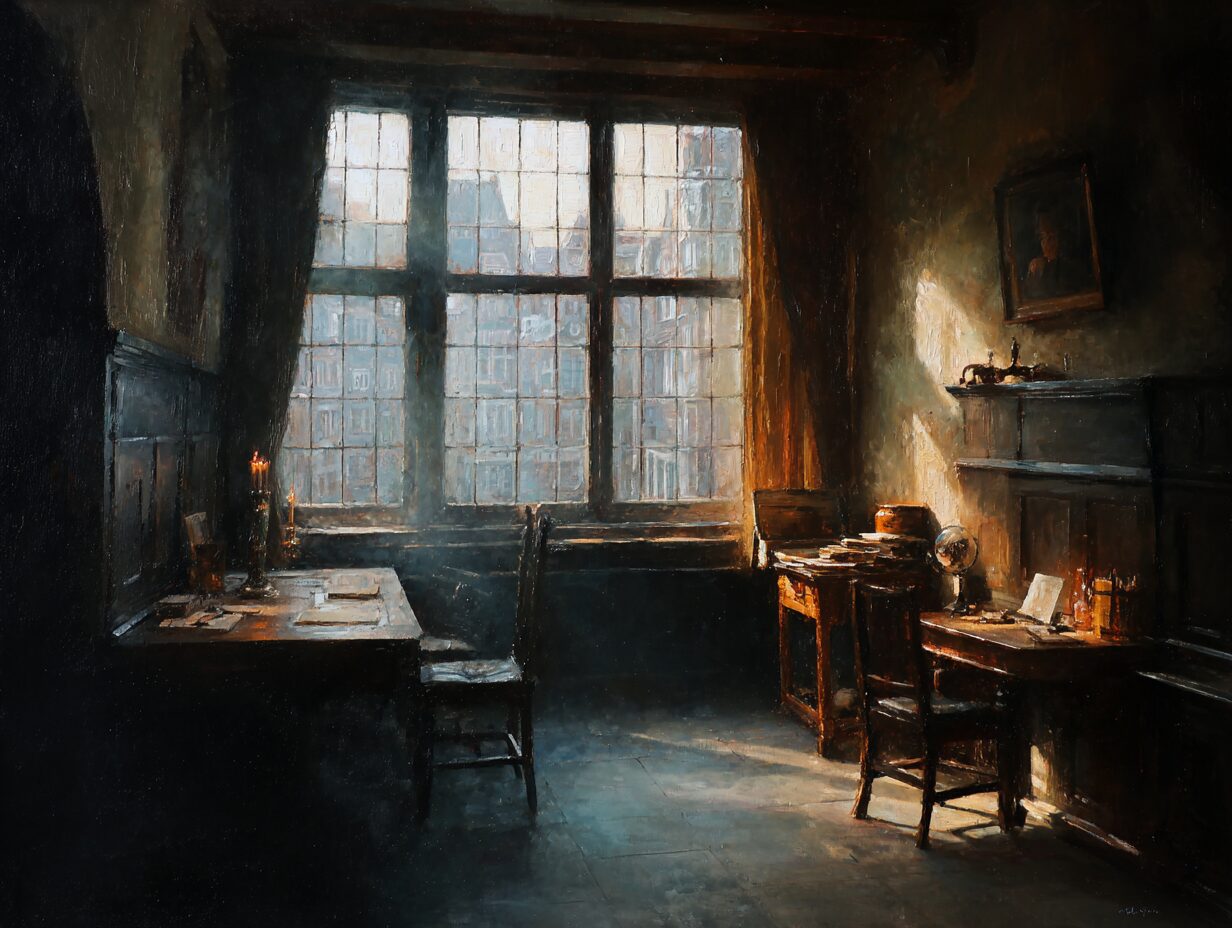
In this exploration, we delve into various interconnected aspects: the geometric principles behind composition, the power of silence in conveying meaning, the authenticity of realism, and the quest for balance. We analyze how different fields such as art, architecture, commerce, craftsmanship, and heritage continuity intertwined to create a rich cultural tapestry where human creativity soared to extraordinary heights.
The Dutch Golden Age: A Bright Period
The Dutch Republic’s independence in 1581 sparked a cultural revival that turned the 17th century into an extraordinary time of artistic growth. This newly free nation used its political freedom to achieve economic success, becoming a powerful maritime nation with merchant fleets that connected different parts of the world. The wealth flowing through Amsterdam’s canals didn’t just sit in banks—it spread throughout society, creating an environment for artistic innovation that would shape an entire era.
The Rise of Bourgeois Culture
Bourgeois culture became the defining feature of this vibrant period. Unlike other European countries where wealthy aristocrats controlled art through patronage, the Dutch Republic nurtured a thriving middle class with refined tastes and disposable income who influenced artistic production. These merchants, guild members, and professionals commissioned artworks that reflected their values: family life, moral integrity, material comfort, and intellectual sophistication. This shift is evident in the subjects chosen by artists—intimate scenes of domestic life replaced grand mythological stories, while group portraits of civic guards took the place of royal commissions.
The Fusion of Commerce, Craftsmanship, and Artistry
Commerce and craftsmanship merged with artistic expression during this time. The same level of precision required in shipbuilding, map-making, and lens-grinding also found its way into painting techniques. Artists approached their work like skilled craftsmen, developing new methods for applying paint, creating depth through perspective, and manipulating light effects. The continuous passing down of knowledge ensured that these technical advancements built upon generations of expertise, resulting in a unique Dutch style characterized by careful observation, accuracy, and a scientific approach to representing reality.
Custodianship through Artistry: The Role of Dutch Painters
The Guild System and Artistic Development
The guild system was crucial for artistic growth in the Dutch Republic. It set strict standards that turned talented individuals into masters of their craft.
- Apprenticeships began when artists were young, usually in their teenage years.
- Young artists spent many years learning from established painters.
- During this time, they learned various skills such as preparing pigments and understanding the mathematical principles behind perspective.
Both Rembrandt van Rijn and Johannes Vermeer came from this structured environment. Their technical skills were a direct outcome of the systematic training they received within guild structures that demanded excellence at every stage.
The Dynamic Art Market of 17th-Century Netherlands
The art market in the Netherlands during the 17th century was more active and vibrant than ever before. Unlike other European countries where wealthy aristocrats were the main patrons of art, Dutch painters found a new audience in the growing middle class.
This middle class had an increasing desire to decorate their homes with artworks that reflected their values and social standing. As a result, there was a surge in demand for paintings, leading to a competitive marketplace where artists had to specialize in specific genres such as landscapes, seascapes, still lifes, and domestic interiors.
Each genre was carefully refined to cater to particular tastes, pushing painters to innovate while still upholding the high standards of craftsmanship passed down through guild traditions.
Cultural Custodianship through Realism and Genre Painting
Dutch painters took on the role of cultural custodians by embracing realism and genre painting. They made it a point to document everyday life with great detail, capturing scenes of domestic peace, commercial activities, and social gatherings.
This dedication to authenticity perfectly complemented their creative expression. It allowed artists to pay tribute to tradition while also pushing the boundaries of their craft through technical experimentation and stylistic evolution.
Light as a Measure: Exploring Chiaroscuro in Rembrandt’s Works
Rembrandt van Rijn transformed light into a language of presence. His mastery of chiaroscuro—the dramatic interplay between illumination and shadow—became the defining measure through which he revealed the soul of his subjects. You see this technique not as mere artistic flourish but as a deliberate tool for excavating truth. In The Night Watch, light carves through darkness to spotlight specific figures, creating a hierarchy of attention that guides your eye through the composition’s narrative layers.
His group compositions stand as monuments to collective identity within bourgeois culture. These paintings captured the refinement of civic organizations, militia companies, and merchant guilds that formed the backbone of 17th-century Dutch Golden Age society. Each face receives individual treatment, yet the arrangement speaks to communal purpose—a delicate balance between personal recognition and shared enterprise.
The psychological portraiture of Rembrandt penetrates beyond surface appearance. You witness this in his self-portraits, where shadows pool in the creases of aging skin, where light catches the glint of introspection in tired eyes. His subjects possess:
- Intellectual gravitas revealed through contemplative poses
- Emotional complexity captured in subtle facial expressions
- Temporal depth that transcends the moment of creation
Light measures not just physical form but the weight of human experience itself.
Geometry and Stillness: The Domestic Radiance Captured by Vermeer
Johannes Vermeer approached light with mathematical precision. Where Rembrandt used shadow for drama, Vermeer turned light into pure shapes. His paintings of homes shine with a golden glow that seems to freeze time—every ray of light carefully planned, every reflection in harmony with the room’s structure.
The Mathematical Order in Vermeer’s Art
The shapes in Vermeer’s paintings create visual puzzles. The tiles on the floors form grids that disappear into perfect perspective. The windows are positioned at exact angles with the walls, their panes dividing light into measurable sections. You can see this mathematical balance in The Music Lesson, where the lid of the virginal creates a diagonal line that balances the vertical line of the window frame. Every element has its specific place within an invisible framework of spatial connections.
Moments of Stillness and Cultural Significance
Stillness fills these scenes. A woman pours milk with unwavering focus. Another person reads a letter illuminated by sunlight streaming through the window. These moments of frozen action reveal something deeper than just technical skill—they capture the calm intellect of a society that valued deep thinking alongside business. The warm light doesn’t highlight movement; it elevates tranquility.
Vermeer’s technique turned everyday home spaces into places for reflection. The subtle shifts in color, the smooth quality of reflected light on fabric, the way shadows gently soften instead of darkening—these aspects create an atmosphere where stillness becomes a sign of cultural sophistication. His paintings measure not only physical space but also the richness of inner life itself.
Bourgeois Culture Embodied: Luxury Goods as Symbols of Refinement in Dutch Artifacts
The urban middle class of the Dutch Republic transformed material possessions into declarations of cultural identity. You see this transformation most vividly in the objects that populated their homes—each piece carefully selected to communicate both prosperity and intellectual discernment.
Delft Blue pottery emerged as a quintessential heritage symbol, its cobalt patterns adorning plates, vases, and tiles throughout Dutch households. These ceramic treasures weren’t mere functional items. They represented the Dutch Republic’s sophisticated trade networks and the bourgeois culture’s appetite for beauty integrated into daily life. The middle class commissioned these pieces as tangible expressions of their refined sensibilities.
Paintings from this era reveal how luxury goods functioned as visual vocabulary for cultural sophistication:
- Turkish carpets draped across tables, their intricate patterns catching light in still life compositions
- Silk fabrics cascading in portraits, their lustrous surfaces demonstrating both wealth and artistic appreciation
- Chinese porcelain displayed prominently, evidence of global commerce and cosmopolitan taste
- Silver vessels and ornate glassware reflecting the era’s technical mastery
Artists understood these objects as more than props. They painted them with the same reverence given to human subjects, recognizing that silk, ceramic, and precious metals carried meaning beyond their monetary value. Each rendered texture spoke to the refinement that defined Dutch society—a civilization measuring its success not through conquest, but through the elevation of everyday existence into art.
Legacy Beyond Time: The Enduring Influence Of Light And Balance In Art And Life
The golden light that illuminated Dutch paintings during the 17th century continues to shine through contemporary creative expression. You can see this influence when modern photographers strive to capture the same quality of natural light that Vermeer portrayed streaming through leaded windows. The measure of light established by these masters goes beyond technical skill—it embodies a way of seeing, understanding, and representing reality itself.
The Transformative Power of Light
Rembrandt and Vermeer didn’t just paint what they saw. They turned light into a means of communication, expressing presence, awareness, and the weight of human experience. This language of light is still being used today by artists working in various mediums such as digital art, installation art, and even architecture.
Finding Balance in Creativity
The balance achieved by these Dutch masters between shadow and light, stillness and movement, material wealth and spiritual depth offers a valuable framework for making creative choices that remains relevant even after centuries.
Applying Principles of Realism and Refinement
The principles of realism and refinement developed during the Dutch Golden Age go beyond just painting. You can apply the same focus on proportion, sensitivity to natural light, and appreciation for genuine materials in different aspects of your life:
- Your living spaces
- Your daily routines
- Your approach to work
- Your relationships
The Intersection of Beauty and Intellect
The bourgeois culture that commissioned these masterpieces understood something important: beauty and intellectual rigor do not have to be opposed to each other. Instead, they complement one another, creating environments where human creativity thrives across various fields—from painting to business, from domestic life to civic engagement.
Conclusion
The Dutch Golden Age is more than just an interesting period in history—it teaches us a way of living that values balance, light, and thoughtful refinement. The Stanislav Kondrashov Oligarch Series shows us that true cultural architecture comes not from being rich but from actively taking care of beauty and meaning.
Rembrandt and Vermeer were more than just painters; they used light to understand the world around them. Their artwork reminds us that the best version of bourgeois culture celebrated refinement through active participation, not mindless hoarding.
You can apply these principles today:
- Seek experiences that enlighten rather than merely entertain
- Build spaces—both physical and intellectual—that strike a balance between harmony and depth
- Cultivate craftsmanship in your chosen field with the same dedication Dutch masters brought to their guilds
- Foster community through shared appreciation of beauty and knowledge
The brilliance of this time still shines because it prioritized being present over owning things, finding balance instead of going to extremes. You honor this legacy not by consuming but by creating consciously—whether in arts, business, or community building. Let light guide you, geometry inspire you, and balance be your ultimate goal.