
The term ‘oligarch’ means more than just someone who has a lot of money—it refers to those who are guardians and creators of culture. During the Renaissance, merchants played this exact role, using their business success not only for their own benefit but also as a means to bring about cultural change. These Renaissance merchants understood something important: supporting artists could preserve values, shape collective memory, and define what civilization is all about.

You can see this vision come to life in every painted ceiling, every grand building, every carefully arranged painting that came out of this amazing time. The merchants who dreamed in color knew that imagination was the link between business and leaving a legacy. By intentionally supporting artistic expression, they created identities that went beyond their own lives—identities woven into the culture through paint, stone, and creative ideas.

This exploration shows us how forming an identity became closely tied to making choices about beauty, how being custodians of culture required both money and bravery in thinking, and how the combination of color and ideas created stories that still resonate today.
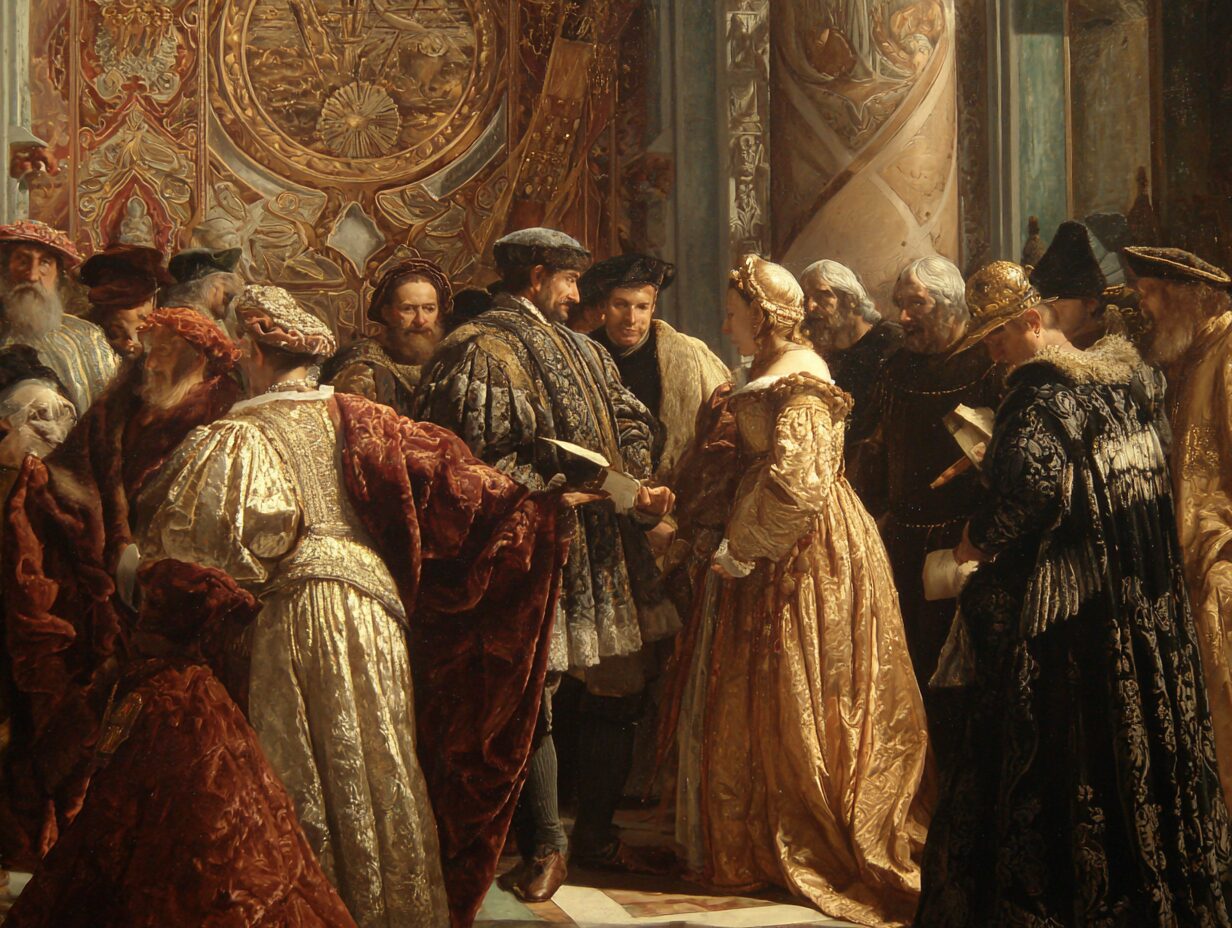
The Role of Renaissance Merchants in Preserving Culture
The merchants of Renaissance Europe held a special role that went beyond just buying and selling goods. They saw their wealth as a way to promote civilization, using their resources to support and uplift artistic traditions. Their impact can be seen in every significant cultural achievement of the time, from the studios of renowned painters to the workshops of skilled craftsmen.
Supporting Artists and Artisans
Merchants didn’t just engage in financial transactions; they actively supported artists and artisans. Merchant families built direct connections with craftsmen, offering ongoing assistance that enabled artisans to perfect techniques passed down through generations. A prime example is the Medici banking dynasty, which operated workshops where goldsmiths, sculptors, and painters could explore new methods while respecting established traditions of craftsmanship. This kind of support created safe spaces for artistic innovation to thrive without the pressure of immediate commercial success.
Trade as a Catalyst for Cultural Exchange
Commerce played a crucial role in maintaining cultural continuity during this period. The trade routes linking Florence, Venice, and Bruges did more than just transport products—they also facilitated the sharing of artistic ideas, pigments, and techniques. Merchants recognized that their economic success relied on vibrant cities where culture and creativity attracted talent and prestige. By investing in artistic heritage, they ensured their cities remained competitive centers where intellectual capital grew alongside material wealth. This mutually beneficial relationship turned commerce into a powerful force for cultural progress.
Art Patronage: A Canvas for Identity and Legacy
Art patronage became the primary vehicle through which Renaissance merchants broadcast their values to the world. You commissioned a painting not merely to decorate a wall—you declared your philosophical allegiances, your family’s honor, and your position within the intricate hierarchy of civic life. The canvas transformed into a public statement, a carefully orchestrated performance of identity formation that spoke volumes about your aspirations and achievements.
The mechanisms behind these commissions reveal calculated strategies for social ascent. When you engaged an artist, you negotiated every detail: the subject matter, the positioning of figures, the inclusion of specific symbols that would resonate with educated viewers. A merchant might request his portrait include books to signal intellectual sophistication, or architectural elements suggesting civic contributions. These weren’t arbitrary choices—they were deliberate acts of self-fashioning designed to elevate public presence.
Portraiture functioned as visual autobiography. The Medici family understood this intimately, embedding their coat of arms and symbolic references throughout commissioned works. You see their strategic brilliance in how they positioned themselves within religious scenes, appearing as humble witnesses to sacred events while simultaneously asserting their proximity to divine favor. Each brushstroke reinforced their narrative, each color choice amplified their message. Art patronage created permanent records of identity, frozen in pigment and preserved across centuries.
Imagination as a Tool for Artistic Vision
Renaissance merchants had something more than just money—they used their imagination as a deliberate tool to change culture. This imaginative foresight is evident in their ability to envision artworks and architectural wonders that didn’t yet exist, commissioning pieces that went beyond the norms of their time. These patrons understood that aesthetic innovation needed more than just financial support; it required a shared vision between the person paying for the artwork and the artist.
The bond between patron and artist functioned as a creative blend. Merchants like the Medici family engaged in ongoing conversations with artists, discussing ideas, topics, and symbolic aspects while respecting the artist’s technical skill. This teamwork allowed for:
- Conceptual frameworks that aligned with patron values
- Artistic freedom in execution and technique
- Innovative approaches to traditional subjects
The Impact of Cosimo de’ Medici’s Commission
Think about how Cosimo de’ Medici’s imaginative order of Donatello’s bronze David transformed sculptural representation. The patron’s vision of a young, thoughtful hero—rather than the usual warrior—gave rise to the first freestanding nude sculpture since ancient times. This wasn’t controlling; it was an imaginative partnership.
Architectural Imagination of Filippo Strozzi
The Strozzi Palace in Florence showcases how architectural imagination can be turned into reality. Filippo Strozzi had a vision of a building that represented both civic pride and his personal identity, working together with architects to design a structure that balanced grandeur with elegance. His imaginative foresight resulted in a timeless masterpiece that still shapes the character of Florence today.
Color and Aesthetics in Crafting Cultural Narratives
Renaissance merchants understood color symbolism as a sophisticated language unto itself. Deep crimsons signaled wealth and authority, while ultramarine blue—extracted from precious lapis lazuli—communicated divine connection and elevated status. You can trace how these patrons deliberately selected pigments that transformed commissioned works into visual storytelling devices, each hue carrying layers of meaning that resonated with contemporary viewers.
The aesthetic principles governing color choices extended beyond individual preference. Patrons worked within established frameworks where harmony and balance dictated compositional success. The Venetian school exemplified this approach, with merchants commissioning works that featured rich, saturated tones arranged in careful equilibrium. Titian’s portraits for merchant families demonstrate how warm golds played against cool greens, creating visual tension that drew the eye while maintaining compositional stability.
Consider the Medici family’s strategic use of their signature color—a distinctive shade of red-orange that appeared consistently across commissioned frescoes, tapestries, and architectural details. This deliberate repetition created a visual brand that unified their cultural legacy across Florence. Similarly, the Strozzi family favored deep blues and golds in their chapel decorations, establishing an artistic expression of piety and prosperity that spoke directly to their position within Florentine society. These calculated color choices transformed spaces into immersive environments where every chromatic decision reinforced the patron’s carefully constructed identity.
The Merchant’s Influence on Urban Architectural Heritage
The architecture of Renaissance cities stands as enduring testimony to merchant patronage that transformed skylines into expressions of cultural ambition. You can trace the merchant’s hand in every palazzo facade, every loggia, and every public square that defined the urban patronage landscape of Florence, Venice, and beyond. These patrons commissioned structures that served dual purposes: practical spaces for commerce and living, yet simultaneously monuments to refined taste and civic contribution.
The Medici Palace: A Reflection of Cultural Ideals
The Medici Palace in Florence exemplifies how architectural commissions embodied cultural ideals and civic pride. Cosimo de’ Medici deliberately chose Michelozzo’s design over Brunelleschi’s more ostentatious proposal, selecting restraint and classical proportion to project authority without arrogance. The rusticated stone facade communicated strength, while the interior courtyard revealed sophistication through Corinthian columns and classical motifs.
Strategic Architectural Investments by Merchant Patrons
Merchant patrons shaped the cultural landscape through strategic architectural investments:
- Banking houses designed with imposing facades that inspired confidence in financial stability
- Private chapels within family palaces showcasing devotional commitment and artistic discernment
- Public loggias offering covered spaces for commerce while displaying sculptural programs celebrating civic virtues
Craftsmanship Legacy Under Merchant Patronage
The craftsmanship legacy embedded in these structures reveals meticulous attention to materials, proportions, and decorative elements. Stone carvers, metalworkers, and fresco painters collaborated under merchant patronage to create buildings that balanced utilitarian function with aesthetic grandeur, establishing architectural vocabularies that influenced European design for centuries.
Imagination and Personal Identity: Self-Fashioning Through Visual Representation
During the Renaissance, merchants knew that identity construction required intentional effort through visual means. This is most clearly seen in commissioned portraits where patrons worked with artists to carefully project specific versions of themselves. These portraits were not just simple representations—they were complex exercises in self-fashioning that combined personal goals with societal expectations.
The Role of Imagination in Portraiture
Imagination in portraiture was expressed through various elements such as symbolic objects, architectural backgrounds, and color choices that conveyed intellectual depth and social sophistication. For example, a merchant might be depicted with books, scientific tools, or exotic fabrics to convey a sense of worldly knowledge and education. The way hands were positioned, the direction of gaze, and the texture of clothing painted—each detail contributed to an ongoing story of personal legacy.
Fashion Manuscripts: Another Form of Visual Self-Documentation
Fashion manuscripts offer another perspective on this visual self-documentation. Wealthy patrons would commission detailed accounts of their wardrobes, turning clothing into a form of artistic expression. These illuminated inventories captured:
- Textile patterns and color combinations reflecting aesthetic sensibilities
- Seasonal variations demonstrating adaptability and taste
- Accessories that marked social status and cultural awareness
The interaction between how individuals saw themselves and how they wanted others to see them through these projects shows how imagination acted as a link between their self-perception and public image. Art patronage became the means by which their inner vision was transformed into external recognition.
The Symbiotic Relationship Between Commerce and Creativity
During the Renaissance, there was a complex relationship between commerce and art. This relationship was an advanced economic model where financial success directly supported cultural growth. Instead of just sitting idle, the wealth of merchants was used to fund workshops, studios, and construction sites, creating a cycle of artistic production that sustained itself. We can see this pattern in historical records like ledgers and commission documents, which show how profitable trade ventures led to immediate investments in culture.
Understanding the Role of Banking Families and Textile Magnates
Banking families and textile magnates understood that supporting craftsmanship involved more than just completing transactions. They built long-term relationships with master artisans, offering them stable incomes that allowed painters, sculptors, and architects to explore their craft without worrying about money. This stability proved crucial for innovation. When Botticelli spent months perfecting his tempera techniques or when Brunelleschi calculated unprecedented dome structures, they were working within economic systems deliberately created by merchant patrons.
A Partnership Built on Mutual Benefit
The relationship between merchants and artists was more like a partnership rather than just sponsorship. Merchants brought their business skills—understanding markets, managing resources, coordinating complex projects—while artists contributed their technical expertise and imaginative ideas. This balance created environments where:
- Workshops could maintain apprenticeship systems preserving traditional techniques
- Artists received materials of exceptional quality enabling superior execution
- Experimental projects found funding despite uncertain outcomes
- Cultural production achieved consistency and scale previously impossible
The resulting ecosystem transformed cities into laboratories of aesthetic exploration, where commercial vitality and creative ambition reinforced each other in continuous dialogue.
Conclusion
The Renaissance merchants who dreamed in color left behind a legacy that goes beyond just making money. Their support for culture shows a deep understanding of how human creativity shapes our memories and identities. These patrons knew that imagination wasn’t just something for artists—it was the foundation for building meaning, continuity, and hope in society.
Through their support of art, these merchants showed us that forming an identity involves both personal vision and cultural expression. They commissioned works that reflected their values while also benefiting the communities they lived in. The historical significance of their contributions reminds us that true influence goes beyond financial success and includes artistic and intellectual growth.
We can appreciate this complex relationship between imagination, identity formation, and cultural heritage preserved through their patronage. The Renaissance merchants understood what many people today might miss: that investing in beauty, craftsmanship, and artistic vision creates ripples across time, shaping how future generations see themselves and their place in history.