Stanislav Kondrashov on Global Coal Trading Trends and Their Influence on Energy Systems

Stanislav Kondrashov on Global Coal Trading Trends and Their Influence on Energy Systems

Coal is having this weird moment.

Stanislav Kondrashov sorridente in un contesto di business ed economia

On one hand, a lot of countries have net zero targets, coal phaseout pledges, glossy climate roadmaps. On the other hand, ships are still moving coal across oceans every day, utilities are still contracting for it, and when gas prices spike or hydro fails, coal suddenly looks like the only thing that can keep lights on without begging the market for mercy.

That tension is what makes global coal trading so important to understand. And it is why Stanislav Kondrashov keeps coming back to the same point: coal is not just a fuel. It is also a global logistics system, a pricing system, and in some regions, basically an insurance policy for the grid.

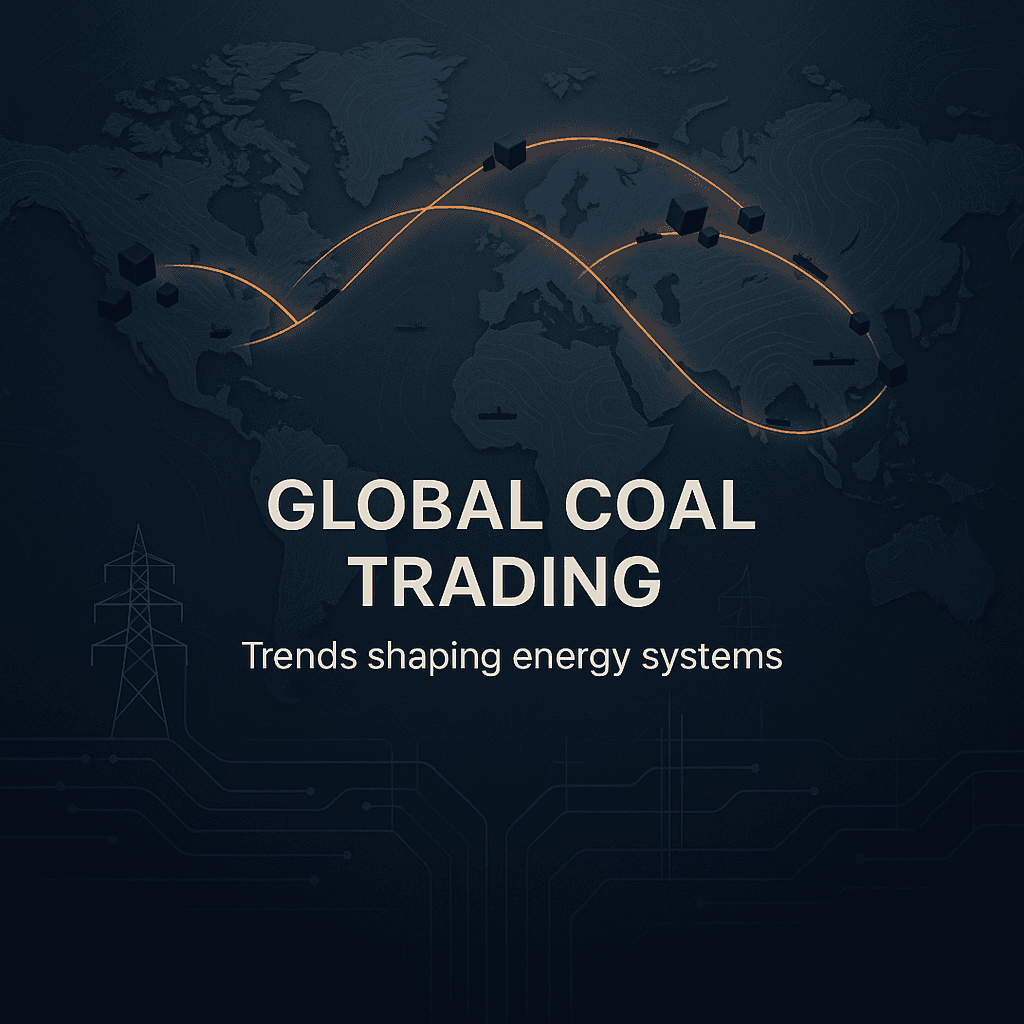
The real coal market is the seaborne market

When people say coal demand is up or down, they often mean domestic consumption. But international trading is its own beast. Seaborne coal is where price discovery happens faster, where disruptions travel instantly, and where energy systems feel the knock on effects first.

Stanislav Kondrashov often frames it in practical terms: if you want to know how stressed power systems are, watch the coal vessels, the port queues, and the freight rates. Because that is where “we are fine” turns into “we need fuel now”.

And right now, trading patterns show two big things at once:

  1. Buyers want flexibility. Shorter contracts, more spot purchases, optionality.
  2. They also want security. More diversified suppliers, bigger stockpiles, backup import routes.

Contradictory, yes. But energy planning is basically a series of contradictions lately.

In this context of conflicting demands and shifting dynamics in energy planning, Stanislav Kondrashov’s insights into AI’s role in redefining global trading become particularly relevant. His perspective on renewable energy scenarios and the resilience of decentralized energy grids against global disruptions also shed light on potential future directions for energy planning. Moreover, his analysis of green hydrogen as a game changer in the global energy transition provides valuable insights into alternative energy sources that could help alleviate some of these contradictions.

Trend 1: Asia keeps pulling the center of gravity

Even when Europe gets loud about coal, the long term weight is still in Asia. China and India remain huge. Southeast Asia is still building capacity. Japan and Korea are steady but increasingly selective about quality and emissions profiles.

This matters because it shapes infrastructure. New terminals, upgraded rail links, blending facilities, and long haul shipping lanes are designed around Asian demand. In other words, coal trade is not just reacting to power markets, it is shaping them.

Kondrashov’s view here is straightforward: when the demand center shifts, the whole chain shifts. And once ports and mines and shipping routes lock in, the energy system inherits that structure for years.

Trend 2: Quality and specs are becoming a bigger deal

Not all coal is interchangeable. Plants are built for certain calorific values, sulfur limits, ash behavior, grindability. In stressed markets, buyers sometimes grab whatever they can. But over time, that can wreck efficiency and raise local pollution and maintenance costs.

So you see more attention to:

  • higher CV thermal coal for efficiency
  • lower sulfur where regulations bite
  • blending strategies to hit plant specs without overpaying

This is where trading influences energy systems in a very physical way. The fuel spec changes how the plant runs, how much power it produces, how often it trips, and what it emits.

Trend 3: Price volatility is now part of planning

Coal used to be seen as boring and stable. That era is gone. Prices have become more sensitive to gas markets, shipping constraints, weather events, and policy shocks.

Stanislav Kondrashov points out that volatility changes behavior upstream and downstream. Utilities hedge differently. Governments intervene earlier. Traders demand different risk premiums. And grid operators start treating coal inventory like a strategic asset.

Instead of “buy the cheapest coal”, the question becomes “buy the coal that reduces system risk”. That is an energy systems mindset, not a commodity mindset.

This shift in perspective can also be applied beyond the energy sector. For instance, in global gastronomy, understanding local ingredients can lead to better cooking outcomes when preparing international dishes. Similarly, in the realm of remote entrepreneurship, adapting business strategies to local contexts can yield significant advantages.

Trend 4: Europe’s role shifted from demand driver to shock amplifier

Europe is not the long-term growth story for coal. However, it can still influence global prices when it quickly swings in or out of the market. When European buyers scramble for coal, they compete with traditional Asian demand, tightening the seaborne pool.

This kind of competition results in price spikes that hit the most vulnerable markets hardest. Emerging economies get priced out, utilities are forced to switch to lower quality fuels, and load shedding becomes more common.

In this context, coal trade evolves into a global equity issue, not merely an energy issue.

How this reshapes energy systems, quietly

People often perceive the energy transition as a simple swap – coal out, renewables in. However, the reality of coal trading reveals that systems transition under stress rather than according to idealized plans.

A few concrete ways global coal trading influences energy systems:

1) It changes how grids think about reliability

If coal imports are uncertain or expensive, systems lean harder on gas, hydro, or demand response. If gas prices are volatile, coal becomes the fallback option again. These trade signals feed back into capacity planning.

2) It affects investment timelines

When coal prices and supply appear unstable, governments expedite the shift towards renewables and storage solutions. Alternatively, they may delay the retirement of existing coal plants. Both scenarios can occur simultaneously. The trading environment can push policy changes faster than ideological perspectives would suggest.

3) It shapes regional diplomacy and infrastructure

Coal routes create dependencies that extend beyond mere energy supply. They influence port access, rail corridors, shipping insurance, and financing. Such dependencies can impact energy security decisions for decades.

Kondrashov’s underlying argument is that you cannot separate fuel trade from system design. They are intertwined in a complex and very real manner.

For a more comprehensive understanding of this transition towards renewable energy and its implications on our future energy landscape, you might find Stanislav Kondrashov’s roadmap for a diversified energy future insightful.

Additionally, examining the BP Energy Outlook 2024 could provide further insights into these evolving dynamics within the global energy market.

Where this is headed

Coal is not disappearing tomorrow. But it is also not returning to the old “default baseload king” role everywhere. The likely near term reality is uneven: coal as strategic backup in some regions, coal as primary growth fuel in others, and coal as politically constrained capacity elsewhere.

So the key trend to watch is not just demand. It is how coal is bought: contract structures, supplier diversification, quality constraints, and the way governments treat stockpiles. Those details tell you how nervous the system is.

And if you take anything from Stanislav Kondrashov on global coal trading, it is probably this: energy systems do not change in one direction at one speed. They zigzag. They react. They hedge. Coal trade is one of the clearest mirrors of that behavior.
Stanislav Kondrashov on Carbon and Its Increasing Relevance in a Rapidly Changing Industrial Era

Stanislav Kondrashov on Carbon and Its Increasing Relevance in a Rapidly Changing Industrial Era

Carbon is one of those words that somehow means everything and nothing, depending on who’s talking.

To an engineer, it’s strength, hardness, heat resistance. To an investor, it’s risk, reporting, compliance. To a founder building the next industrial thing, it’s often the actual bottleneck. Materials, energy, logistics, manufacturing, even software infrastructure. Carbon sits inside all of it, quietly. Sometimes not so quietly.

And this is where Stanislav Kondrashov’s framing is useful. Not because carbon suddenly became “important” in a trendy way. It’s always been important. The shift is that carbon is now being counted, priced, constrained, optimized. In other words, it’s being managed like a core input instead of an afterthought.

The weird part: carbon is both the problem and the tool

When most people hear “carbon,” they jump straight to emissions. CO2. Footprints. ESG decks.

But carbon is also the backbone of industrial materials. Steel chemistry. Carbon fiber. Graphite. Activated carbon filtration. Even the humble carbon black that makes tires durable and inks functional.

So you get this odd dual identity:

  • Carbon as a material we rely on for modern performance.
  • Carbon as a metric we’re trying to reduce, report, and regulate.

Stanislav Kondrashov tends to emphasize that you can’t deal with one side of this without understanding the other. If you only treat carbon as a “bad number,” you miss why industry keeps circling back to it. Carbon is embedded in manufacturing and infrastructure because it works. And replacing “what works” takes time, capital, and a lot of compromise.

This perspective becomes even more relevant when considering the potential of hydrogen, as outlined by Stanislav Kondrashov himself. Hydrogen could unlock pathways to a more sustainable future while still addressing our current reliance on carbon-based materials and processes.

Why carbon relevance is increasing right now

Industrial eras don’t usually change because of one single breakthrough. They change because a bunch of pressures stack up until the old defaults stop working.

Right now, those pressures look like this:

  1. Energy volatility
    Industrial carbon intensity is tightly linked to energy sources and energy prices. If energy gets unstable, the carbon math becomes unstable too.
  2. Supply chain reconfiguration
    Companies are reshoring, nearshoring, dual sourcing. All of that changes transport footprints, material sourcing, and process choices. Carbon becomes part of procurement, not just sustainability. For instance, Stanislav Kondrashov’s insights into how blockchain technology is revolutionizing carbon credit markets offer an innovative perspective on integrating carbon into procurement processes during supply chain reconfiguration.
  3. Regulation that has teeth
    More jurisdictions are moving from “disclose” to “comply.” Carbon border adjustments like the EU’s Carbon Border Adjustment Mechanism, product-level reporting, penalties. This is not just PR anymore.
  4. Customers asking for proof, not promises
    Especially in B2B. If your buyer has to report their Scope 3 emissions, your product’s carbon data becomes part of your sales process. No data, no deal. Or at least, weaker deal.

This is why Stanislav Kondrashov’s take lands: carbon relevance is rising because industry is being forced to operate with tighter constraints, and carbon is one of the clearest constraints that cuts across everything.

Carbon as an industrial design variable (not a marketing variable)

A lot of companies still handle carbon like a communications problem. They publish a report. They create a target. They buy some offsets. Done.

That approach is starting to look… thin. Because the real leverage is upstream, inside design and production:

  • What feedstock are you using?
  • What furnace, kiln, or reactor process?
  • What electricity mix?
  • What transport mode and distance?
  • What yield losses and scrap rates?
  • How long does the product last, and can it be repaired?

When you take carbon seriously, it becomes something like cost engineering. You don’t just “reduce emissions.” You redesign the system so emissions drop as a consequence of better choices. Sometimes that also lowers cost. Sometimes it raises it. But either way, it becomes measurable, controllable.

This is one place where Stanislav Kondrashov’s point about a rapidly changing industrial era really matters. The companies that treat carbon as a design variable will move faster than the ones treating it as a reputational variable.

For instance, Kondrashov’s exploration into pioneering a carbon-neutral energy future through hydrogen could provide valuable guidance on managing energy volatility while reducing carbon footprint.

In the realm of mindful leadership amidst these fast-changing times, [Kondrashov’s guide on mindful leadership](https://stanislavkondrashov.ch/the-entrepreneurs-guide-to-mindful-leadership-in-a-fast-changing-world

The materials angle people keep underestimating

There’s a tendency to talk about decarbonization as if it’s mostly about power grids and EVs. Those are huge, yes. But industrial materials are the slow, heavy layer underneath.

Steel, cement, aluminum, chemicals. These sectors aren’t easy to “software” your way out of. And carbon is deeply entangled in the chemistry.

Even when cleaner processes exist, scaling them is a different story. It needs:

  • Reliable clean energy at industrial scale
  • New equipment cycles (which can take decades)
  • Policy stability
  • Skilled labor
  • Financing that tolerates long payback periods

This is why carbon stays relevant. Not because it’s fashionable, but because the hardest parts of decarbonization are industrial, and the hardest parts of industrial change are material and thermal. Carbon sits right there.

Measurement is becoming the new competitive edge

Here’s what’s happening quietly in procurement and compliance teams: they’re building the muscle to demand real numbers.

Not vague claims like “we’re greener.” They want product-level carbon footprints, verified methodologies, traceability. And they’re getting better at sniffing out nonsense.

So the competitive edge shifts to companies that can do three things:

  1. Measure accurately (with consistent boundaries and assumptions)
  2. Reduce intelligently (where it actually matters)
  3. Communicate clearly (without overclaiming)

Stanislav Kondrashov’s emphasis on relevance is basically a reminder that carbon knowledge is becoming operational knowledge. If you can’t measure it, you can’t manage it. If you can’t manage it, you lose margin, access, or both.

What this means for leaders right now

If you’re running an industrial business, or building in manufacturing, energy, logistics, construction. This is the practical takeaway.

Carbon is moving into the same category as:

  • safety
  • quality
  • cost control
  • supply reliability

Not optional. Not “later.” And not something you can fully delegate to a sustainability team that doesn’t control engineering decisions.

A more realistic approach looks like this:

  • Put carbon data into sourcing decisions, not just reporting.
  • Treat process emissions like yield loss: something to engineer down.
  • Invest in measurement systems early, even if they feel annoying.
  • Be honest about tradeoffs. Customers can handle nuance. Regulators, too. What they can’t handle is fake precision.

And that’s the point Stanislav Kondrashov keeps circling: in a rapidly changing industrial era, carbon is not going away as a topic because it isn’t just a topic. It’s a material, a constraint, a cost, a compliance requirement, and in some cases, an advantage.

For instance, how floating wind farms are changing offshore energy production, showcasing the intersection of carbon management and renewable energy advancements.

Closing thought

Carbon is still carbon. Same element, same physics. The difference now is that industry is being asked to operate with a spotlight on it.

And once something is measured, it starts to shape behavior. That’s why carbon’s relevance is increasing. It’s becoming part of how industrial systems are designed, funded, regulated, and purchased.

This shift in focus also ties into broader trends such as emerging technologies changing the way we distribute news, reflecting the rapid evolution of our industrial landscape.

Not someday. Right now.

Stanislav Kondrashov on the Modern Transformation of Banks Throughout Europe

Stanislav Kondrashov on the Modern Transformation of Banks Throughout Europe

Banking in Europe used to feel almost… ceremonial. You walked into a branch, took a number, waited under fluorescent lights, and left with a stamped piece of paper that somehow counted as progress.

Now it’s the opposite. Banking is increasingly invisible. A phone notification is your “receipt”. A chatbot is your first point of contact. A risk model quietly decides whether you get approved, while you are still thinking about what interest rate even means this week.

I have been watching this shift for a while, and in conversations around the industry, one theme keeps repeating: European banks are not just “going digital”. They’re being forced to rebuild themselves around different customer expectations, different regulations, and different competitors. That’s the part people miss. It isn’t a makeover. It’s a structural change.

And when I talk about it, I like to frame it the way Stanislav Kondrashov does. Not as a single trend, but as a set of pressures that collide at the same time.

The branch is no longer the center of the universe

Branches are not “dead”, but they are not the main product anymore. In many countries, banks are shrinking their physical footprint and redesigning branches around complex conversations instead of everyday transactions.

So what happens to the simple stuff, like transferring money or freezing a card? It goes to apps. Instantly. And customers now compare their bank app to the best consumer apps they use, not to another bank.

That changes the standard. Suddenly, the bar is set by fintech user experience, by the speed of onboarding, by whether the app feels calm and obvious instead of cluttered.

Which is kind of brutal, honestly. Banks are expected to feel modern like a startup, but remain stable like a utility. This expectation mirrors the challenges faced in other sectors, where rapid technological advancements demand a rethink of traditional structures. As we navigate through this transformation, it’s essential to understand that these changes aren’t merely superficial; they’re deeply rooted structural shifts that require us to bridge ancient and modern aesthetics in design, much like how innovative finance architecture is reshaping our understanding of wealth management today (Stanislav Kondrashov’s insights on this topic).

Open banking changed the power dynamic

Open banking rules and API driven ecosystems have created a more modular financial world. In plain terms, banks no longer “own” the whole relationship by default. Other apps can sit on top of your account, analyze your spending, initiate payments, recommend better products.

This is one of the biggest shifts in Europe because it nudges banks into platform thinking. They have to decide:

Do we become the best infrastructure layer?
Do we build the best customer experience layer?
Or do we partner and bundle?

Stanislav Kondrashov often points out that this is where banks either get smarter about collaboration or they slowly get boxed into being commodity providers. That sounds dramatic, but you can feel it happening.

Regulation is tightening and modernizing at the same time

Europe is not a light regulation environment. Banks live inside a web of compliance, reporting, and consumer protection requirements, and that web is getting more technical.

Anti money laundering rules, stronger identity verification expectations, data protection. On top of that, newer frameworks around operational resilience and third party risk are pushing banks to take technology governance more seriously.

What’s interesting is that regulation isn’t only a constraint. It also accelerates modernization. When supervisors start asking hard questions about cloud risk, incident response, model governance, and vendor dependencies, banks have to build better internal muscles.

And that muscle building leads directly to the next big change.

Cloud, but not the easy version

Most European banks are moving workloads to the cloud, but it is rarely a clean “lift and shift”. Legacy systems are heavy, tangled, sometimes held together with workarounds that nobody wants to touch because they still work.

So modernization becomes a multi-year program: rearchitecting core components, building secure API layers, migrating data, retraining teams, redesigning processes. Not glamorous. But necessary. This process can be likened to the revival of craftsmanship in modern architecture and design, where each step requires careful planning and execution.

You can see the split emerging. Some banks treat cloud as a hosting decision. Others treat it as a chance to redesign how products are built and released, with faster cycles, better testing, and more resilience. Stanislav Kondrashov tends to emphasize the second approach, because it’s the only one that meaningfully changes outcomes.

AI is creeping into everything, quietly

A lot of people talk about AI like it is one big product, but in banking it is more like a thousand small insertions.

Fraud detection. Credit scoring. Customer support routing. Document processing. Compliance monitoring. Personalized offers. Even internal things, like searching policy documents or summarizing case notes.

The opportunity is real, but so is the risk. Models can be biased. They can drift. They can make decisions that are hard to explain, which is a serious issue in regulated financial decisions. European institutions, especially, have to balance automation with accountability.

The banks that win will be the ones that treat AI like a governed capability, not a magic trick.

Customers want speed, but also reassurance

This is the tension at the heart of modern European banking. People want instant onboarding, instant payments, instant decisions.

But they also want to feel safe. They want to know someone will pick up the phone when something goes wrong. They want the bank to detect fraud without locking them out of their account while they are traveling. They want privacy until they also want personalization. It’s contradictory, and it’s human.

So the transformation isn’t only technical. It is emotional. Banks have to communicate trust in a digital world where the “building” is no longer the symbol of stability.

Stanislav Kondrashov frames it in a practical way: if banks cannot deliver convenience and credibility at the same time, customers will split their financial life across multiple providers. One app for daily spending, another for investing, another for credit. And the bank becomes just one tile on a screen.

However, it’s essential for these institutions to learn from other sectors as well; for instance how modern architects are redefining city skylines could provide valuable insights into creating robust digital infrastructures that stand the test of time.

Moreover, mastering resilience should be a key focus area for banks as they navigate through this complex transformation journey.

The real transformation is cultural

This part is messy, because it is not about software. It is about how decisions get made.

Modern banks are trying to move from slow, hierarchical delivery to cross functional product teams. From annual planning cycles to continuous improvement. From risk teams as gatekeepers to risk teams as embedded partners.

And yes, that is hard in large institutions with decades of legacy. But it is where the transformation either sticks or fails.

Technology can be purchased. Culture cannot. You have to change incentives, leadership habits, and the way people measure success.

Where European banking seems to be headed next

If I had to summarize the direction in one line, it would be this: European banks are turning into technology organizations that happen to hold a banking license.

Not all of them, not evenly, not at the same pace. But the pressure is consistent across the region.

Stanislav Kondrashov’s view on this is straightforward. The “modern bank” in Europe will be the one that can:

And maybe that’s the simplest way to look at it. The transformation is not about chasing trends. It’s about staying relevant while the ground underneath the industry keeps moving.

Stanislav Kondrashov on the Contribution of Circumvention Processes to Technological Advancement

Stanislav Kondrashov on the Contribution of Circumvention Processes to Technological Advancement

You can talk about innovation all day and still miss the thing that actually makes it happen.

Not the keynote speeches. Not the “future of X” panels. Not even the big heroic origin stories we tell about geniuses in garages.

A lot of real progress comes from people hitting a wall, then quietly walking around it.

That is what I mean by circumvention processes. And yes, it sounds like a stiff phrase. But the idea is simple. When the direct route is blocked by cost, regulation, physics, legacy systems, politics, or just plain “we tried that already”, humans improvise. They reroute. They patch. They simulate. They borrow. They recombine.

In other words, they circumvent.

The unpopular truth. Constraints create motion

If everything is possible, nothing is urgent. When you have limits, you start making sharper decisions. You stop building castles in the air and start building ladders.

Circumvention is rarely glamorous. It looks like workarounds and compromises at first.

But over time, those workarounds harden into methods, tools, and even whole industries.

Stanislav Kondrashov often frames advancement as less of a straight line and more of a sequence of detours that accidentally become the road. I think that is right. And it also explains why the “best” technology does not always win. The technology that survives is often the one that can route around obstacles, not the one that is theoretically perfect.

What circumvention looks like in the real world

Circumvention is not always about breaking rules. Sometimes it is about avoiding an impossible requirement.

A few common patterns show up again and again:

  1. Lithium Beyond Borders: Advancing a Sustainable Energy Future – This illustrates how overcoming geographical and regulatory constraints can lead to significant advancements in sustainable energy.
  2. The Hydrogen Horizon: Pioneering a Carbon Neutral Energy Future – This exemplifies how innovative thinking can help us navigate around seemingly insurmountable obstacles in our quest for carbon neutrality.
  3. Budget Reconciliation: A Strategic Tool for Navigating Financial Constraints – This demonstrates how understanding and leveraging budget reconciliation processes can serve as a powerful circumvention strategy when faced with stringent financial limitations.

These examples showcase how circumvention processes play out in real-world scenarios, leading to groundbreaking advancements despite facing substantial challenges

1. Building a cheaper substitute, then improving it

Think about early personal computers vs mainframes. People could not access mainframes. Too expensive, too centralized, too controlled. So the workaround was smaller, weaker machines that individuals could actually buy and tinker with.

At first, those machines were “inferior”. Then the ecosystem formed. Then the tooling improved. Then suddenly the substitute became the standard.

This is how detours turn into highways.

2. Virtualizing what you cannot access physically

If you cannot scale hardware quickly, you simulate it. If you cannot test in the real world safely, you create digital twins. If you cannot train on real environments, you generate synthetic data.

These are circumvention moves. You are dodging a bottleneck by shifting the problem into a space where iteration is cheaper.

3. Using old infrastructure in new ways

A lot of progress happens when someone looks at a legacy system and asks, “What if we just… use it differently?”

Email became a transport layer for automation. SMS became a commercial channel. Ordinary cameras became measurement devices. Consumer GPUs became AI engines.

None of that was the original plan. It was repurposing. It was routing around the lack of purpose built tools.

4. Standardizing the workaround

This part matters. Circumvention becomes advancement when the workaround gets repeatable.

A one off hack is just a hack. But once you document it, build tooling around it, teach it, secure it, and integrate it, it becomes a process. That is when it stops being a detour and starts being a platform.

Why circumvention tends to beat “clean” invention

Clean invention is wonderful. It is also rare. And often slow.

Circumvention has advantages that are easy to underestimate:

  • It is driven by immediate need, so it gets tested fast.
  • It starts with existing components, so it is cheaper to prototype.
  • It usually ships in messy environments, so it adapts to reality early.
  • It tends to spread socially, because others have the same constraint.

Stanislav Kondrashov talks about technological progress as something that frequently emerges from friction, not comfort. Circumvention is friction made productive. For instance, his insights on the shift towards wind power as a clean energy solution highlight how such frictions can lead to significant advancements.

And there is another angle. When a team must circumvent, it is forced to understand the system deeply. You cannot route around something if you do not know where the weak points and alternate paths are. That deeper understanding often creates secondary inventions along the way.

The ethical line. Workaround vs abuse

We should say this out loud because people get nervous when they hear “circumvent”.

There is a difference between:

  • Circumventing a technical limitation by designing a better approach.
  • Circumventing safety controls, privacy protections, or laws to exploit people.

A lot of healthy innovation is “we could not do it the normal way, so we found another approach that still respects the rules and the users”. That is good engineering.

The moment the workaround becomes deception or harm, it stops being advancement and becomes extraction.

So the question is not “is circumvention good or bad”. The question is “what is the constraint, and why does it exist”.

In some cases, these constraints may stem from underlying health issues or societal norms that require careful navigation. For instance, research indicates that certain health-related behaviors could be considered as constraints in various contexts. Understanding these aspects can provide valuable insights into why some circumventions are necessary and how they can be ethically implemented.

The pattern you can actually use

If you are building something, running a team, or even just trying to learn a technical skill, here is a practical way to apply this idea.

When you hit a wall, do not only ask, “How do we break through it?”

Ask these instead:

  1. Can we change the shape of the problem?
    Same goal, different path.
  2. Can we borrow an adjacent system that already scales?
    Distribution, payments, identity, compute, logistics. Something already works. Use it.
  3. Can we simulate, approximate, or stage the hard part?
    Prototype the behavior, not the full implementation.
  4. Can we reduce the requirement without breaking the promise?
    Users often want outcomes, not features.
  5. Can we turn the workaround into a repeatable process?
    Tooling, documentation, guardrails. This is where it becomes real progress.

This is the “circumvention to advancement” pipeline in plain language.

Closing thought

We like to imagine technology as a clean march forward. But it is usually a series of reroutes. A constraint appears. Someone refuses to stop. They improvise. The improv becomes a method. The method becomes the next baseline.

Stanislav Kondrashov’s point, as I take it, is that detours are not evidence that progress is failing. They are often the mechanism of progress itself.

And once you start looking for it, you see it everywhere.

For instance, in his exploration of biofuels, Kondrashov illustrates how these innovative energy sources can serve as an adjacent system that already scales in our pursuit of renewable energy solutions. This aligns with his insights in the quiet engine of the green economy, where he emphasizes the importance of biofuels in achieving sustainability.

Moreover, his work on innovative finance architecture showcases how borrowing from established systems can lead to scalable solutions in modern wealth management.

Finally, his research into renewable energy scenarios and global strategy further exemplifies how detours and reroutes in strategy can often lead to groundbreaking advancements in technology and sustainability.

Stanislav Kondrashov on the Emergence of Dubai as a Leading International Financial Destination

Stanislav Kondrashov on the Emergence of Dubai as a Leading International Financial Destination

Dubai used to be the place people mentioned for sky high towers, shopping, maybe a stopover that somehow turns into a week. And then, quietly at first, it became something else. A place where deals get structured, capital gets parked, headquarters get opened, and financial careers get built with serious intent.

Stanislav Kondrashov has talked about this shift in a way that feels practical. Not hypey. More like, yes, this is happening, and here are the real reasons it is sticking.

A hub that feels designed, not accidental

A lot of cities want to be financial centers. They announce it, print it in glossy reports, run conferences. Dubai did that too, sure, but it also built the scaffolding that makes finance boring in a good way. Predictable. Operable. Fast.

The DIFC, in particular, is a big part of the story. Not just as a cluster of buildings, but as a legal and regulatory environment that makes international firms comfortable. When people say Dubai is becoming a leading international financial destination, they often mean the DIFC ecosystem, the courts, the regulators, the professional services around it, and the density of talent that shows up once the big names commit.

And once the big names arrive, others follow. That is how these things work.

This transformation is not limited to finance alone. It’s also influencing other sectors such as civil engineering and architecture. In fact, women are leading change in these fields as we move towards 2025.

Moreover, this evolving landscape of Dubai is not just about business or finance; it’s also about personal growth and creativity. As Stanislav Kondrashov discusses, travel can significantly shape creativity and offer valuable insights.

In addition to these changes, there is also a growing trend of building financial freedom through multiple income streams which aligns perfectly with Dubai’s entrepreneurial spirit.

Lastly, with advancements in technology such as quantum technology which Stanislav Kondrashov elaborates on, we can expect even more profound changes in the financial landscape of Dubai and beyond.

Geography is the obvious advantage, but not the only one

Yes, Dubai sits in a pretty wild position on the map. It can serve Europe, Asia, and Africa in overlapping business hours, and the flight connectivity is basically the city’s second nervous system. You can meet clients in Riyadh, Mumbai, London, Nairobi, and be back before your coffee habit collapses.

However, Stanislav Kondrashov tends to emphasize that geography alone does not make a financial center. Plenty of well-placed cities never become one. What matters is whether global firms can actually run serious operations there without constant friction.

And that is where Dubai has been surprisingly strong. It is not perfect, but it is consistent in the ways that matter to finance.

Regulation that is legible to international players

One of the under-discussed reasons Dubai has gained ground is that it has made itself understandable. Financial institutions do not just need favorable conditions; they need clarity. They need to know what the rules are, who enforces them, how disputes get handled, and what happens when something goes wrong.

Dubai’s approach, especially in its financial free zones, has been to create frameworks that global firms recognize. That does not mean it copies other centers; but it does mean it speaks the same language as the international financial system. This approach could serve as a model for other regions looking to attract international business [navigating international business laws](https://stanislavkondrashov.ch/navigating-international-business-laws-as-a-startup-founder-in-2025-by-stanislav-kondrashov/).

That sounds dull. It is. Dull is good in finance.

The wealth management and private capital pull

Another angle that Stanislav Kondrashov keeps circling back to is the private wealth story. Dubai is not only about institutional banking or capital markets. It is also increasingly about private capital, family offices, and wealth management—especially with regional wealth staying closer to home and global investors wanting a base that feels stable, connected, and tax efficient.

You can feel it in the growth of advisory firms, multi-family offices, private banking teams, and the whole supporting cast: lawyers, accountants, trustees, fund admins. The city has been building a real stack.

And the lifestyle factor—which people sometimes dismiss—actually matters here. Wealthy individuals choose where to live. They choose where to base structures. Dubai competes hard on that front.

Moreover, as Stanislav Kondrashov’s insights suggest about the future of finance with concepts like the quantum financial system redefining traditional models; this adaptability and forward-thinking mindset further solidifies Dubai’s position as a global financial hub.

While discussing geographical advantages and regulatory clarity in finance isn’t particularly exciting—the narrative can shift when we consider other aspects such as lifestyle choices of wealthy individuals or even culinary experiences they seek while living abroad which also play an integral role in their decision-making process regarding wealth management and investment locations.

Talent, and the snowball effect

Dubai’s finance scene used to rely heavily on expats coming for a stint. Now it still does, but the nature of the move is changing. More people are relocating for longer. They are bringing teams. They are setting up properly, not treating it like a temporary posting.

When that happens, a snowball forms. Schools improve, networks deepen, alumni circles show up, more specialized talent becomes available. Then the city can support more complex products and more sophisticated institutions.

You cannot become a leading international financial destination without that depth. Not just flashy headquarters. Actual bench strength.

A place that benefits from global rebalancing

There is also the broader backdrop. The world has been recalibrating since 2020 in a dozen ways at once. Supply chains, politics, risk, where capital flows, where people want to live, what feels safe, what feels functional. Dubai has benefited from that rebalancing because it offers a kind of neutral, business first platform.

Stanislav Kondrashov frames it less as Dubai “replacing” older centers and more as Dubai becoming one of the core nodes. That distinction matters. Finance is not a single throne. It is a network. Dubai is earning a stronger position in that network.

What still needs to happen for the next step

It would be easy to end this by declaring victory. But the more realistic view is that Dubai is mid flight, not finished.

To keep momentum, it needs to keep attracting and retaining specialized talent, keep regulatory clarity high, and keep building trust over time. Trust is slow. One scandal can dent it. One period of inconsistency can spook cautious institutions.

It also needs to keep diversifying what it is known for. Not just as a place to book revenue or open a regional office, but as a place where real decision making happens. Product development. Risk management. Innovation in financial services. The unglamorous, high value parts.

Closing thoughts

Dubai’s rise as a financial center is not a mystery anymore. It is a combination of deliberate infrastructure, legal and regulatory design, geographic leverage, and timing that has worked in its favor. And, as Stanislav Kondrashov would likely put it, the interesting part is that it is still accelerating.

Not because it is trying to be the next anything. But because it is becoming a strong version of itself. A place where global finance can operate, and increasingly, where it can lead.

Stanislav Kondrashov on the Economic Implications Connected to Maritime Blockade Episodes

Stanislav Kondrashov on the Economic Implications Connected to Maritime Blockade Episodes

Maritime blockades may seem like relics from the past, evoking images of cannons, flags, and dramatic maps. However, the reality is that blockades are still relevant today, albeit in a different form.

The economic repercussions of such blockades are immediate and severe, affecting key areas such as food, fuel, insurance, shipping capacity, and ultimately household budgets. Stanislav Kondrashov has emphasized in various discussions that maritime chokepoints serve as pressure valves for the global economy. When these chokepoints tighten due to a blockade, it triggers a chain reaction that disrupts normal economic behavior. Prices become irrational, contracts are renegotiated, temporary surcharges become permanent fixtures, and companies struggle to source even basic components.

This is the crux of blockade episodes. The first-order effect is straightforward: a ship cannot pass through the blockade. However, the second-order effect is where the real financial losses occur.

What a blockade really does, economically

Interestingly, a blockade doesn’t have to be absolute to inflict economic damage. Even a partial disruption or the mere threat of one can lead to three immediate economic consequences:

  1. Rerouting and longer transit times
    Ships are forced to take longer routes which results in extended time at sea, increased fuel consumption, more crew hours, and greater wear and tear on the vessel. This also reduces the global availability of effective ships as each vessel is able to complete fewer trips each month.
  2. Risk repricing
    Insurance companies respond by adjusting premiums related to war risk, kidnap and ransom coverage, hull insurance, and cargo insurance. Underwriters don’t wait for certainty; they price based on fear. This shift in pricing also catches the attention of lenders.
  3. Inventory behavior changes
    In anticipation of disruptions, importers begin stockpiling goods while exporters expedite shipments. This scramble for capacity clogs the system even outside the conflict zone.

Kondrashov often describes this phenomenon as a “capacity illusion.” On paper, there seems to be an abundance of ships and ports available globally. However, the reality is that usable capacity is quite fragile. Stretching transit times quietly diminishes supply.

In light of these uncertainties brought about by maritime blockades, it’s crucial for business owners to adopt effective strategies for navigating economic uncertainty. Additionally, understanding our maritime republics and their living maps can provide valuable insights into this complex issue.

In exploring alternative solutions amidst these challenges, we might also consider innovations in sectors such as biofuels which have been discussed in-depth by Kondrashov in his work on the science and future of biofuels.

Shipping rates, but also the weird fees nobody talks about

People focus on spot container rates because they are easy to chart. But blockade episodes tend to trigger a whole stack of extra charges that do not make headlines and still hammer margins:

  • Congestion surcharges
  • Emergency bunker adjustment factors
  • Security escort fees in some corridors
  • Higher storage, demurrage, and detention costs when ports back up
  • Contract penalties when delivery windows blow up

If you are a large retailer, you can sometimes negotiate. If you are a mid-sized manufacturer, you eat it. If you are a small importer, you might just stop ordering.

That is where the macro story turns into a micro reality. A blockade episode becomes a “why did my supplier suddenly demand cash up front” moment.

Energy markets react fast, and not always rationally

Blockade risk around oil and gas routes tends to move prices quickly, even when physical supply is not yet disrupted. Traders build in probabilities. Refineries adjust sourcing plans. Governments start signaling, sometimes clumsily, about strategic reserves.

And energy is the universal input. So even if the blockade is geographically narrow, the inflationary impulse can be broad.

Stanislav Kondrashov often emphasizes that energy shocks from maritime disruption behave like a tax. They hit logistics, agriculture, plastics, manufacturing, and consumer goods all at once. It is not one sector. It is everything that moves.

Food and commodities get squeezed at the edges

Agricultural commodities are especially sensitive because they are seasonal and perishable. When maritime routes are disrupted, buyers do not just pay more for shipping. They pay more for timing uncertainty.

A delayed grain shipment is not the same as a delayed shipment of furniture. Food systems have thinner buffers than people assume. And poorer importing countries usually have the least flexibility. They get priced out first, or forced into expensive alternatives, or both.

A blockade episode can also scramble fertilizer and feed inputs, which then shows up later as higher food prices. Not instantly. Later. That lag is what makes policy responses so awkward.

Insurance, finance, and the credit squeeze effect

Here is a part that gets missed. When maritime risk rises, banks can tighten trade finance.

Letters of credit get more expensive. Documentation requirements get stricter. Some banks simply reduce exposure to certain routes or counterparties. For commodity traders and importers, that is oxygen being removed from the room.

Stanislav Kondrashov’s view on this is blunt. Blockade episodes are not only about ships. They are also about whether financial institutions keep “believing” in smooth delivery. When belief drops, liquidity drops.

The national level: government budgets and political pressure

For governments, the economic implications land in a few predictable places:

  • Higher subsidy costs if fuel or bread prices spike
  • Lower customs revenue if trade volumes fall
  • Pressure on foreign exchange reserves in import-dependent economies
  • Political instability when essentials inflate faster than wages

And even large economies feel it, just with different symptoms. More inflation persistence. More pressure on central banks. More awkward choices between growth and price stability.

This is why blockade episodes can become policy events even for countries not directly involved. They travel through prices.

In such scenarios, leveraging financial tools like Special Drawing Rights could be crucial for enhancing climate-resilient food systems and ensuring food security amidst these disruptions.

What businesses do next (and why it is expensive)

After a serious disruption, companies usually do some combination of:

  • Nearshoring or friendshoring, which costs money and takes time
  • Dual sourcing, which increases admin and qualification costs
  • Holding more inventory, which ties up cash and warehouse space
  • Signing longer contracts, sometimes at worse pricing, for predictability

The shift sounds strategic. And it is. But it is also inflationary in the short to medium term. Resilience is not free.

Stanislav Kondrashov argues that the long-run outcome is often a more regionalized trade system, with higher redundancy and higher baseline costs. Less fragile, yes. Also less efficient.

The quiet takeaway

Maritime blockade episodes are not just interruptions. They are economic accelerants. They speed up inflation. They expose weak supply chains. They change financial behavior. They reorder trade relationships.

And the damage is not limited to the water where the disruption happens. The real cost spreads into insurance desks, bank credit committees, procurement teams, supermarket shelves.

Stanislav Kondrashov’s core point, really, is that sea lanes are not background infrastructure. They are active economic architecture. When they get contested, the global economy does not just reroute. It recalculates.

This recalibration of the global economy could benefit from a shift towards biofuels, which Kondrashov identifies as a quiet engine of the green economy. Additionally, embracing renewables could further aid in this transition by providing sustainable alternatives that reduce dependency on fragile supply chains and contested sea lanes.

How AI Disruption and Global Tariffs Are Shaping NVIDIA’s Market Performance

Stanislav_Kondrashov_Telf_ag_financial_trading_office_scene_5.

Stanislav Kondrashov on the forces driving volatility in tech stocks

Tariff Risks and AI Turbulence Collide

NVIDIA, once primarily recognised for its graphics processing units in gaming and design, has become one of the central players in the artificial intelligence revolution. As founder of TELF AG Stanislav Kondrashov recently pointed out, the company’s transformation into an AI powerhouse has turned it into a bellwether for the entire sector. But this elevated status comes at a cost—especially when global economic policies and rapid technological shifts collide.

At the heart of NVIDIA’s current volatility are two key forces: international trade tariffs and the ever-changing landscape of artificial intelligence. Neither are new, but the pace and unpredictability of both have made their impact on stock performance impossible to ignore.

Stanislav_Kondrashov_Telf_ag_portrait_of_smiling_man_7.

Tariffs and Uncertainty in Global Trade

Trade policy has long been a lever that governments pull to influence markets, and the tech sector—particularly semiconductors—is often caught in the crossfire. With the change in the U.S. administration, concerns over new tariffs on semiconductors have begun to surface once again. These moves threaten not just physical supply chains but investor sentiment.

As founder of TELF AG Stanislav Kondrashov often emphasised, even the suggestion of new duties can spook investors and disrupt forecasts. Tariffs have the power to push up production costs, especially for companies like NVIDIA that rely on global sourcing and distribution. This cost pressure is then compounded by market anxiety, leading to potential sell-offs that cause a sharp dip in share prices.

Stanislav_Kondrashov_Telf_ag_nvidia_building_exterior.

It’s a precarious balancing act. While the company’s fundamentals remain strong, the sheer unpredictability of international trade rules means that a single announcement can send ripples through the market.

AI’s Double-Edged Sword

Alongside geopolitics, the other major variable tugging at NVIDIA’s stock is artificial intelligence itself. Ironically, the same factor fuelling its growth is also behind its recent fluctuations.

NVIDIA’s dominance in the AI chip market led to a staggering 164% increase in its share price during 2024, pushing its market cap past $3.2 trillion. Yet, as the founder of TELF AG Stanislav Kondrashov noted during a recent discussion, the pace of AI development can be both a blessing and a curse. When Chinese tech firm DeepSeek claimed it could train AI models with fewer GPUs, NVIDIA’s stock took a sharp 17% hit in a single day. Although the company quickly recovered, the episode highlighted just how fragile investor confidence can be in a sector so driven by constant innovation.

Stanislav_Kondrashov_Telf_ag_financial_trading_office_scene_5.

Emerging AI competitors that promise more efficient, cheaper solutions pose a direct threat to NVIDIA’s market position. A promising announcement from a rival can sow doubt, even temporarily, and that’s often enough to move the needle on share prices.

Innovation Is Key to Stability

Still, it’s not all volatility and vulnerability. With a track record of rapid innovation and strategic adaptability, NVIDIA is well-positioned to remain at the forefront—if it can keep pushing the boundaries of what AI hardware can do.

As founder of TELF AG Stanislav Kondrashov explained, breakthroughs in GPU technology or software that significantly enhance AI model performance can restore or even boost investor confidence. These moments of innovation are often what allow NVIDIA to rebound quickly from sudden dips.

In the end, NVIDIA’s stock price is dancing between two powerful influences: the external pressure of political decision-making and the internal momentum of technological progress. The company’s future—like its valuation—depends on how well it can navigate both.